In 2025, cold storage is no longer just about preservation—it’s about prediction, precision, and performance. As rising energy costs collide with tightening environmental regulation and heightened consumer expectations, cold storage has emerged as a critical battleground for innovation in the food and drink sector.
Portable, Fixed, and Hybrid Cold Storage Solutions
Flexible cold storage solutions remain central to operational agility. Portable modular units continue to gain traction among SMEs and rural operators, offering rapid deployment and short-term scalability. Meanwhile, larger producers are investing in fixed cold storage infrastructure to support high-volume processing, blast freezing, and extended holding times. Hybrid setups—combining fixed and portable assets—are also emerging, giving businesses more control over fluctuating seasonal demand and regional logistics.
Digital Twins and AI-Powered Facility Management
At the heart of next-generation facilities are integrated energy management systems powered by AI and machine learning. These systems optimise defrost cycles, anticipate external weather conditions, and manage internal load distribution. Some operators simulate these environments using digital twins—virtual replicas that allow real-time system simulation and predictive maintenance.
Natural Refrigerants and the Impact of F-Gas Regulation
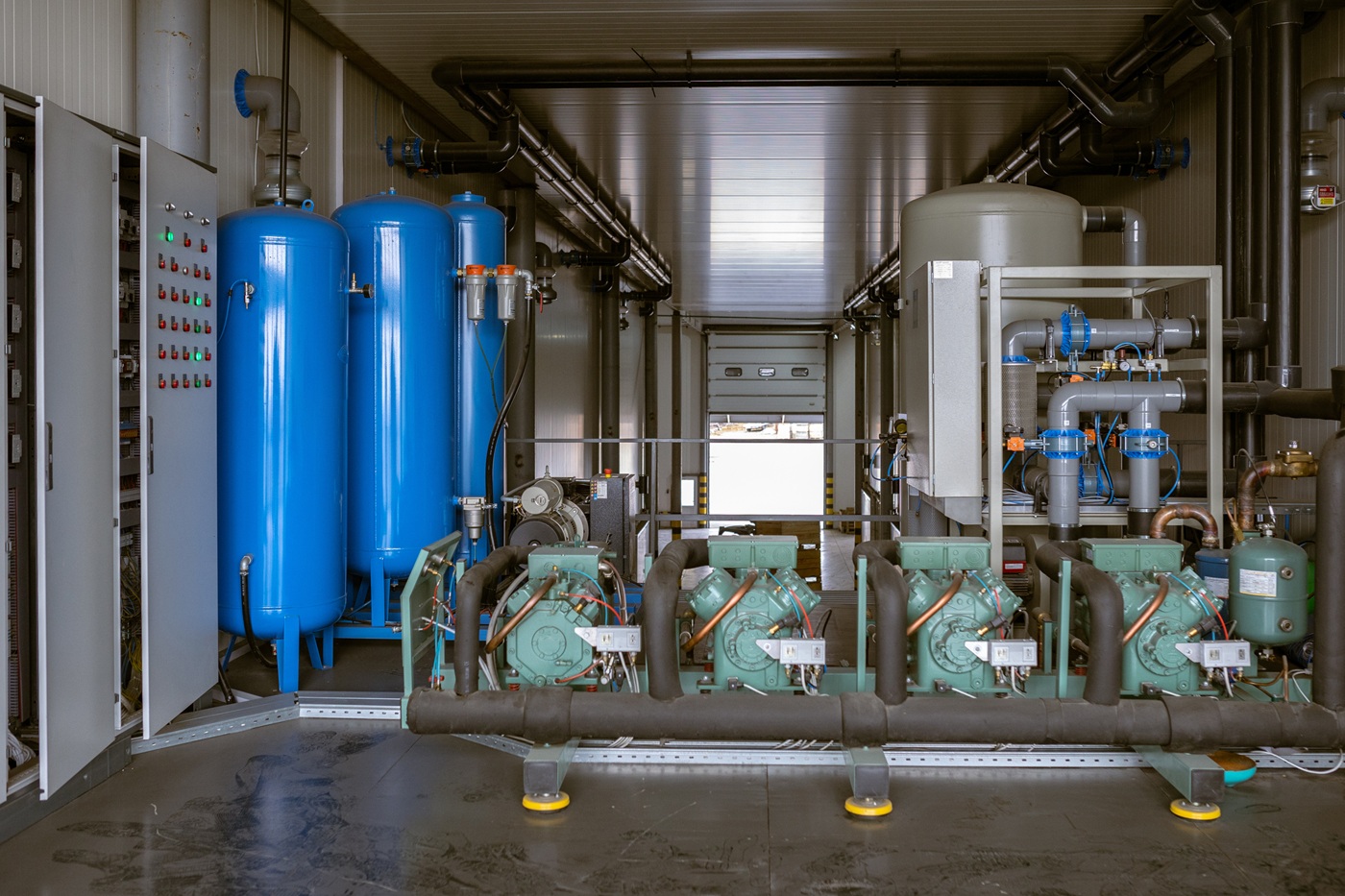
Refrigeration is undergoing a transformation due to stricter F-Gas regulations in the UK and EU. CO₂ (R744), ammonia (R717), and hydrocarbons like propane (R290) are now being adopted for their low global warming potential. Heat recovery systems further improve efficiency, repurposing waste energy to warm offices or preheat water.
Smart Grids and Renewable Integration
Power Purchase Agreements (PPAs), on-site solar generation, and battery storage are helping cold stores stabilise energy costs and reduce grid reliance. Combined with AI-led grid balancing, these facilities are becoming more than storage—they’re integrated energy assets.
Warehouse Automation and Robotics
Autonomous Mobile Robots (AMRs), Automated Guided Vehicles (AGVs), and AS/RS systems are now standard in many cold storage operations. They increase throughput, reduce errors, and alleviate pressure from ongoing labour shortages. AI also enhances warehouse routing and pick accuracy.
Intelligent Monitoring Across the Cold Chain
IoT sensors monitor not just temperature but also humidity, light, and shock exposure—vital for perishable or high-value goods. Smart packaging and QR-coded TTIs ensure condition visibility from warehouse to point of sale.
Blockchain and Regulatory Compliance
Blockchain platforms offer secure, tamper-proof traceability that meets growing food fraud prevention needs under legislation like the UK’s Economic Crime and Corporate Transparency Act 2025. These systems also support food safety audits and sustainability reporting compliance.
Cold Chain as a Service (CCaaS) and Energy Storage
Outsourcing cold storage infrastructure through CCaaS offers flexible, tech-enabled logistics for brands seeking scale without capital burden. AI-managed battery systems store energy off-peak, improving load management and reducing costs.
The Move to -15°C: Rethinking Frozen Storage
The CCF and BFFF-backed Move to -15°C initiative is gaining momentum. Raising frozen storage temperatures from -18°C to -15°C could reduce energy use, though product texture, packaging resilience, and supply chain collaboration will need careful attention.
Cold Storage as a Competitive Differentiator
Cold storage is no longer passive infrastructure. From predictive energy management to automated handling and traceable distribution, it is a dynamic component of modern food logistics. As regulatory demands tighten and energy costs rise, the ability to adapt will determine long-term competitiveness.