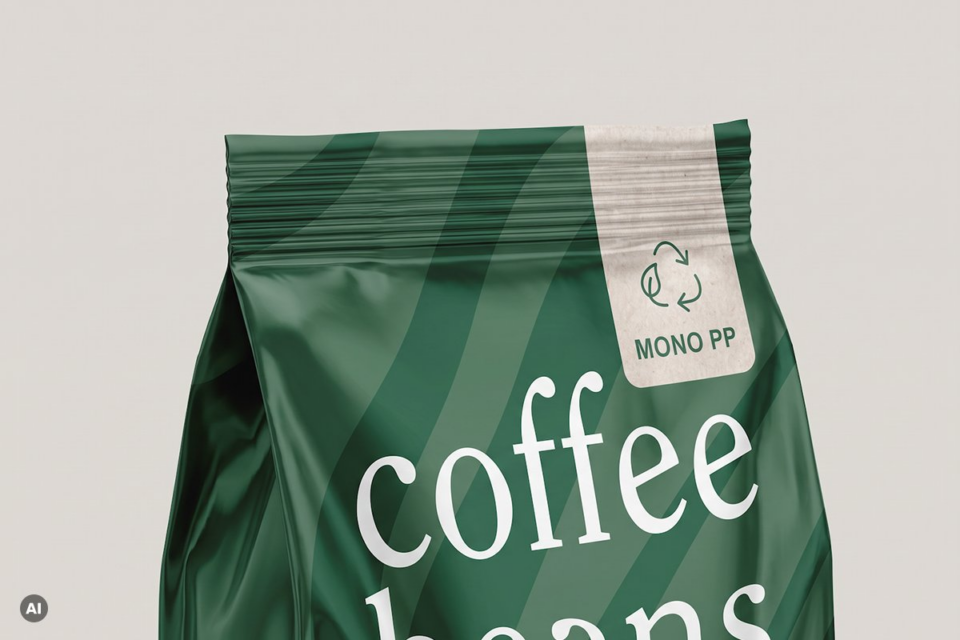
Escalating green coffee costs, evolving purchasing behavior, heightened price awareness, and the forthcoming PPWR are reshaping the coffee sector. Against this backdrop, how can packaging for roasted ground coffee and whole beans remain competitive? Which solutions can increase manufacturing efficiency, strengthen brand positioning, and limit regulatory exposure? And what market developments are influencing packaging decisions today?
SÜDPACK has examined these issues in detail, highlighting the principal forces influencing the global coffee market. As a family-owned producer of films and packaging systems, SÜDPACK combines extensive extrusion and materials expertise with many years of development experience and a broad service offering. The company works alongside customers as a development partner, helping them move from conventional laminate structures to packaging solutions designed with recyclability in mind.
An overview of the coffee market
Coffee remains one of the world’s largest and most resilient food categories. Europe leads global consumption, representing approximately 30% of worldwide demand. The European market is expected to reach an estimated value of about USD 56 billion in 2026, with average annual growth exceeding 5%. Germany represents the region’s largest national coffee market. In 2025, German consumption totaled 456,000 metric tons, generating almost EUR 9 billion in sales[1]. Nevertheless, the category continues to evolve, influenced by new consumer groups, emerging markets, changing product preferences, and alternative pack formats.
Although ground coffee continues to hold a substantial market position, demand for whole beans is increasing steadily. Rising prices, unstable raw material availability, climate pressures, and stronger worldwide consumption are reinforcing coffee’s premium character. At the same time, coffee remains an everyday indulgence that appeals to consumers across income groups.
The sector’s international expansion and increasingly varied food and drink consumer trends are accelerating this transformation. Leading roasters are pursuing growth outside their established territories and adapting portfolios to local tastes. Many are also using distinctive origins, unusual blends, and new product formats to attract shoppers. These include concentrated coffee, ready-to-drink beverages, functional coffee, collagen-enriched products, and high-protein varieties—developments that reflect wider food and beverage industry trends and food and drink industry innovation.
Packaging developments gaining momentum
Large 1-kg whole-bean bags and conventional 500-g vacuum packs for ground coffee remain widely used. However, demand for compact formats, including 250-g packs, is expanding. In selected applications, modified atmosphere packaging (MAP) is also becoming a more established option for ground coffee.
The balance between ground coffee and whole beans is changing as well. In Germany, whole beans are currently the best-performing segment and have achieved unprecedented sales levels. The popularity of fully automatic coffee machines helps explain this performance: approximately one in three households now owns one, demonstrating the importance consumers place on preparing high-quality coffee at home.
As coffee becomes more expensive and household budgets come under pressure, manufacturers need packaging platforms that support quick artwork updates, shorter production runs, multiple pack sizes, and differentiated price points. Packaging also plays an increasingly important role in communicating quality. Premium print reproduction, tactile coatings, and carefully selected matte or high-gloss finishes can enhance shelf impact and reinforce a product’s upscale positioning. These capabilities are becoming important elements of food and drink marketing.
For film producers such as SÜDPACK, the direction is evident. Packaging must respond to food manufacturing trends while protecting the product’s aroma, freshness, and usable life. It must also support the premium experience consumers expect and meet the growing requirements associated with food and drink sustainability.
Balancing recyclability, machine performance, and coffee protection
The PPWR is accelerating the transition from conventional laminate structures, including aluminum-based formats, toward mono-material packaging based on PP or PE. Both polymers benefit from established recycling routes in numerous European markets. For roasters and packers, however, the change creates practical challenges. They must identify films that run efficiently on existing equipment, preserve production speed, deliver sufficient protection, and reduce the commercial and compliance risks associated with changing materials.
Any replacement structure must provide barrier performance comparable to that of traditional aluminum laminates. These established formats protect the delicate aromas created during roasting from oxygen, moisture, and light. Maintaining this protection is essential for preserving coffee quality throughout distribution and storage while complying with evolving food and drink regulations.
CarbonLite®: a PP packaging platform for coffee products
SÜDPACK’s CarbonLite® portfolio combines product protection, processing performance, and premium visual presentation in a format developed to support recyclability. Its PP-based Flow Pack film is designed for compatibility with recycling systems already available in many European countries.
The mono-PP laminate is suitable for use on existing vertical form-fill-seal (VFFS) equipment and delivers dependable sealing performance and seal strength. Depending on the application, the structure can provide effective resistance to oxygen, water vapor, and ultraviolet radiation. It also combines stiffness with puncture resistance and protection against substances such as oils. PP-compatible aroma valves can be heat-sealed into the pack, enabling roasted coffee to release gases after filling.
Alongside its PurePP film, SÜDPACK supplies a metallized alternative that helps create distinctive metallic effects in printed designs. Both structures can also support vivid graphics without a metallic finish. Flexographic, rotogravure, and digital printing are available according to the application and the customer’s requirements. SÜDPACK’s SPQ® printing technology provides another option. Its standardized seven-color (7C) system and controlled process settings promote consistent, high-quality output while lowering ink and solvent consumption.
Validated results and dependable market introduction
SÜDPACK works with customers throughout the development of new packaging concepts, matching film solutions to specific technical and commercial requirements and validating its recommendations with robust data. In an internal coffee-packaging assessment, replacing a conventional 100-μm PET/aluminum/PE laminate with CarbonLite PurePP film of equivalent thickness lowered the total carbon footprint by 43%. The assessment tool follows ISO 14040/44 principles. Its results use a cradle-to-grave methodology that excludes printing and the use phase, while end-of-life impacts are calculated according to the German recycling mix. This type of evidence supports informed decisions in the context of food and drink sustainability and broader food and beverage industry trends.
Support extends from the first concept through industrial implementation. SÜDPACK helps producers reduce transition risks, confirm compatibility with existing manufacturing operations, and introduce new packaging formats reliably. The objective is to create greater flexibility, shorten time to market, and deliver future-ready packaging concepts that combine operational efficiency with strong consumer appeal. These priorities are increasingly important across food processing technology, food distribution trends, and the wider food and drink packaging landscape.
[1] Source: German Coffee Association, European Coffee Market Size, Share, and Growth Overview, 2031
Further information is available at suedpack.com