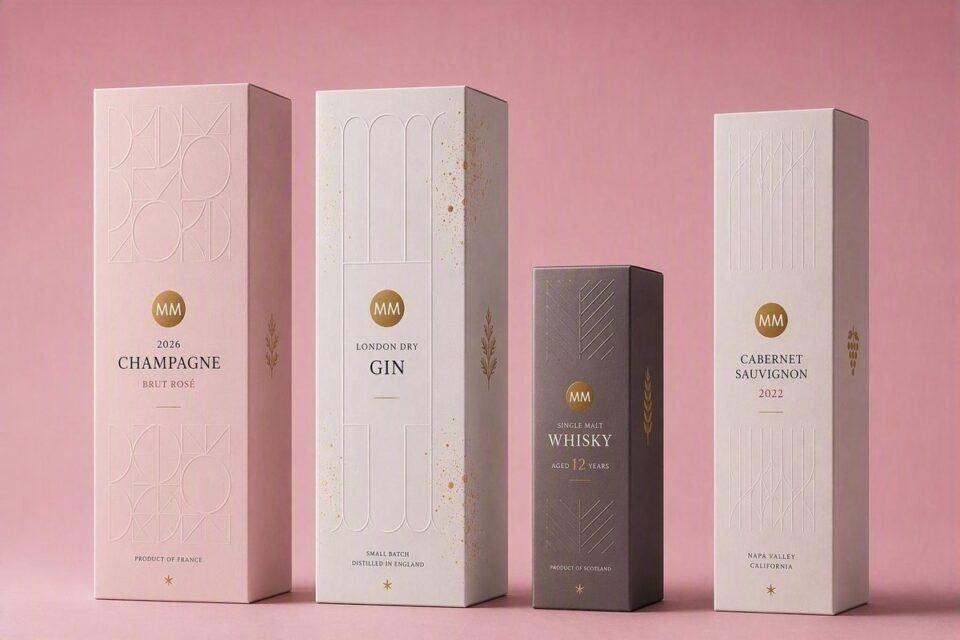
When shoppers compare two spirits bottles on the same shelf, they may struggle to explain why one attracts their attention more than the other. The decision often begins before they consider the liquid inside. Although product quality builds repeat purchase, packaging creates the first point of contact—and increasingly determines whether a brand earns the visibility required to compete.
Spirits packaging is now being shaped by forces beyond aesthetics. New sustainability requirements are influencing choices around pack weight, unused space, material combinations, and disposal after use. At the same time, brand owners are reassessing the traditional approach of ‘bigger, heavier, and more elaborate’ presentation as extended producer responsibility (EPR) charges add the cost of excess materials to the equation. Features once associated with prestige can now suggest unnecessary resource use.
Consequently, spirits producers are reconsidering how they develop packs. The objective is to preserve a premium brand experience while using materials and structures that support compliance. Achieving that balance requires both creative thinking and specialist technical knowledge.
Compliance is redefining the brief—not reducing ambition
Premium spirits have traditionally relied on secondary packs based on the familiar rectangular carton. Brands have differentiated these formats through paper grades, colours, coatings, and other decorative treatments, while the underlying construction has remained broadly similar. That approach has become less attractive as food and drink regulations place greater emphasis on reducing unnecessary material and empty volume.
These developments are prompting a fundamental design rethink. They also coincide with growing consumer scrutiny of the environmental impact of luxury packaging. Brands that respond only by shrinking or simplifying existing packs risk producing less distinctive versions of what came before. In contrast, companies that approach the change strategically can use it to create a more ownable and recognisable physical identity.
Making structure part of the brand
A distinctive pack often begins by challenging the standard carton format. Curved or angled profiles, unexpected proportions, and opening sequences that invite interaction can make unpacking part of the overall product experience. With careful development, these features can also support efficient material use and EPR-conscious packaging design.
Advances in material development are expanding the options available to packaging designers. For example, METPET lamination can deliver a sophisticated metallic appearance while avoiding some of the recyclability issues linked to conventional laminated foils. Board-to-board lamination offers another route by combining different board grades to increase stiffness and create a substantial hand-feel without relying on a heavier complete pack. As sustainability becomes central to food and drink packaging decisions, these approaches help brands communicate quality without treating weight as its primary proof point.
The inside of the pack deserves the same level of consideration. Custom inserts can hold a bottle securely while also managing the sequence and pace of the reveal. This is particularly valuable for limited-edition products, travel retail releases, and gifting presentations, where the opening experience contributes directly to perceived value.
However, visual and tactile appeal cannot compromise performance. Spirits bottles are frequently heavy, delicate, and exposed to demanding handling conditions. Their packs must withstand distribution, remain efficient to fill and assemble, and operate reliably at commercial production volumes. Effective packaging innovation therefore combines creative direction with engineering expertise, ensuring the product reaches its destination safely.
Meeting these requirements can call for new construction methods, including litho-laminated microflute. This solution combines the cushioning and structural performance of corrugated board with the sharply printed exterior expected in premium categories. It allows brands to adopt stronger fibre-based formats while retaining the visual and tactile quality associated with high-end spirits packaging.
Finishing with purpose
Finishing processes often reveal the full character of a premium pack. Hot stamping and cold transfer can introduce refined metallic accents, while varnishes create contrasts between gloss and matt surfaces. Embossing, debossing, and other tactile treatments provide depth and encourage shoppers to interact with the pack.
The most effective approach is usually selective rather than excessive. One carefully positioned detail can communicate greater luxury than a decorative effect applied across every panel. Strong packaging design connects each finish to a meaningful aspect of the spirit, its provenance, or its brand story instead of adding embellishment without purpose. In this way, the finish can express an idea or sensation before the consumer has consciously articulated it.
Building luxury into the development process
Brands gaining the greatest value from this shift are involving structural design, material selection, and finishing strategy at the beginning of the project. Early collaboration prevents these elements from becoming costly additions at the end and helps turn regulatory limitations into opportunities for genuine differentiation. This approach reflects wider food and beverage industry trends, in which food manufacturing trends, food processing technology, food distribution trends, and food and drink industry innovation are all influencing how products reach the market.
MM Packaging combines packaging design and finishing expertise to integrate these capabilities into premium spirits projects from the earliest concept stage. Its Food & Premium team works with brand owners to unite creative ambition with the material knowledge and engineering required for efficient manufacture, product protection, and regulatory compliance. For premium spirits, the pack is increasingly central to the brand narrative. Getting every element right—from the structural format to the final decorative treatment—can be what persuades a shopper to pick up the bottle.
These principles also support wider priorities across food and drink sustainability, food and drink consumer trends, and food and drink marketing, helping brands create packaging that is attractive, responsible, and commercially effective.
To learn more about MM Packaging, please visit https://mm.group/packaging