In the past 3 years, the trucking industry has encountered numerous challenges due to the impact of COVID-19. However, these disruptions have recently become more unpredictable and disruptive rather than predictable. Today, the challenges the industry faces are deeper and more personal, stemming from various causes such as the passage of certain laws and the lack of agreements to protect contract workers.
Even the most cutting-edge technology sometimes falls short in predicting what will happen next. Marina Mayer, the Editor-in-Chief of Food Logistics and Supply & Demand Chain Executive, talks exclusively with Jai Ranganathan, the Chief Product Officer for Motive, about the significance of the Advanced Clean Fleets rule and the industry’s expectations once it goes into effect.
The California Air Resources Board unanimously voted to finalize the Advanced Clean Fleets rule, which mandates that all new medium- and heavy-duty vehicles sold or registered in California must be zero-emission by 2036. This decision holds significant implications for the future of trucking and transportation.
According to Jai Ranganathan, this rule demonstrates the government’s increasing focus on reducing emissions in the trucking industry to achieve a more sustainable future. However, the current patchwork system of emissions governance among different states might create challenges. While supporting efforts from all stakeholders to make trucking cleaner, greater coordination and consistency across North America would also be beneficial in addressing this issue.
The implementation of the Advanced Clean Fleets rule signifies a bold step towards a cleaner and more sustainable future for trucking and transportation. It accelerates the transition to zero-emission vehicles through continued investment in technological advancements. This shift can reshape the trucking market by necessitating the adoption of new technologies, training for drivers and technicians, and other adaptations for carriers.
California’s adoption of these changes is expected to inspire other states to follow suit by enforcing similar policies to reduce emissions from heavy-duty vehicles. This has the potential to drive a global shift toward decarbonization and the widespread adoption of zero-emission technologies.
The Federal Motor Carrier Safety Administration (FMCSA) has revised its Hours of Service regulations, allowing certain expansions to the workday. This change aims to increase productivity and empower drivers to have better control of their day without compromising safety. Education and training are crucial in the industry, and these updates to the Hours of Service rules, along with accurate recording and interpretation of Electronic Logging Device (ELD) records, contribute to moving the industry forward.
Trucking electrification is becoming increasingly prevalent. The Infrastructure Investment and Jobs Act (IIJA) has allocated $7.5 billion to establish long-distance EV traveling and install charging stations near residences or workplaces. This alternative fuel source is gaining traction in the supply chain industry, especially with government support and tax incentives for building EV infrastructure. While short-distance and last-mile transit have already witnessed rapid adoption of EVs, longer-haul vehicle infrastructure is also starting to see progress.
From a customer perspective, there is increasing interest in using products that manage alternative fuel efforts. Customers and their customers have set ambitious goals for emission reduction, and collaboration with partners, customers, and original equipment manufacturers (OEMs) is essential for operationalizing this transition. Intelligent insights and data are utilized to reduce waste and enhance operational efficiency.
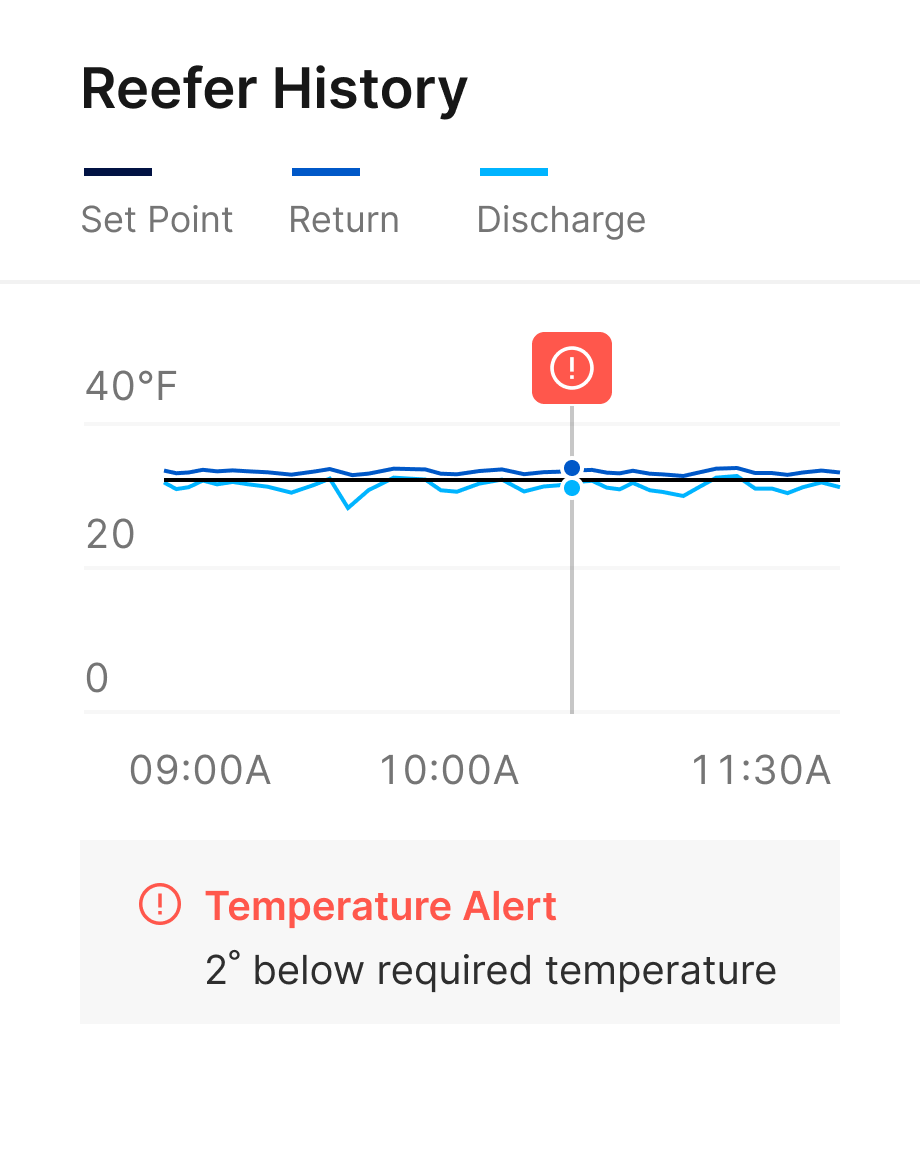
The rise of Mobility-as-a-Service (MaaS) is also impacting the cold food chain. The importance of cold chain transportation extends beyond location; it encompasses real-time temperature control. With the increasing prevalence of MaaS, the traceability and transparency of temperature data become crucial. Reefers must provide customers with real-time temperature visibility, and service providers need to offer immediate alerting and automated intervention in response to temperature variations to protect the transported products. Additionally, MaaS generates valuable data that enables route and load optimization, reducing costs, empty miles, fuel consumption, and carbon emissions.
Intermodal transportation has been the fastest-growing major rail segment, with a 5% increase in volume growth in 2019. However, this growth poses challenges in maintaining consistent temperature across different vehicles and environments. Carriers are experiencing significant cost increases in owning and operating reefer trailers, leading to the purchase of older reefers and the associated risks of degraded insulation. To run an efficient business, leveraging technology is becoming increasingly crucial as it allows for real-time tracking of location and temperature in the cold chain logistics.
Visibility remains a critical aspect in the industry. Integrating reefer monitoring systems with the Motive platform ensures real-time insights, synchronization with logistics and operations, and the ability to make necessary adjustments.
Overall, the trucking and transportation industry is navigating challenges and embracing trends that will shape the future of cold food chain logistics. It requires adaptability, technological advancements, and coordinated efforts from stakeholders to achieve sustainability and efficiency while delivering goods.