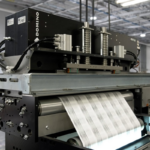
Efficient cutting and slicing processes are crucial in the food manufacturing industry, especially for companies that specialize in pre-cooked meats, cheeses, breads, and various vegetable-based products. The performance of equipment directly impacts operational success and product output.
Small variances in production can significantly influence a company’s profitability, with the latest technological advancements in machinery providing essential uniformity and quality in portion sizes. This not only helps in minimizing waste but also accelerates production rates. State-of-the-art methods like ultrasonic cutting and crust freezing have emerged, pushing the quality of portion production to new heights.
Modern machines, such as Weber’s advanced slicers, can achieve up to 2,000 cuts per minute for both cheese and meat, drastically enhancing food production capabilities. With improved connectivity and the integration of data-driven artificial intelligence (AI), the next decade promises remarkable developments in this foundational technology of the food and beverage sector.
A significant transformation in food manufacturing has been ignited by automated cutting and slicing innovations over the past century. This shift has been instrumental in allowing food manufacturers to evolve from small, regional operations into vast enterprises participating in global markets.
The precision involved in food slicing is not only a mechanical challenge but a vital component of product integrity and profitability. GEA’s cutting-edge technology exemplifies this, offering integrated AC systems, a user-friendly interface, and predictive maintenance features. GEA CutMasters can efficiently cut, mix, and emulsify a variety of meat, poultry, or meat alternatives, providing a solid foundation for further processing, also extending to fish, vegetables, and processed cheese.
Visual appeal in packaged food is critical for brand identity and influences purchase decisions. This necessitates the selection of technology that ensures quality assurance, consistency, and operational efficiency. GEA’s slicers meet these demands, enhancing yield, productivity, flexibility, and reliability. Beyond machinery, GEA provides comprehensive support and consultation, working closely with clients to refine their production requirements.
The impact of a company’s slicing and cutting capabilities is profound, influencing workforce demands, resource utilization, and the final quality of the product. Ed Hewitt, the sales director at Reiser UK, emphasized the critical role of technology in efficient food production: “Cutting and slicing are central to food production efficiency and product consistency. At Reiser UK, we offer a comprehensive range of solutions, from entry-level to high-capacity industrial systems.”
He further elaborated on their offerings, including Holac slicers for precise cuts in meat and seafood, and Ross Industries systems for accurate portioning. Additionally, Vemag equipment can integrate cutting and linking functions to enhance flexibility across a range of products. Multivac’s slicing product manager, Lewis Pascoe, underscores the value of cutting and slicing by highlighting its influence on yield, labor needs, portion consistency, and package quality.
With the ongoing cost-of-living crisis intensified by geopolitical factors, manufacturers are under tremendous pressure to maintain low costs while ensuring consistent production and quality. It is in such challenging conditions that the most significant innovations emerge, with businesses increasingly analyzing data for insights on operational efficiency. Pascoe noted the shift towards smarter integrative solutions and automation: “Manufacturers are under constant pressure to reduce labour dependency while improving yield and maintaining high acceptance levels.”
Modern systems focus on hygiene enhancements that allow for quick cleaning and maintenance, addressing stringent food safety regulations without interrupting production. Hewitt highlighted the versatility of new equipment capable of accommodating multiple applications, thus optimizing space and investment, while priorities like fast, efficient disassembly aid in meeting safety standards.
Artificial intelligence (AI) is another emerging factor, poised to transform food manufacturing. Its capacity to analyze vast data sets swiftly will likely lead to heightened automation as organizations seek to optimize their equipment’s output and efficiency.
Pascoe foresees significant advancements in the next decade, with better interconnectedness and real-time monitoring shaping the future of cutting and slicing processes. He notes that automated solutions will become increasingly capable of managing diverse products with minimal manual effort, resulting in smarter production lines.
Tony Turner from Applied Manufacturing and Engineering Solutions added a balanced viewpoint, pointing out that trends in slicing technology not only aim to enhance quality and yield but also prioritize food safety. He mentioned advancements in AI and 3D imaging could revolutionize food safety measures, although challenges related to cost and scalability remain.
Regardless of the direction future technologies take, AI and increased automation will undoubtedly influence the industry’s landscape, raising questions about employment dynamics within manufacturing roles. Ultimately, the efficiency of manufacturing processes and the quality of outputs are set to improve, benefiting end consumers as technology progresses.