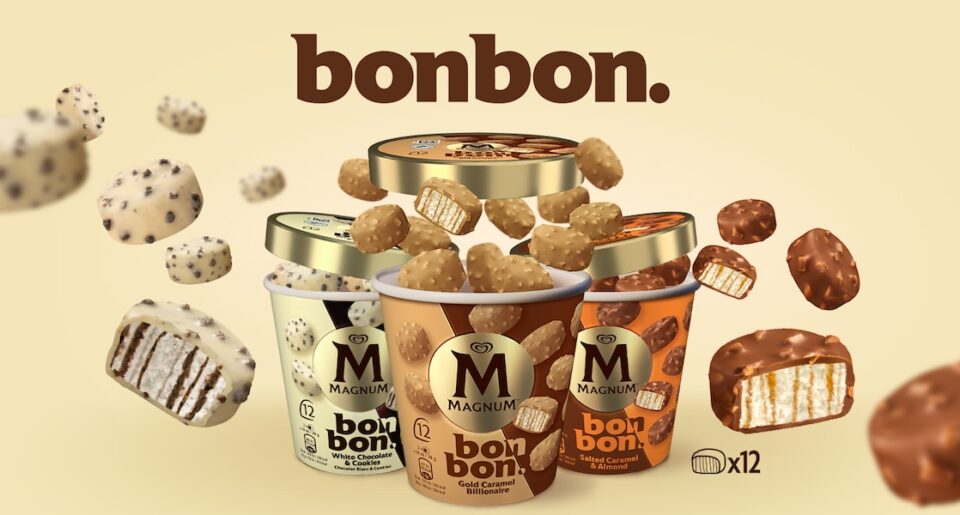
The CEO of the Magnum Ice Cream Company (TMICC) has highlighted a key focus on enhancing volume and achieving “competitive growth” in its inaugural year as a standalone entity following its separation from Unilever.
Despite reporting a 4.2% increase in organic sales for 2025, CEO Peter ter Kulve maintained a growth outlook of 3-5% for the upcoming year, which is impressive as the upper limit surpasses the prevailing market category growth rate of 3-4%.
During a recent analysts’ call on February 12, ter Kulve detailed the strategies for driving growth, especially through innovation. He emphasized that the company aims to modernize the ice cream category, which has largely been anchored in nostalgic indulgence. “The ice cream category has got a little bit stuck in nostalgia and creamy indulgence,” he stated. Thus, he sees significant potential in introducing modern snacking and refreshment benefits.
In the last 18 months, TMICC has revitalized 80% of its core product line, investing in improved ingredients and formulations. Future product launches include “hydration” ice cream and protein-packed options that utilize “nascent sugar replacement technology.”
To streamline operations, TMICC has reduced what ter Kulve termed “SKU complexity,” allowing for focused resource allocation toward “productive innovations.” Throughout the past year, the volume/mix growth was reported at 1.5%, although overall revenue remained flat at €7.9 billion ($9.3 billion). In response to severe commodity challenges, particularly with cocoa, TMICC implemented a 2.6% price increase.
Ter Kulve acknowledged the pressures from a challenging macroeconomic landscape and commodity inflation, stating, “It was a year of operational and strategic progress.” He highlighted the decision to competitively price products to stimulate volume growth. Notably, pricing adjustments were made across multiple brands and geographical areas to refine trade margins.
Furthermore, TMICC has initiated a €500 million productivity program aimed at optimizing its supply chain and structural costs. Ter Kulve mentioned, “This gives us the full fuel to reinvest behind our brands,” thus fortifying future leadership through innovative strategies and digital execution.
From this €500 million initiative, €250 million has already been implemented. Ter Kulve expressed confidence in nurturing the company’s volume engine for the subsequent year, identifying the AMEA region as a key growth driver, recording a 4.5% increase in volume with organic sales rising 10.9% to €2 billion.
While the Europe and ANZ segments experienced a 1.2% volume increase and organic sales growth of 3.3% amounting to €3.2 billion, the Americas reported flat volumes but a sales uptick of 0.8% to €2.8 billion. Notably, TMICC did not inherit Unilever’s ice cream businesses in India, Indonesia, and Portugal during the December separation. However, CFO Abhijit Bhattacharya noted recent developments, including the acquisition of the Indonesian business.
Regulatory approvals for the Indian business listing are expected to be finalized by mid-month, with plans to integrate this operation in the first half of the year. Portugal is also anticipated to join TMICC during this period. Ter Kulve expressed optimism regarding the Indian market’s potential. “India is already the largest dairy market in the world,” he noted, predicting its ascendance as the largest ice cream market globally within two decades. Despite historical challenges in the region, he pointed out, “we’re in a turnaround mode.”