

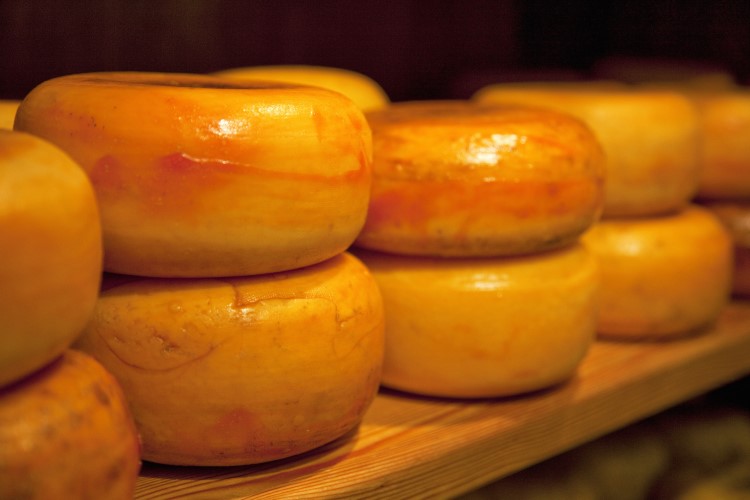
Cheesemaking is a complex and time-consuming process, taking anywhere from several weeks to over a year to achieve the desired flavor and texture. The storage time for hard cheeses is even longer than that for soft varieties, requiring careful management of space, temperature, and humidity. According to a study conducted in 2003 by Upadhyay and McSweeney, the cost of ripening cheddar for nine months was estimated to be between $640 and $1025 per tonne of cheese.
To expedite the maturation process, various approaches have been explored, such as raising the ripening temperature or using genetically-modified starter cultures or enzyme blends. However, researchers from the Technical University of Denmark (DTU) claim to have developed a breakthrough solution. They have created a mesophilic starter culture that accelerates the release of cheese-ripening enzymes, eliminating the need for additional cultures and significantly reducing both time and cost.
Christian Solem, an associate professor at DTU’s National Food Institute, explains that existing solutions for hastening cheese ripening often come with drawbacks like high cost and off-flavors. The long ripening time also leads to substantial inventory costs. However, the new culture developed by DTU is a game-changer, offering a more efficient and natural process.
The researchers tested their novel starter culture on Danbo, a semi-soft cheese similar to Emmental, and achieved remarkable results. The maturation time was reduced from 25 to 13 weeks. Danbo is a surface-ripened cheese, where microorganisms on its surface release ripening enzymes that expedite the process. The DTU team cultivated these microorganisms on whey in a fermentation tank, creating a shortcut for faster cheese ripening.
When asked about mesophilic cultures and their slow enzyme production, Solem clarifies that traditionally, these cultures consist of a combination of Lactococcus lactis and Lactococcus cremoris bacteria. Lactococcus cremoris releases enzymes more efficiently, whereas Lactococcus lactis, while heat-tolerant, contributes less to taste. However, the DTU culture, which is a special variant of Lactococcus lactis, excels in releasing ripening enzymes efficiently. It is also more cost-effective and easier to grow, making it a sustainable choice for culture providers.
The benefits of the DTU culture extend beyond faster maturation. The culture can also be used to produce extra-mature cheeses with enhanced flavor and to eliminate the bitterness often associated with low-fat cheeses. Additionally, the culture is highly tolerant of high temperatures, offering new possibilities for creating harder cheese variants with the desired mesophilic taste.
Solem emphasizes that the culture’s advantages outweigh any downsides. It is cost-effective, easy to grow, and approved for use in food production. Hence, there are no regulatory or production hurdles to hinder its wider adoption. He believes that in a world grappling with global warming, sustainable and resource-saving technologies like this are urgently needed.
Regarding competition, Solem states that there are currently no comparable solutions on the market. He acknowledges that the findings of their study may be seen as controversial, particularly the superior performance of their simple culture compared to commercially available ones. The study’s results will soon be published in an article titled “Simple & Better – Accelerated cheese ripening using a mesophilic starter based on a single strain with superior autolytic properties.”
Overall, this breakthrough in cheese ripening technology opens up new possibilities for the food and beverage industry, such as faster production, enhanced flavors, and innovative low-fat cheese options. As the industry continues to seek sustainable and efficient solutions, the DTU culture is poised to make a significant impact.
Sources:
– Acceleration of cheese ripening
– P.L.H. McSweeney, V.K. Upadhyay
– Published July 2003
– DOI: 10.1533/9781855737075.3.419

