In a bid to drive economic growth in South Africa, the food and beverage industry has made significant investments in the country. These investments range from establishing manufacturing facilities for local food production to injecting hundreds of millions of dollars into strategic projects. It is evident that the global F&B industry is acknowledging the potential of South Africa’s lucrative market. Kerry, a taste and nutrition company, opened the “largest and most advanced taste manufacturing facility on the African continent” in May last year with €38 million. The facility produces sustainable nutrition solutions across the continent and is one of Kerry’s most environmentally efficient manufacturing sites.
Sustainability is a vital component of energy-intensive industries such as food and beverage in South Africa. The country has been constrained by electricity supply shortages for years, causing rolling scheduled power cuts (load-shedding) that intensified exponentially and disrupted economic activity. Implementing sustainable systems becomes imperative for the endurance of large companies operating in the country. Nestlé, for instance, installed a solar plant with a capacity of 966 kW at its Babelegi manufacturing facility, which produces Maggi noodles and Nestlé Cremora, last year. In comparison, at its Harrismith Factory, it installed a ground-mounted system and solar photovoltaic panels, generating approximately 45% of the factory’s demand during daylight hours.
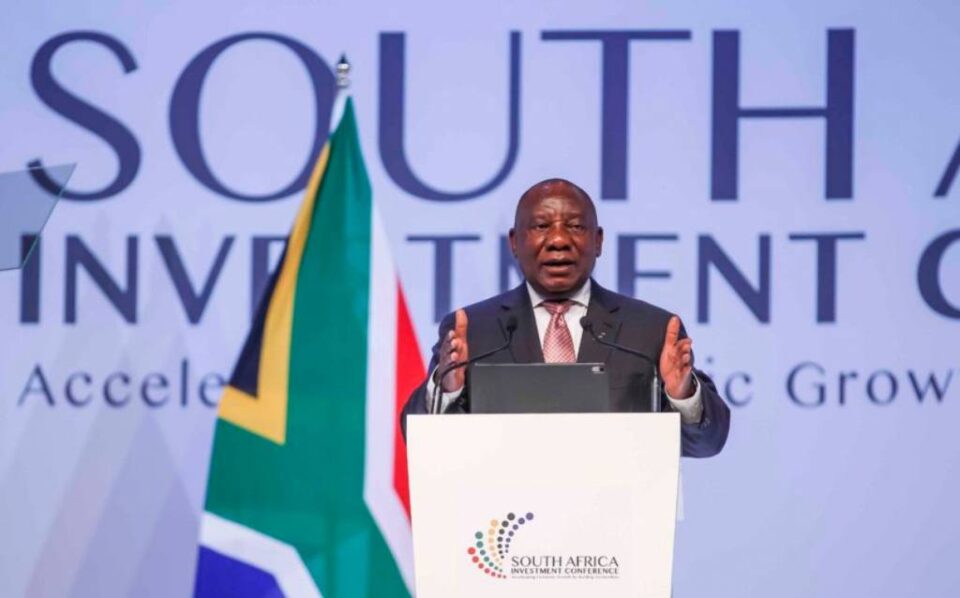
The beer industry is also a key contributor to the South African economy. AB InBev pledged to invest an additional R 920 million (approx. $63 million) into two breweries through its subsidiary South African Breweries (SAB) last year. The investment was expected to create direct and indirect employment opportunities and contribute to job creation, tax generation, and procurement spend. Beer giant Heineken also recently announced a successful acquisition of Distell and Namibia Breweries, which they combined with Heineken South Africa into a new Heineken majority-owned business, Heineken Beverages. The package announced at the 2023 South Africa Investment Conference includes an investment plan of over €500 million over five years, investing more than €250 million towards the construction of a new brewery and maltery.
In conclusion, the food and beverage industry’s investments in South Africa have created direct and indirect employment opportunities and drive the government’s mission towards economic recovery and growth. The industry is set to foster growth, create jobs, and contribute to the overall economic development of the region. The region’s potential for economic growth for F&B players is exciting, considering the investments made by these companies and their impact on the South African economy.