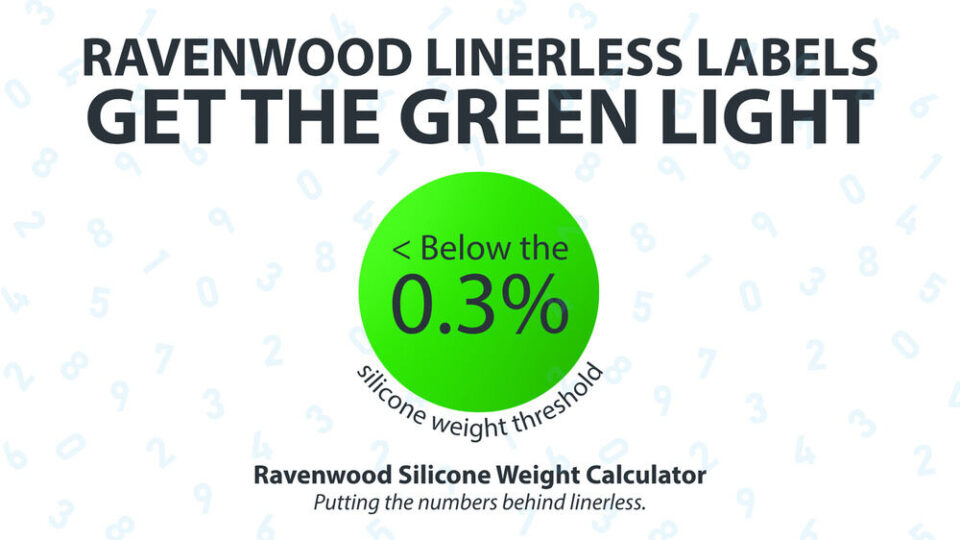
Ravenwood has introduced an environmental impact calculator that enables packaging teams to quantify the benefits of replacing self-adhesive labels with linerless alternatives. By providing measurable data, the platform could encourage wider adoption across FMCG, retail and logistics operations.
Created as part of Ravenwood’s linerless programme, the calculator assesses potential reductions in packaging waste, energy consumption, transport-related emissions and total carbon impact. As businesses respond to PPWR requirements, Scope 3 disclosure expectations and retailer sustainability scorecards, procurement and operations teams increasingly need evidence-based figures rather than broad environmental claims.
Measuring the impact of linerless labelling
The calculator compares conventional pressure-sensitive labels, which use a silicone-coated backing liner, with Ravenwood’s linerless format. Removing the liner allows users to evaluate several environmental and operational improvements, including:
- Reduced material consumption: Each label requires fewer inputs, while lower waste volumes can reduce disposal costs.
- Lower carbon emissions: Reduced substrate use, fewer pallet movements and lower production energy requirements can all contribute to a smaller carbon footprint.
- Improved operational performance: Longer reels can reduce changeovers, minimise interruptions and support higher equipment uptime.
- More efficient logistics: A greater number of labels can fit into each shipment, helping reduce transport requirements and related emissions.
Ravenwood reports that the calculator has undergone validation through several customer trials. This gives packaging professionals a practical way to assess specific operating conditions instead of depending on standardised or unsupported sustainability estimates.
The launch comes as food and beverage industry trends increasingly focus on measurable environmental performance. PPWR implementation, combined with stricter retailer packaging assessments, is pushing brands and suppliers to deliver demonstrable improvements rather than isolated packaging adjustments. Although linerless labelling has long been associated with sustainability benefits, uncertainty about the exact scale of those gains has limited adoption in some businesses.
Ravenwood’s tool is designed to close that information gap.
Packaging manufacturers can use the results to build a stronger, data-led proposition for customers. Brand owners can apply the findings to sustainability reporting, investment planning and the adoption of linerless-compatible print-and-apply equipment. Retailers, meanwhile, can use a consistent calculation method when assessing different suppliers and packaging solutions.
Linking sustainability with commercial value
The calculator also considers financial and operational benefits. These may include lower label material costs, reduced warehouse space, fewer production stoppages, increased throughput and lower charges for handling packaging waste.
As food manufacturing trends, food processing technology and food distribution trends continue to develop alongside strict cost controls, businesses must balance efficiency with environmental commitments. Quantifying both carbon and financial savings makes linerless labelling easier to evaluate and support across larger production networks.
The approach also aligns with wider food and drink industry innovation, particularly as companies invest in food and drink sustainability while adapting to evolving food and drink regulations. Alongside developments in food and drink packaging, businesses are increasingly using verified data to strengthen food and drink marketing claims and respond to changing food and drink consumer trends.
With leading packaging organisations already expanding their linerless capabilities, Ravenwood’s calculator could become an important planning resource for packaging engineers, procurement specialists and sustainability teams.