Finnish biomaterials specialist Innomost is advancing Suberinno™ Suberin as a versatile barrier ingredient for fibre-based packaging and performance coatings. Sourced from upcycled Nordic birch bark, the material offers moisture and grease resistance alongside oxygen-barrier properties when incorporated into coating formulations. Its combined functionality positions it as a bio-based option for barrier components traditionally derived from fossil resources, supporting evolving food manufacturing trends and food and drink sustainability objectives.
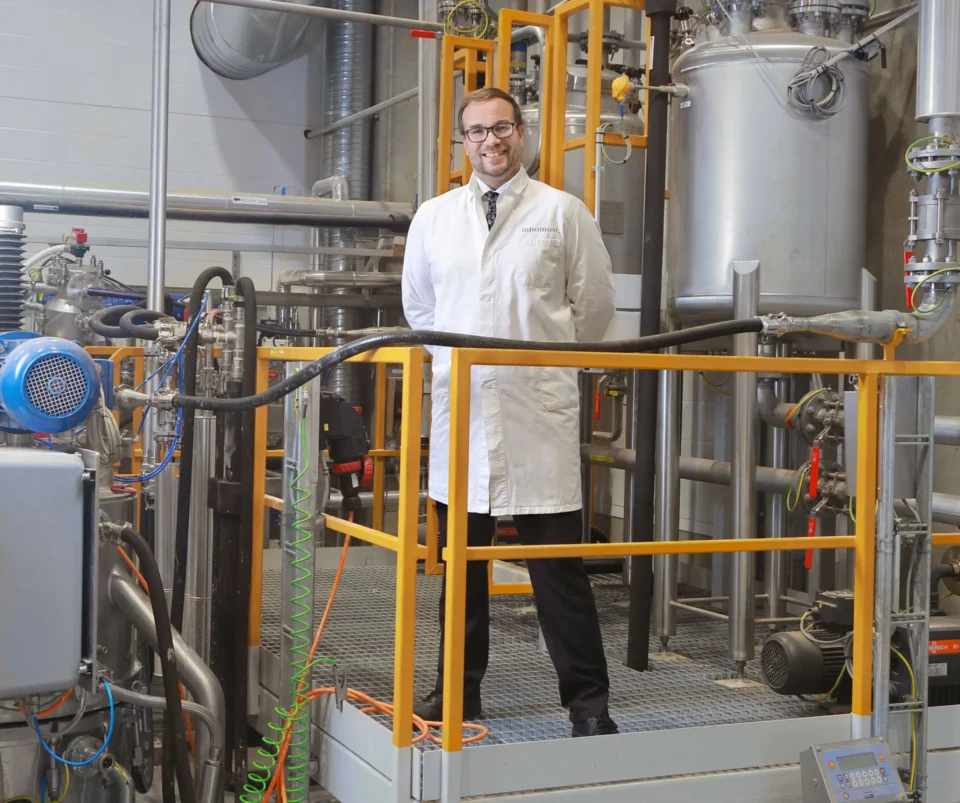
“Replacing fossil-based barrier materials requires more than renewable raw materials. The coating must provide the functionality required by the packaging application and work with different substrates and formulation systems,” says Dr. Sami Selkälä, Founder and CTO of Innomost.
Selkälä presented the technology at the Specialty Papers Europe conference in Vienna, Austria, in September. He is also scheduled to discuss the subject at Sustainability in Packaging Europe in Barcelona, Spain, in October.
Innomost currently manufactures Suberinno™ Suberin at its Kokkola, Finland, facility. The company expects to expand production with an industrial-scale plant over the next two to three years, reflecting wider food and drink industry innovation and the growing adoption of food processing technology across the value chain.
Nature-derived barrier performance for packaging
Suberin is a naturally occurring substance located in plant cell walls. Within birch bark, it forms part of the tree’s defence system, helping protect against moisture, oils, and environmental exposure.
Innomost uses patented processing technology to transform birch bark—an established side stream from the Nordic forest industry—into Suberinno™ Suberin. The resulting bio-based blend of suberin-derived compounds is designed for use in barrier coatings, packaging structures, adhesives, and various industrial applications.
When used in coating formulations, Suberinno™ Suberin may provide moisture protection, resistance to grease, oxygen-barrier performance, hydrophobicity, adhesion, and coating durability. These attributes are relevant to food and drink packaging, where product protection, shelf life, and material efficiency remain central priorities.
The material can serve as the main functional ingredient in selected coating systems or work in combination with organic and inorganic components. This flexibility enables coating formulators, paper and board producers, and converters to tailor film formation, barrier properties, and processing behaviour to specific substrates and end uses.
Potential across food and non-food packaging
Innomost is focusing development of Suberinno™ Suberin on fibre-based food packaging, dry-goods formats, and non-food packaging applications. The approach aligns with emerging food and drink consumer trends, as brands and manufacturers respond to demand for renewable materials, improved recyclability, and effective product protection.
“Suberinno™ Suberin is particularly interesting because it can contribute to coating formulations with moisture, grease, and oxygen-barrier properties in the same material. It can be used as a principal functional component in selected systems or combined with other coating materials to achieve the required performance,” comments Niko Mellanen, CSO of Innomost. Suberinno™ Suberin is being evaluated in different coating and packaging systems with industry partners.
Across the packaging sector, demand for renewable coating solutions continues to grow. Producers are looking to reduce dependence on virgin fossil-based inputs while maintaining performance and supporting more recyclable packaging designs. These priorities are shaping food and beverage industry trends, food distribution trends, and developments in food and drink marketing, where packaging increasingly communicates sustainability as well as product quality.
The EU Packaging and Packaging Waste Regulation (PPWR) will generally apply from 12 August 2026. The regulation establishes requirements for packaging design, material composition, recyclability, and waste management. Its objective is to ensure that all packaging placed on the EU market can be recycled in an economically viable manner by 2030. As food and drink regulations continue to evolve, manufacturers and converters are assessing new food and drink packaging materials that can meet both technical and environmental expectations.