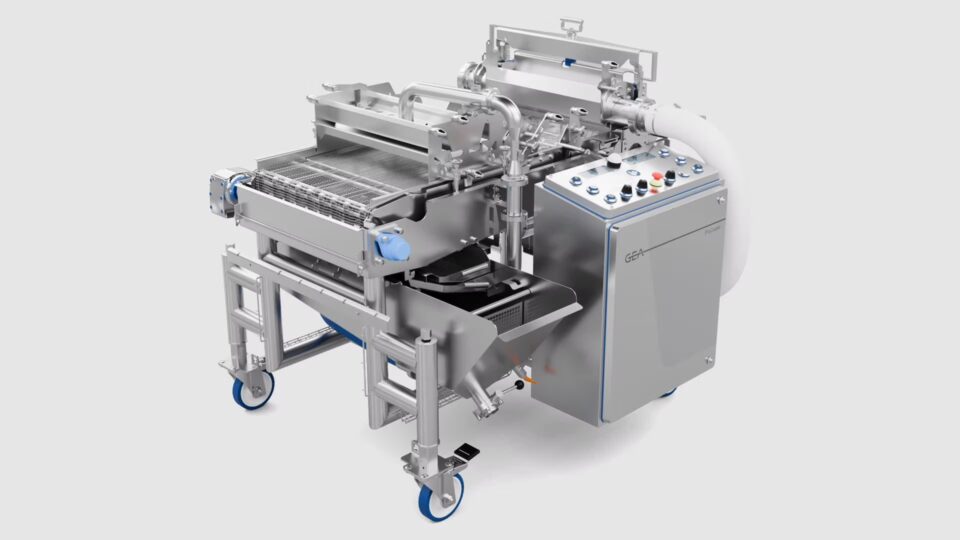
GEA has launched the GEA ProCoater, a next-generation wet coating system designed to give food processors greater batter stability, precise coating pickup, and improved production efficiency.
The machine targets the fast-growing coated convenience food sector, covering poultry, pork, seafood, cheese, plant-based, and hybrid products. It is engineered to address persistent production pressures, including demanding coating formulations, narrow quality specifications, and limited access to experienced operators.
Improved batter stability with less foam
As food and drink consumer trends continue to favour crisp textures, attractive presentation, and new alternative-protein formats, manufacturers need tighter control over the coating process.
The ProCoater achieves this through an innovative, patent-pending guided return flow system. Conventional wet coating operations can draw air into the batter and create foam, disrupting the coating curtain and causing imperfections such as voids and white marks on the finished product.
GEA’s return flow design reduces air entrainment and foam formation by as much as 80 percent. The result is a smooth, stable batter flow and a consistent curtain that supports reliable coating performance over long production cycles and across a broad range of batter viscosities.
Engineering designed for precise process management
The ProCoater combines practical mechanical and pneumatic functions to make operation easier and improve control on the production floor:
- Adjustable scrapers: Operators can make precise corrections while the line is running, eliminating the need for production stoppages during routine adjustments.
- Smart air knives: Even airflow across the entire belt width delivers accurate coating weights and a consistent finished appearance.
- Optimised product entry and positioning: A refined infeed transfer promotes smooth product handling, while a patent-pending batter retention plate and optional bottom-layer batter supply unit support full underside coverage. These features also help keep products correctly aligned and prevent floating or drifting.
Higher yield and lower material losses
Together, these capabilities provide consistent control of the wet coating operation from line start-up through shutdown. Reliable batter application helps limit giveaway, rework, and downgraded products, while more efficient batter use can increase yield and support strong hygiene standards.
With belt widths of 400, 600, and 1000 millimetres, the GEA ProCoater can be configured for different plant layouts, output requirements, and product ranges.
Its development reflects wider food manufacturing trends, including the adoption of advanced food processing technology to improve consistency, labour efficiency, and resource use. It also supports manufacturers responding to food and beverage industry trends, food distribution trends, and growing expectations around food and drink sustainability. By helping companies introduce reliable products efficiently, the system can contribute to food and drink industry innovation while supporting changing food and drink regulations, food and drink packaging requirements, food and drink marketing strategies, and evolving food and drink consumer trends.
“With the GEA ProCoater, we focused on giving processors reliable control over one of the most quality-critical stages in coated food production,” said Ben Kop, application specialist at GEA. “By stabilising batter flow and simplifying adjustment, the machine helps operators achieve consistent results with less intervention and greater confidence.”
GEA also provides application guidance, food technology expertise, and access to its international Technology Centers to help customers implement the equipment successfully. Manufacturers can use these facilities to evaluate products, verify processing conditions, and test new recipes in production-like environments. This approach helps reduce implementation risk when developing and commercialising new coated food products.