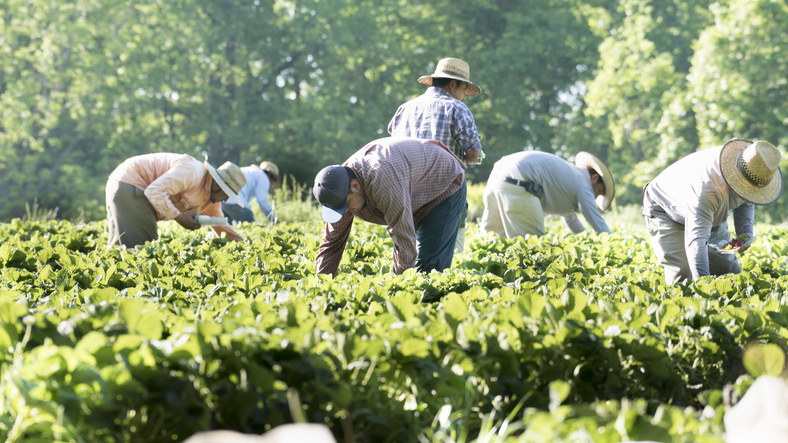
The food and beverage industry is facing significant challenges when it comes to protecting workers from forced labor risks, according to a report from the Business & Human Rights Resource Centre. The analysis highlights the failure of companies in the sector to prevent and address abuses, particularly affecting migrant workers who are often employed in the food and beverage supply chains. Despite six years of benchmarking progress, the sector’s efforts to combat forced labor remain stagnant, which is concerning given the current geopolitical and climate crises.
The report reveals that high-risk commodities such as fish, beans, cattle, coffee, rice, tea, tomato, and wheat frequently report incidents of forced labor and exploitative practices. Companies are also lacking in their implementation of preventative measures, including the support of freedom of association and collective bargaining, incorporating the voices of workers into due diligence processes, and providing adequate remedies for harm caused to workers.
Exploitative recruitment practices are a persistent challenge in the sector, leaving vulnerable workers burdened with debt and struggling. Furthermore, many companies fail to identify and report human rights risks in their supply chains, even when sourcing high-risk products. A significant percentage of companies (37%) have yet to disclose their human rights risk assessment procedures, including major meat companies such as Hormel, JBS, Tyson, and WH Group.
Despite the growing focus on human rights due diligence legislation worldwide, the analysis reveals a lack of consistency in the sector’s efforts to address forced labor exploitation. Only half of the benchmarked companies score above 10/100, a stark contrast to top-performing companies like Tesco and Woolworths. The report also highlights specific companies that have shown minimal improvement over the past six years, including JBS, Tyson, and FEMSA.
Áine Clarke, Head of KnowTheChain and Investor Strategy at the Business & Human Rights Resource Centre, emphasizes the crucial role of workers in the global food system and highlights the need for stronger corporate actions to protect them. She urges companies to adopt a worker-centric approach to due diligence and ensure that workers and other stakeholders are involved in the design and implementation of risk assessments, grievance mechanisms, and supplier monitoring processes.
To address labor abuses in their supply chains, food and beverage manufacturers can explore cooperative models, responsible and sustainable sourcing, and Human Rights Impact Assessments. Ethical sourcing initiatives, such as Princes’ efforts to tackle the exploitation of migrant workers in southern Italy by signing pre-harvest tomato supply contracts, can also contribute to combating the problem.
Clarke warns that the cost-of-living crisis is exacerbating the gap between the sector’s profit margins and the working conditions of those who contribute to those profits. With the increasing momentum behind human rights due diligence legislation, companies must act swiftly to address forced labor risks in their supply chains to avoid legal, financial, and reputational consequences.
In summary, the food and beverage industry must prioritize the protection of workers and take decisive actions to combat forced labor risks. By adopting a worker-centric approach and actively involving key stakeholders, companies can ensure that their supply chains uphold human rights standards and contribute to a more responsible and sustainable industry.