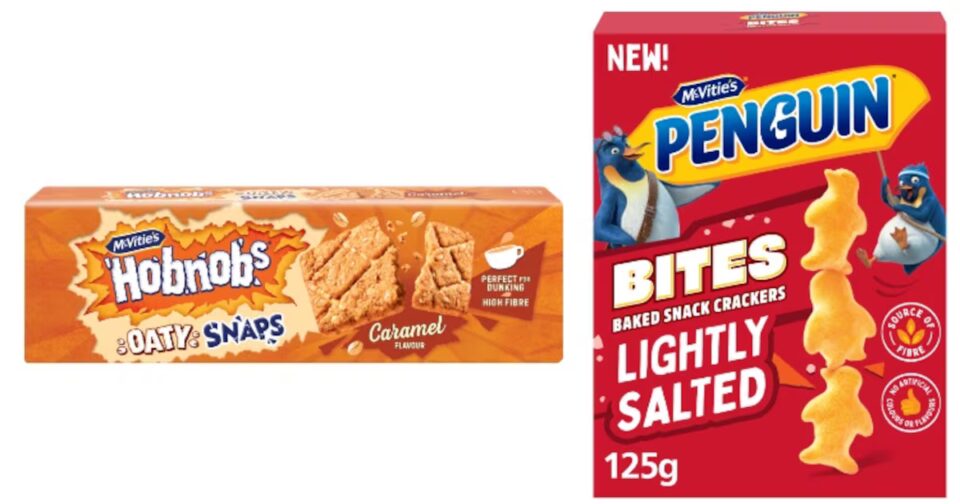
Pladis has committed to achieving a goal by 2030 to significantly increase the sales of products that contain reduced levels of sugar, salt, and saturated fats, while enhancing the presence of beneficial nutrients like fibre and protein. Presently, these healthier options represent approximately 10% of the company’s total sales volume.
The snack manufacturer plans to fulfill this promise through the reformulation of current recipes, the introduction of new products, and the growth of already compliant ranges. So far, Pladis has successfully eliminated 676 tonnes of sugar from its UK recipes, which is roughly equivalent to 169 million teaspoons.
This initiative comes in response to a rising demand for healthier food and beverages. According to recent data from Lumina Intelligence, there has been a notable increase in the number of individuals identifying as ‘very health led’, with a 2.8 percentage point rise over the past five years.
Additionally, the introduction of GLP-1 has played a role in this shift, encouraging consumers to embrace what is often termed ‘snackification’—the trend of replacing standard meals with smaller, more frequent, nutrient-rich mini-meals.
However, as Dr. Jennifer Moss, Chief R&D Officer at Pladis, noted, flavor remains paramount.
“People don’t buy biscuits and chocolate because they’re looking for a lecture on nutrition – they buy them because they enjoy them. Great taste will always come first,” she asserted.
She added, “What is changing is that consumers increasingly want more choice. They want products that fit their lifestyles and wellbeing goals, but they still expect the same great taste.”
Dr. Moss further emphasized, “We believe the brands that succeed in the future will be the ones that can deliver both. That’s why we’re committed to giving consumers more options while continuing to provide the enjoyment that has always been at the heart of our brands.”
This perspective was also echoed by Suzanne Allers from Untapped Innovation.
“As more brands reformulate to meet non-HFSS targets, we’re likely to see even greater emphasis on flavour, texture and the overall eating experience, making healthier options feel less like a compromise and more like a positive choice,” she stated in an interview with Food Manufacture.
To reinforce its mission for 2030, Pladis has established a comprehensive global nutrition framework that will steer the development, reformulation, and marketing of its product lineup.
Formed by the company’s scientific team, this framework incorporates globally recognized nutritional standards, including France’s Nutri-Score, Australia’s Health Star Rating, and the UK’s Nutrient Profile Model (HFSS).
The framework will be applied to all of Pladis’ offerings and strives to maintain a balanced approach to nutrition. It evaluates both the nutrients that consumers are encouraged to increase, such as fibre and protein, as well as those they often aim to minimize, including salt, sugar, and saturated fat.
Pladis aims to elevate the volume of its ‘nutritionally balanced’ products from the current 10% to 20% by 2030 as part of its ‘Happy People, Happy Planet’ global sustainability initiative.