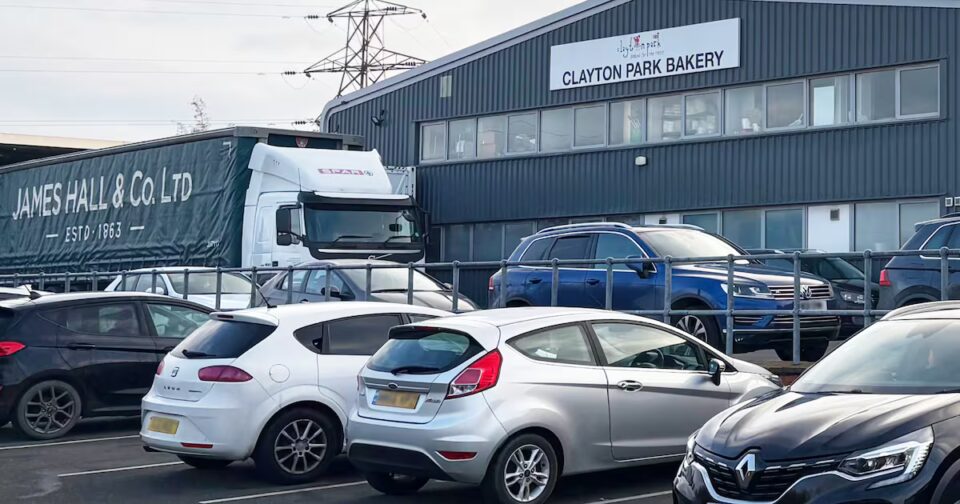
Clayton Park Bakery is set to more than double production capacity at its Clayton-le-Moors manufacturing site near Blackburn.
The expansion will be funded by parent company James Hall & Co, with the upgraded facility scheduled for completion in autumn 2027, according to sister publication British Baker.
The investment is designed to support business growth and broaden the bakery’s product range, which spans bread, morning goods, fresh cream cakes, ambient confectionery, pies and other savoury lines. Clayton Park Bakery currently manufactures more than eight million products each year.
The project will also bring a former warehouse across from the company’s existing 20,000 sq ft premises on Petre Road into operation. The move reflects wider food and beverage industry trends, including the need for manufacturers to expand capacity, adopt food processing technology and respond to changing food and drink consumer trends.
Barry Thomas established Clayton Park Bakery in 1995, initially making sausage rolls and meat pies for his family’s market stall, which traded three days each week.
The business relocated to its current site in 2005 after winning supply agreements with sports clubs, including Liverpool FC and Preston North End, along with cafés, schools and hospitals throughout the North West. Its customer base also includes regional Booths, Spar and Asda stores.
James Hall & Co acquired the bakery in 2011, and Clayton Park Bakery opened a second facility in Huncoat two years later. The company now employs approximately 200 people across both sites.
“It is over a decade since our last major expansion, and the time was right to expand again as we have outgrown the existing Huncoat site and need to keep up with customer demand,” commented founder and managing director Barry Thomas.
“This move will help us streamline our current morning goods and bread operation while enabling us to invest in technology and improve our efficiency.”
The development comes against a backdrop of evolving food manufacturing trends and food distribution trends, with producers also balancing food and drink sustainability, food and drink regulations, food and drink packaging requirements, food and drink marketing priorities and wider food and drink industry innovation.