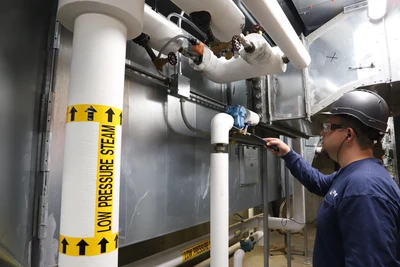
American Plant Maintenance (APM Steam), a trusted provider of steam system maintenance services, offers comprehensive steam trap surveys for food and beverage manufacturers. These assessments establish a detailed steam trap inventory, locate failed or underperforming units, and reveal trap station conditions that limit heat transfer and interfere with effective condensate removal.
Steam is widely used in commercial buildings and manufacturing operations for heating and process applications. However, steam systems can lose as much as 20% of their energy through leaks, with defective steam traps representing one of the most common causes. The US Department of Energy reports annual failure rates of approximately 15-20% even in properly maintained facilities. Where traps have gone several years without maintenance, failure rates may reach 50%.
In food manufacturing environments, steam trap problems can affect several important operational objectives. A failed trap may undermine temperature consistency during thermal processing, creating a food safety concern under FSMA requirements. These failures can also contribute to unexpected production line interruptions, schedule delays, and lower plant efficiency. As energy prices continue to rise and food and beverage companies work to reduce carbon emissions, improving steam system performance is increasingly important for facilities that depend on energy-intensive processes such as cooking, pasteurization, and sterilization.
APM Steam technicians use ultrasound testing and temperature differentials to assess each trap and record its operating condition. The resulting survey report includes a complete inventory, detailed system data, identified deficiencies, recommended actions, a summary of findings, and a return-on-investment analysis. This calculation compares the cost of replacing failed traps with the ongoing energy losses those failures create.
Technicians also inspect the components around each steam trap, including isolation valves, inlet strainers, check valves, bypass lines, and test valves. This broader review helps identify conditions that may affect repair safety, complicate access, or make a facility shutdown necessary.
For straightforward identification, every surveyed trap is fitted with a numbered stainless-steel tag. Survey records capture the trap’s location, application, operating steam pressure, manufacturer, model, pipe size, temperature readings, and installation characteristics. The documentation can also identify access limitations, confined-space requirements, and other factors that may influence future maintenance work.
The ROI analysis accounts for survey expenses, replacement trap costs, and labor, then compares those investments with the financial impact of failed units. Facility managers can use the projected payback period to prioritize steam system repairs, and many plants find that these projects recover their costs in under 12 months.
For more information, visit https://www.apmsteam.com/pages/services.