Industry Insight: Fruit and vegetables have always presented food manufacturers with a problem that many other raw materials do not: they refuse to behave like manufactured components.
A crop cannot simply be ordered to arrive on Tuesday at a predefined size, quality and quantity. Temperature affects growth. Rain alters harvesting schedules. Drought changes yield. Disease can emerge during storage. Labour availability determines how quickly produce leaves the field, while a few days of unexpected heat can bring an entire crop forward.
That unpredictability is becoming commercially more important.
For processors, packers and retailers, variability at farm level can quickly translate into idle processing capacity, emergency procurement, additional labour, wasted packaging, rejected produce or missed customer orders.
The next phase of fresh-produce technology is therefore less about futuristic farming and more about connecting agriculture with manufacturing.
The objective is increasingly simple: know what is coming, protect as much of it as possible and find a profitable destination for more of what is grown.
Heat, water pressure, labour availability and volatile imports are making fresh produce harder to predict. For growers and manufacturers, the response is moving beyond simply producing more. Crop forecasting, robotics, precision breeding, intelligent grading and better storage are creating a supply chain built around one increasingly important measure: reliable, saleable output.
Plenty on Paper: Domestic Production Still Masks Supply Exposure
UK vegetable production delivered a strong headline performance last year.
Defra’s latest horticulture statistics show domestic vegetable output increased by 8% to 2.6 million tonnes, accounting for around 56% of total UK supply.
Fruit tells a very different story.
UK growers produced 577,000 tonnes, but home production represented only around 14% of total supply. Fruit imports increased by 8.2% to almost 3.6 million tonnes and cost close to £5 billion.
For food manufacturers, that creates two different resilience challenges.
Vegetable processors have a substantial domestic production base but remain exposed to weather, water availability and labour within concentrated UK growing regions. Fruit businesses are additionally dependent on international growing conditions, shipping, border movements, currency and competition for supply.
Neither can be solved simply by demanding more production.
Defra’s figures demonstrate how dramatically individual crops can move within a single season. Weather can benefit one category while severely damaging another, while increased biological yield does not necessarily translate into increased marketable output.
The commercial question is therefore changing from how much can we grow? to how much usable product can we reliably deliver?
That distinction is driving investment throughout the chain.
Water Becomes Capacity: Irrigation Moves Into Production Planning
Water is an environmental issue, but for horticulture it is increasingly a capacity issue.
Prolonged dry conditions through the 2025 growing season made irrigation access critical for many UK vegetable crops. In some areas, abstraction restrictions forced changes to growing plans and contributed to poorer establishment and lower yields, particularly on unirrigated land.
Heat and dry conditions have remained a major concern through this year’s growing season.
That changes the economics of water technology.
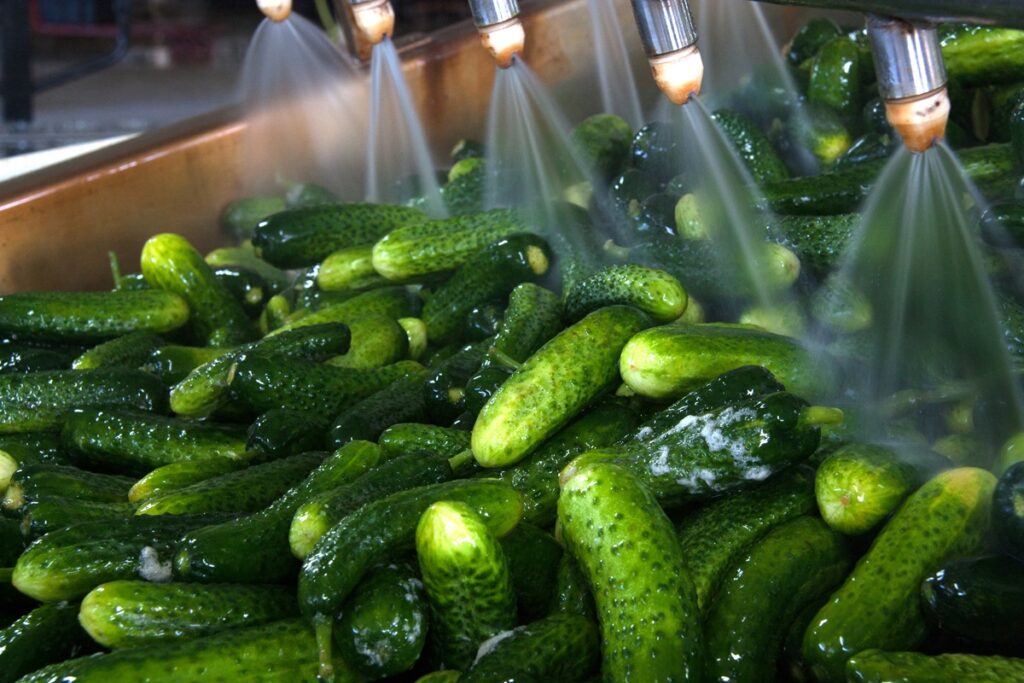
Precision irrigation is no longer simply about demonstrating that fewer litres have been used. Soil-moisture probes, local weather stations, flow monitoring, crop models and automated irrigation controls allow growers to target water according to actual crop requirement.
Done well, the return can appear in several places.
Correct irrigation can improve uniformity, protect crop size, reduce stress, avoid unnecessary pumping and improve the proportion of produce meeting specification.
For manufacturers contracting significant volumes of vegetables, salad crops or soft fruit, irrigation resilience can consequently become part of supplier assessment.
Reservoir capacity, abstraction licences, boreholes, water recycling and local availability may increasingly influence which growers can provide dependable volume during difficult seasons.
The factory may be miles from the field, but its production capacity can still depend on whether that field has enough water.
See the Crop Coming: Forecasting Connects Field and Factory
One of the most valuable technologies in fresh produce may turn out to be the ability to see the harvest before it happens.
Traditionally, processors have relied heavily on grower experience, field inspections and historic timings to predict crop availability.
Those skills remain essential, but they are increasingly being supplemented by data.
Satellite imagery, drones, weather feeds, field sensors, machine vision and crop-growth models can build a continually changing picture of crop development.
Artificial intelligence can then identify patterns that would be difficult to detect manually across hundreds or thousands of hectares.
The important step, however, comes after the prediction.
A forecast that remains inside farm-management software has limited value to a processor. Connect that forecast with procurement, production planning and logistics, and it becomes operational intelligence.
Earlier warning that a crop is likely to mature five days ahead of schedule can allow a factory to change labour plans, alter line schedules, secure packaging and reorganise transport.
An anticipated shortfall can trigger alternative sourcing before the market tightens.
A larger-than-expected crop can be matched with additional processing capacity or secondary markets before produce begins deteriorating in the field.
Agricultural data therefore starts to function much like demand forecasting elsewhere in manufacturing.
The crop is still variable. The difference is that the business has more time to react.
Robots Earn Their Keep: Automation Targets Labour, Timing and Damage
Labour remains one of horticulture’s defining operational pressures.
The UK Seasonal Worker route provides a quota of 41,000 horticultural places this year, illustrating the continuing scale of the industry’s requirement for seasonal labour.
At the same time, government policy is clearly encouraging a more automated future.
A new £20 million Farming Futures Automation and Robotics competition opened in August, targeting technologies capable of operations including planting, crop management and harvesting.
But horticulture remains a particularly difficult environment to automate.
Fruit and vegetables vary naturally in size, colour, position and ripeness. Crops may be obscured by leaves, covered in soil or moving in wind. Equipment also has to avoid damaging the very product it is trying to harvest.
Machine vision and AI are steadily improving that capability.
Rather than expecting autonomous machines immediately to replace an entire picking workforce, some of the most commercially realistic systems attack individual labour-intensive tasks.
Autonomous platforms can transport produce from pickers to collection points. Vision systems can count fruit and assess maturity. Robots can undertake repetitive weeding or crop-monitoring operations. Automated harvesting is becoming increasingly practical where varieties and growing systems have been designed around mechanisation.
The calculation nevertheless has to remain commercial.
Picking speed, uptime, supervision, damage rates, maintenance and cost per kilogram matter far more than whether a machine makes an impressive demonstration.
For processors, there is an additional prize.
More controlled harvesting can potentially provide better information about the crop while reducing handling damage before produce reaches the packhouse.
Automation becomes not simply a labour solution but another tool for protecting saleable yield.
Breed for the Process: Crop Genetics Moves Closer to Manufacturing
Machinery is only one side of the automation equation.
The crop itself can change too.
England’s precision-breeding framework became operational in November 2025, creating a regulatory pathway for plants developed using techniques such as gene editing where the resulting genetic change could also have arisen naturally or through traditional breeding.
Release and marketing notices are now appearing on Defra’s precision-breeding register, although commercial food use remains at an early stage and precision-bred food and feed must meet separate authorisation requirements.
The potential implications for fruit and vegetable processing are considerable.
Much discussion understandably concentrates on agronomic characteristics such as disease resistance, drought tolerance or improved yield.
Manufacturers may be equally interested in traits that appear further downstream.
A vegetable with more consistent dimensions may pass through automated trimming or slicing equipment more efficiently.
Fruit that bruises less easily could survive mechanical harvesting and transport with lower losses.
Improved storage characteristics could extend processing windows.
More uniform maturity could make harvesting automation easier.
Better resistance to heat or drought could reduce variation between contracted volume and delivered volume.
That creates the possibility of crop breeders, growers and equipment manufacturers designing future production systems together.
Rather than adapting machinery to whatever biology produces, varieties could increasingly be selected partly because they suit automated harvesting, handling and processing.
Sort for Value, Not Perfection: Intelligent Grading Protects Margin
The moment produce reaches the packhouse, another important calculation begins.
How much of what has been grown can actually be sold?
That question makes inspection and grading technology increasingly significant.
Camera systems, optical sorters, near-infrared technologies and AI-assisted vision can assess characteristics such as dimensions, colour, shape, surface condition and internal quality at high speed.
The benefit is not simply removing bad product.
Greater consistency can prevent acceptable produce from being unnecessarily rejected.
Defra’s latest figures provide a striking example. Onion growers experienced severe fusarium and bacterial storage rots, with losses reaching as much as 15% in some cases. The response included increased adoption of optical grading to identify quality problems and reduce the risk of rejection further down the chain.
This type of technology also creates an opportunity to rethink specifications.
Traditionally, produce has often been divided into relatively simple categories: acceptable or rejected, retail or processing grade.
More sophisticated grading makes considerably more segmentation possible.
A cosmetically perfect vegetable may be directed towards fresh retail. A different size can enter prepared foods. Misshapen produce can be diverted into chopping, pureeing, juicing, sauces or ingredients.
The aim becomes extracting the highest possible value from each piece of produce rather than trying to force an entire crop through one specification.
That is an important distinction for waste reduction.
A manufacturer does not necessarily need a perfect carrot.
It needs a carrot that is suitable for the operation it is about to perform.
Keep Quality Alive: The Cold Chain Starts Before the Factory
Once fruit or vegetables are harvested, time becomes another raw-material cost.
Respiration continues. Moisture is lost. Texture changes. Microbial activity progresses. Temperature abuse at any stage can reduce remaining shelf life before the manufacturer has even received the product.
That is why cold-chain management is increasingly moving from passive refrigeration towards active condition monitoring.
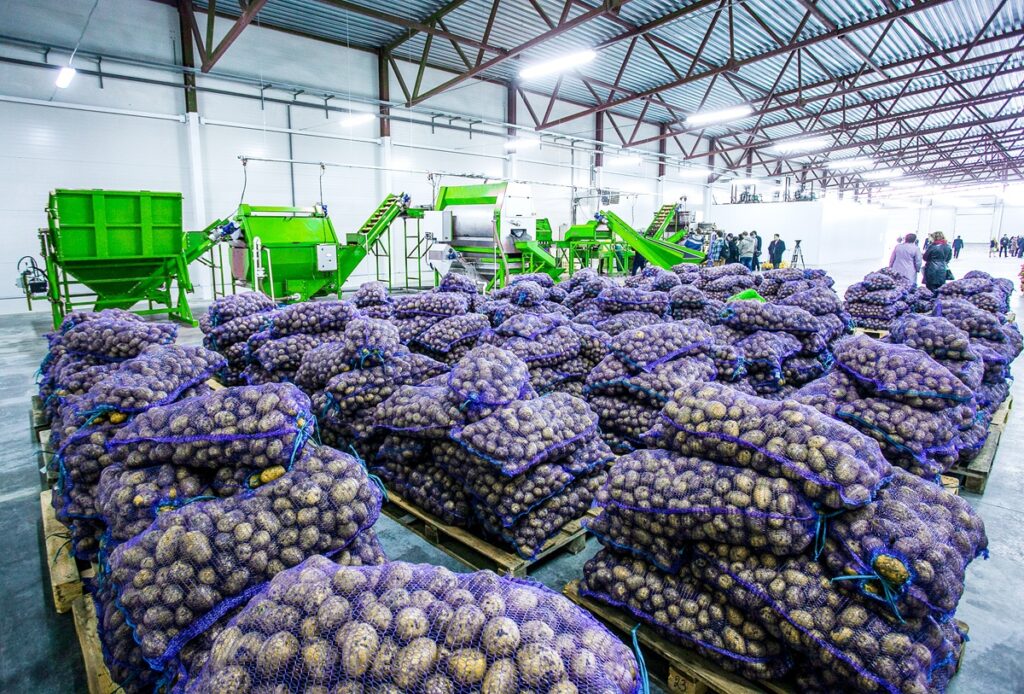
Temperature sensors and connected data loggers can provide a continuous record through storage and transport. Controlled and modified atmospheres can slow physiological deterioration for appropriate crops, while humidity and ethylene management can extend storage life and protect quality.
For processors, better storage creates operational flexibility.
If raw material maintains specification for longer, factories gain a wider window in which to schedule production.
That can reduce the need to run lines purely because a crop is deteriorating, allow better coordination between growers and processing sites and provide additional time when unexpected volumes arrive.
The important point is that shelf life does not begin when the finished pack leaves the factory.
Much of it has already been won or lost before the raw material reaches the intake area.
Connecting pre-harvest conditions, harvest timing, storage data and processing information could therefore become an increasingly valuable part of quality management.
Contract for Resilience: Procurement Moves Closer to the Farm
Technology alone cannot remove fresh-produce volatility.
Commercial relationships matter just as much.
If manufacturers want growers to invest in irrigation reservoirs, robotics, specialist varieties, protected growing systems or new storage, those growers need confidence that there will be a market for the resulting crop.
That is pushing the resilience debate towards procurement.
Longer-term agreements can give producers greater certainty to invest, while manufacturers can gain improved visibility over future supply.
Contracts can also evolve beyond simply agreeing a price and tonnage.
Variety selection, anticipated harvest windows, quality requirements, contingency arrangements and data sharing can increasingly form part of the relationship.
Manufacturers may also need to reconsider whether historically rigid cosmetic specifications always produce the best commercial outcome.
Where processing equipment can accept natural variation, widening a specification may recover more value from the crop without compromising the finished product.
Equally, linking growers with multiple processing destinations creates options when produce does not meet its original specification.
Resilience therefore does not necessarily mean creating surplus inventory.
Fresh produce rarely allows that luxury.
It means creating more options before something goes wrong.
Profit per Saleable Kilo: A Better Measure of Horticultural Productivity
Fruit and vegetable production will always retain an element of unpredictability.
No sensor can stop a heatwave. No algorithm can guarantee rainfall. Robotics cannot prevent every disease outbreak, and precision breeding cannot remove biological variation.
What technology can change is how much uncertainty passes uncontrolled through the supply chain.
Earlier crop forecasts give factories more time to react.
Better irrigation protects yield and quality.
Automation addresses labour-intensive bottlenecks.
Improved crop genetics can make production more resilient and processing more consistent.
Intelligent grading finds greater value within variable harvests.
Better storage protects the crop once it has been picked.
The common measure connecting all of them is not maximum tonnes per hectare.
It is saleable kilograms delivered at a commercially viable cost.
For senior decision-makers in fresh produce, processing and retail, that may prove to be the defining metric of the next phase of horticultural technology.
The smartest supply chain will not necessarily be the one that grows the most.
It will be the one that knows what is coming, protects what it grows and wastes the least opportunity between field and factory.
What are the biggest challenges facing UK fruit and vegetable production?
The principal challenges include extreme weather, water availability, seasonal labour shortages, rising energy and input costs, crop disease and volatile international supply. Fruit is particularly exposed to imports, while many vegetable-growing regions face increasing pressure around irrigation and water security. Growers are responding through automation, improved forecasting, protected cropping, precision agriculture and more resilient crop varieties.
How can robotics improve fruit and vegetable production?
Robotics can automate or support labour-intensive operations including planting, crop monitoring, weeding, transportation and harvesting. Machine vision and artificial intelligence allow equipment to identify crops, estimate maturity and perform increasingly selective operations. The strongest commercial cases focus on cost per kilogram, reliability and productivity rather than simply replacing workers.
What is precision breeding and why is it important to horticulture?
Precision breeding uses modern biotechnology, including gene-editing techniques, to create genetic characteristics that could also have occurred through traditional breeding. England now has a regulatory pathway for precision-bred plants. Potential horticultural applications include disease resistance, climate resilience, improved shelf life, better quality and crop characteristics suited to automated harvesting and processing.
Is vertical farming still commercially viable?
Vertical farming can be viable for appropriate crops and business models, but recent company failures demonstrate that high yield per square metre is not enough. Energy use, capital costs, labour, crop value, automation and facility utilisation all influence profitability. Future projects are likely to focus more closely on energy efficiency, location and high-value crops.
How can food processors make fruit and vegetable supply chains more resilient?
Processors can improve resilience by working more closely with growers on crop forecasting, specifications, varieties and production planning. Digital crop monitoring can provide earlier warnings of changes in yield or harvest timing, while flexible grading can direct different qualities of produce to the most appropriate application. Longer-term relationships can also support investment in irrigation, automation and protected growing systems.