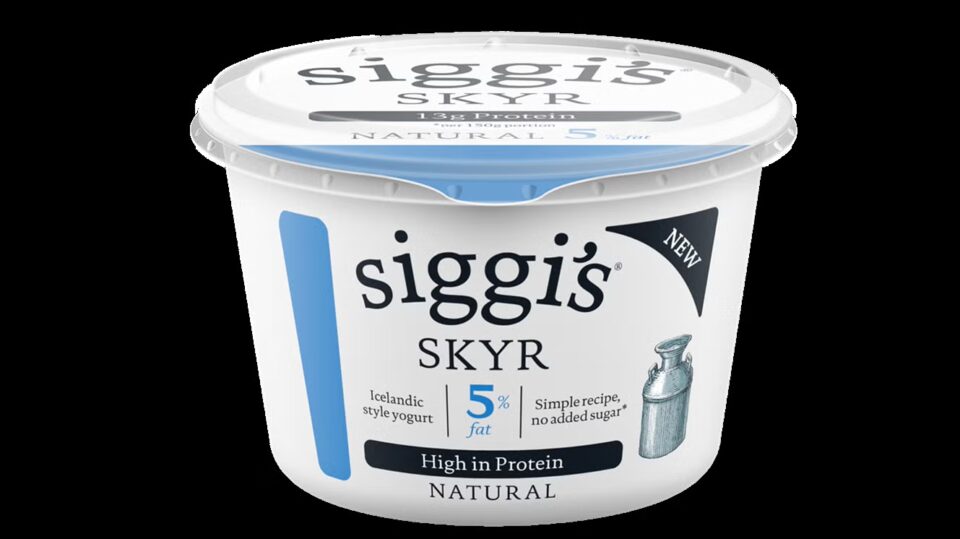
Lactalis is introducing a new range of skyr products under its Siggi’s brand in the UK, capitalizing on growing trends in the food and beverage industry. The French dairy powerhouse aims to secure a foothold in this increasingly competitive segment with its distinctive recipes.
With consumers prioritizing the role of protein in their diets, there is heightened interest in how this nutrient is sourced. “There is a clear demand for what many describe as ‘clean protein’ products made with simple, recognisable ingredients and without artificial additives,” noted Siggi’s senior brand manager, Lise Chevallier, in an interview with Just Food.
Lactalis is launching four SKUs produced in France: two 450g pots—one with 0% fat and another containing 5%—alongside two 140g multipacks. Priced at £3.25 ($4.39) for the 450g pots at Morrisons, the multipacks are available for £2.50. In a competitive landscape, Lactalis claims its products deliver “50% more protein and 30% less sugar than other yogurts”.
Chevallier emphasized, “Siggi’s is ideally placed to meet this demand, offering a naturally high-protein skyr yogurt made with simple ingredients, less sugar than other flavored yogurts and no artificial flavorings, colorings, sweeteners or preservatives.” Lactalis acquired the Siggi’s brand in 2018, and its products are currently available in France, Belgium, the US, Canada, and Australia.
Additionally, the rising trend of GLP-1 weight-loss drugs among UK consumers is fueling interest in protein-rich food options. Recent research from IGD revealed that the percentage of UK adults on this medication has surged to 6%—nearly double the rate from nine months ago.
The study highlights that “more affluent mid-life women are the main group driving GLP-1 usage” in the UK. Meanwhile, individuals aged 18 to 24 and those over 65 show the least engagement with these medications. The IGD’s survey indicated that these drugs are “actively reshaping” food preferences.
Interestingly, nearly 60% of users report a decreased desire for fatty foods, while almost half have noticed a similar trend with sweet foods. However, over a quarter of respondents are increasingly drawn to sweet or creamy options, signaling a complex shift in consumer behavior.
As the IGD points out, the results stem from ongoing monthly polling involving over 2,000 “nationally representative” UK shoppers. This nuanced data presents both opportunities and challenges for product developers in the food and drink business.