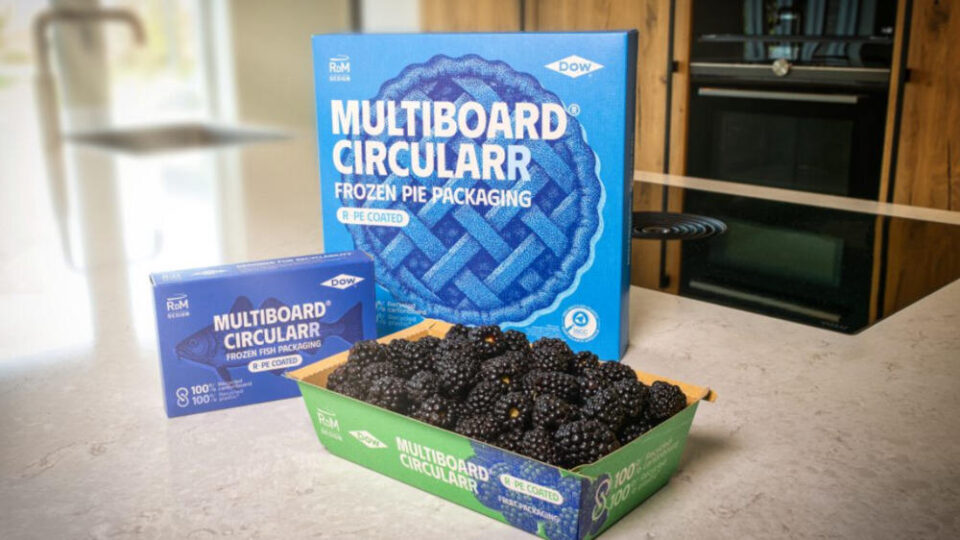
A groundbreaking partnership between RDM Group, the foremost producer of recycled cartonboard in Europe, and the materials science leader Dow has led to the development of a revolutionary fibre-based packaging solution for the food industry. This innovation addresses a long-standing issue: the challenge of balancing recycled content with high-efficiency barrier protection.
This collaboration introduces an unparalleled approach for food and beverage manufacturers, employing cartonboard created entirely from recycled fibres complemented by a barrier coating produced from recycled plastics. This advancement signifies a major step forward for manufacturers striving to meet rigorous sustainability objectives while adhering to the strict safety standards inherent in the food sector.
Traditionally, the integration of recycled fibres in food-contact packaging faced obstacles due to the necessity of strong barriers to prevent contamination and keep products fresh. These barriers often relied on virgin plastics or aluminium, which complicated the end-of-life recycling process.
The joint effort between RDM and Dow effectively merges two separate recycling streams. RDM Group supplies the premium recycled cartonboard foundation, while Dow imparts its polymer science knowledge to develop a barrier coating sourced from post-consumer recycled (PCR) plastics. Utilizing Dow’s REVOLOOP technology, this partnership guarantees that the entire packaging framework—consisting of both the substrate and its protective layer—is inherently circular.
For food and beverage brands, this innovation creates an opportunity to align growth with reduced reliance on virgin materials, all without sacrificing shelf life or structural strength. A key benefit is the material’s compatibility with existing packaging lines, enabling manufacturers to enhance their environmental footprint without the need for substantial investment in new equipment.
Moreover, this collaboration addresses the implications of the Plastic Packaging Tax and the EU’s Packaging and Packaging Waste Regulation (PPWR). By integrating recycled plastic into the barrier coating, manufacturers can notably minimize their tax burdens, appealing to an expanding segment of environmentally conscious consumers who closely examine packaging labels for claims of recycled content.
By demonstrating that recycled plastic barriers can effectively function on recycled fibre bases, this partnership encourages other manufacturers to rethink their reliance on monomaterials. It challenges them to investigate how hybrid, recycled-content structures can safeguard food products while ensuring complete recyclability.