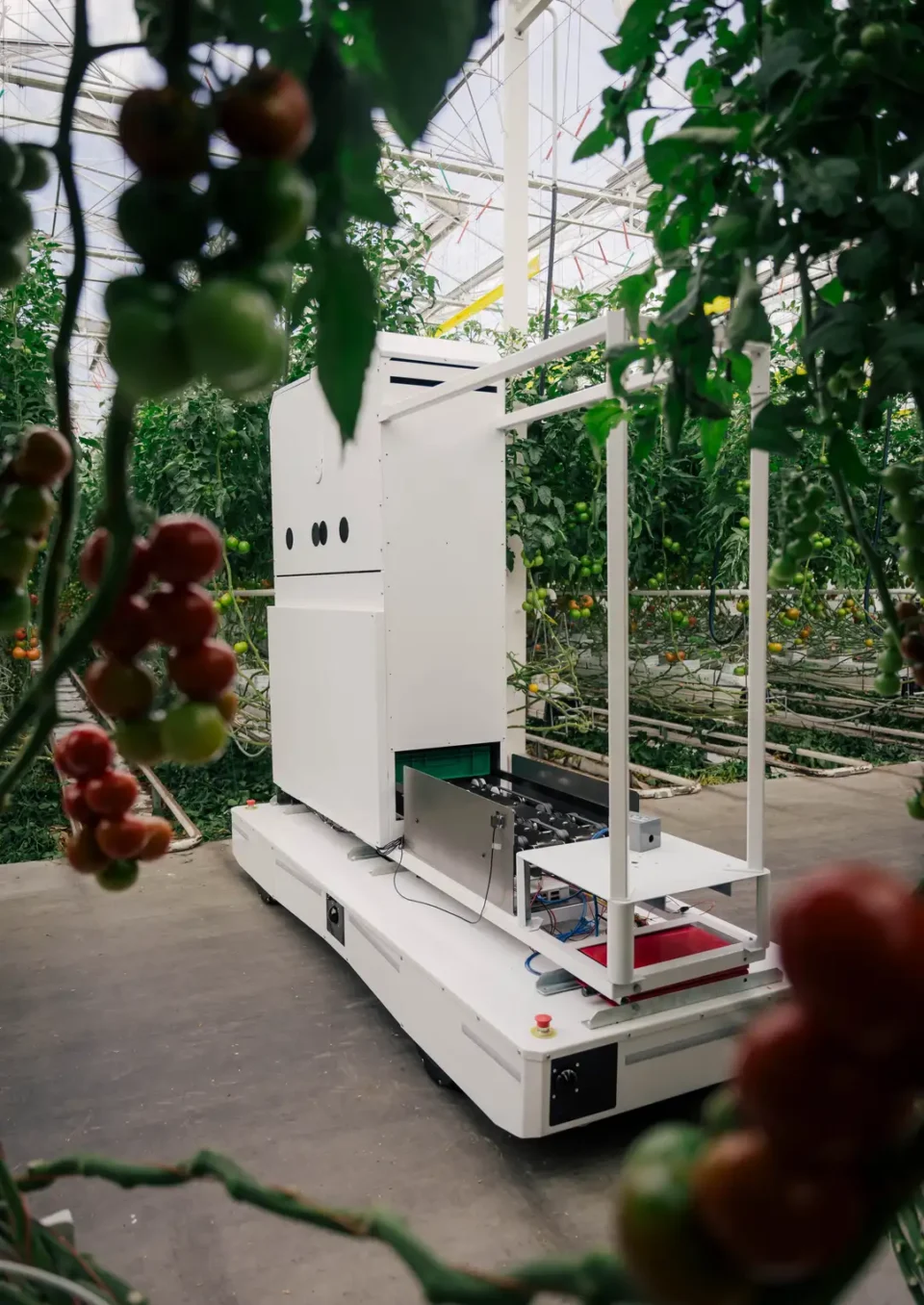
German robotics startup eternal.ag has secured €8m in funding to accelerate the development of autonomous harvesting systems for greenhouse agriculture.
The investment round was supported by Simon Capital, Oyster Bay Venture Capital, EquityPitcher Ventures and Backbone Ventures, reflecting growing interest in automation technologies aimed at addressing labour challenges in food production.
Eternal.ag is developing robotic systems capable of carrying out greenhouse tasks without human intervention, targeting a sector increasingly affected by labour shortages. Across Europe, the availability of greenhouse workers has declined steadily over the past decade, with further constraints expected.
The company’s technology is focused on automating labour-intensive harvesting processes, enabling growers to improve consistency and extend operational hours. Its first commercial solution, Harvester, has been designed specifically for tomato crops and can operate for up to 22 hours per day. The system uses artificial intelligence to optimise picking accuracy and maintain consistent quality.
“Autonomous robots only work if they can handle real-world variability between plants, layouts, and daily operations,” said Renji John, CEO and co-founder of eternal.ag. “We develop and validate our robots using simulation-first development. That allows us to train, test, and fail safely in virtual greenhouses – cutting iteration cycles from months to days. Once deployed, every robot action feeds data back into the system, which is designed to learn, improve and scale.”
Built as a modular platform, the technology is designed to expand over time, supporting additional crop types and operational functions. The newly secured funding will be used to scale deployments across Europe, accelerate product development and broaden the system’s application to a wider range of produce.
Founded by Renji John and Sherry Kunjachan, eternal.ag employs 26 people across Europe and India, with headquarters in Cologne and an additional base in Bengaluru. The company’s long-term goal is to enable fully automated greenhouse operations by 2040.