


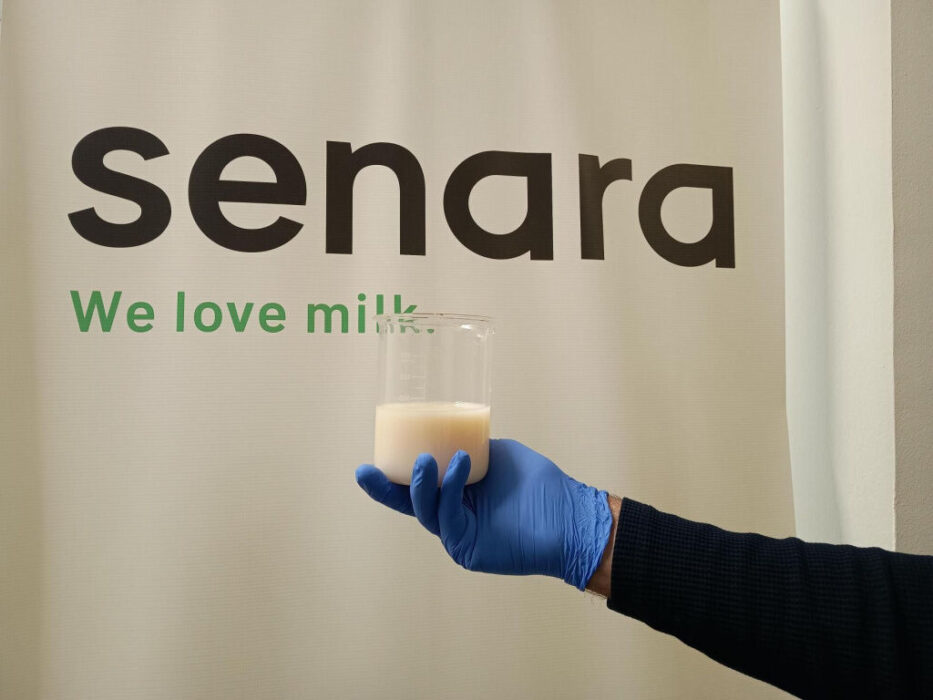
German biotechnology company Senara has received an undisclosed investment from Dutch regional development organisation LIOF to open a second location in Maastricht. The funding will support the start-up’s efforts to move cell-cultivated milk from laboratory development toward commercial-scale manufacturing.
Announced on 23 October 2026, the expansion places the Freiburg-based business within Limburg’s rapidly developing cellular agriculture network. It also highlights how advances in food processing technology could reshape dairy ingredient production and influence wider food manufacturing trends.
Dairy production without livestock
Established in 2022 by Dr Svenja Dannewitz and Dr Philipp Prosseda, Senara produces milk by growing animal cells inside bioreactors. The cells release milk in a process that replicates what naturally occurs in a cow’s udder.
Rather than taking cells directly from an animal, Senara obtains them from fresh milk and grows them in a proprietary bioreactor system. The resulting milk includes lactose, casein, whey and micronutrients. It is also produced without genetically modified organisms, bacteria or yeasts typically associated with milk spoilage.
“We don’t want to change milk; we want to improve the way it is produced,” Dannewitz said. She explained that the approach may reduce land and energy requirements compared with traditional dairy farming, while also making supply chains shorter. In the longer term, farmers could potentially run bioreactors on their own farms, allowing them to remain part of the food system as alternative production models develop.
Maastricht expansion supports pilot ambitions
LIOF’s investment will connect Senara with specialist expertise, skilled employees, facilities and commercial partners in Maastricht. The company is also assessing the possibility of establishing a pilot production plant in the city and has opened a new funding round to help finance its plans. The value of LIOF’s investment has not been revealed.
The partnership supports LIOF’s broader objective of bringing international businesses into Limburg’s cellular agriculture cluster. “Senara is among the European frontrunners in cell-cultivated dairy and has the ambition to grow internationally,” said Annemoon Borst, investment manager at LIOF. “Limburg brings together specialised knowledge, entrepreneurship, investment capital and scale-up infrastructure”.
Limburg has developed significant expertise in cellular agriculture over the past decade. Maastricht hosted the development of the first cultivated hamburger, while the region is now home to Maastricht University, Brightlands Maastricht Health Campus, Mosa Meat and the open-access Cultivate at Scale facility. Together, these assets strengthen the region’s position in food and drink industry innovation.
Developing a route to market
Senara is collaborating with food manufacturers around the world to explore uses for its ingredients in products such as ice cream, cheese and panna cotta. The company believes its first products could appear on supermarket shelves within several years. Its platform may also be tailored to particular nutritional requirements, including milk with a higher A2 protein content or lactose-free formulations. Eventually, the technology could be adapted to produce milk from goats, buffalo, sheep and other animals.
Senara is also developing applications for cosmetics and skincare. These markets may provide an earlier commercial opportunity because novel food products generally face more demanding approval processes. By pursuing both sectors, the company could generate revenue and gain valuable scale-up experience while navigating food and drink regulations.
The Maastricht project suggests that cell-cultivated dairy is progressing beyond research announcements and into the development of practical manufacturing infrastructure. Senara is already operating a 100-litre pilot bioreactor and has previously outlined plans to install an industrial-scale unit by 2028. If achieved, the industry’s focus will increasingly move away from proving the technology and toward understanding how it can support formulation, product development and supply-chain operations.
The proposed Maastricht pilot plant is the company’s next major test. The current financing round will help determine how quickly the new site can become a bridge to commercial production, and when dairy ingredients made without cows can enter the food and beverage industry. Their arrival could also influence food and drink consumer trends, food and drink packaging, food and drink marketing, food distribution trends and the future direction of food and drink sustainability.