


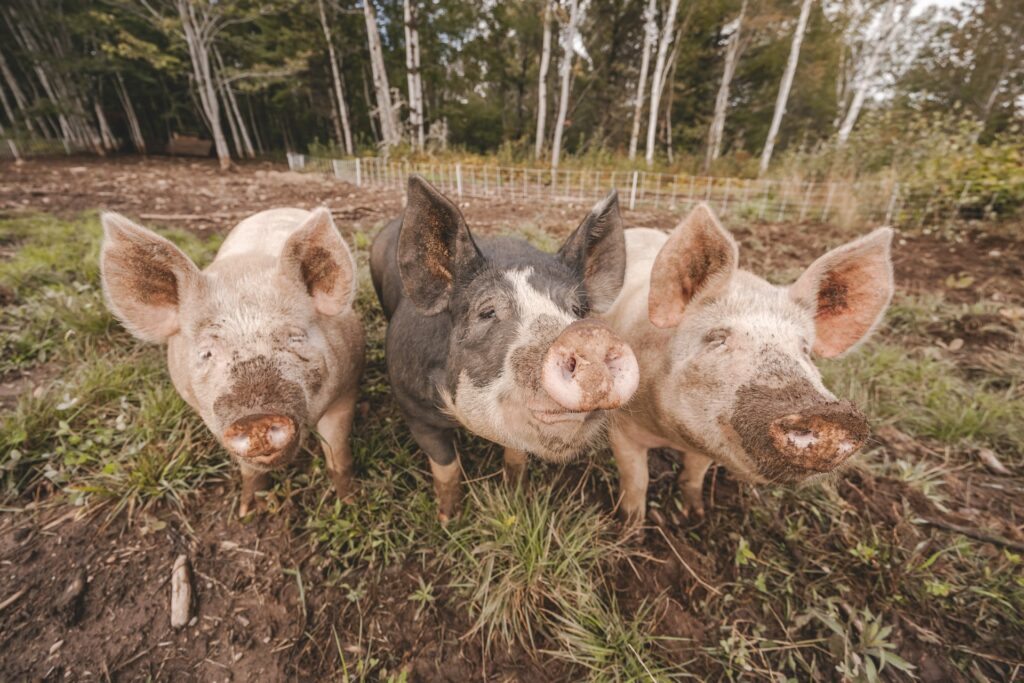
Professor Peter Sandøe from the Department of Food and Resource Economics’ comments were in response to new research into pork production. This research revealed that consumers prioritize animal welfare over the environmental impact of their products. Although this study highlights a practical contradiction between producing more climate-friendly pork and improving animal welfare, Sandøe emphasizes that a more climate-friendly pig is a more ‘efficient’ pig.
Sandøe explains, “It’s a real dilemma that maximizing climate friendliness may require pushing animals on a number of other fronts. For example, the breeding of sows that give birth to more and more piglets per litter or to keep animals indoors so as to sequester more direct emissions than if they were to roam outdoors. Or to feed pigs finely ground feed, so that nothing goes to waste, but which gives them stomach ulcers. Conversely, the kinder one is with the animals, the greater the climate impact per kilo of meat.”
Despite the potential strain on the environment, a University survey revealed that 60% of British respondents would be willing to pay more for pork with improved animal welfare, lower climate impact, decreased use of antibiotics, guaranteed freedom from harmful bacteria, and not fed soy. It is clear that improved animal welfare is the main priority for most respondents.
Sandøe adds, “The answers clearly demonstrate that focusing solely on climate improvements in pork production is not what consumers care most about when buying pork. They see it as important that pigs have had a good life, and that this is more important than climate-friendly production. This applies to many consumers in Denmark, Germany, and the UK.” Among German consumers, climate considerations ranked lowest out of the five different types of improvements, with Danish, British, and Chinese respondents placing climate impact as the second lowest priority.
Co-author of the report, Thomas Bøker Lund, expresses surprise at these findings, stating, “In light of how much climate has occupied public debate in recent years, we were surprised that bringing down the climate footprint was given such a relatively low priority among consumers.”
Sandøe believes that these findings present a clear picture for both politicians and pork producers. Labelling pork as climate-friendly will not solve the climate change problem. There is a real dilemma here because focusing solely on climate-friendly pork production compromises animal welfare, such as sows birthing more pigs and the animals being tightly packed into their living spaces. Additionally, the majority of CO2 emissions from animal production stem from beef, so cattle must bear the brunt of addressing the climate problem. Sandøe concludes, “So, it’s a good idea to swap the beef in your Bolognese sauce out for pork or chicken. But at the same time, we need to eat less meat in general and more plant-based foods.”
Meanwhile, the planned strike action by Irish vets and meat inspectors poses a threat to animal welfare, unsold livestock, and mass disruption to the food supply chain, according to the British Meat Processors Association (BMPA). The strike action highlights the importance of maintaining a balanced approach to the welfare and production of food.