


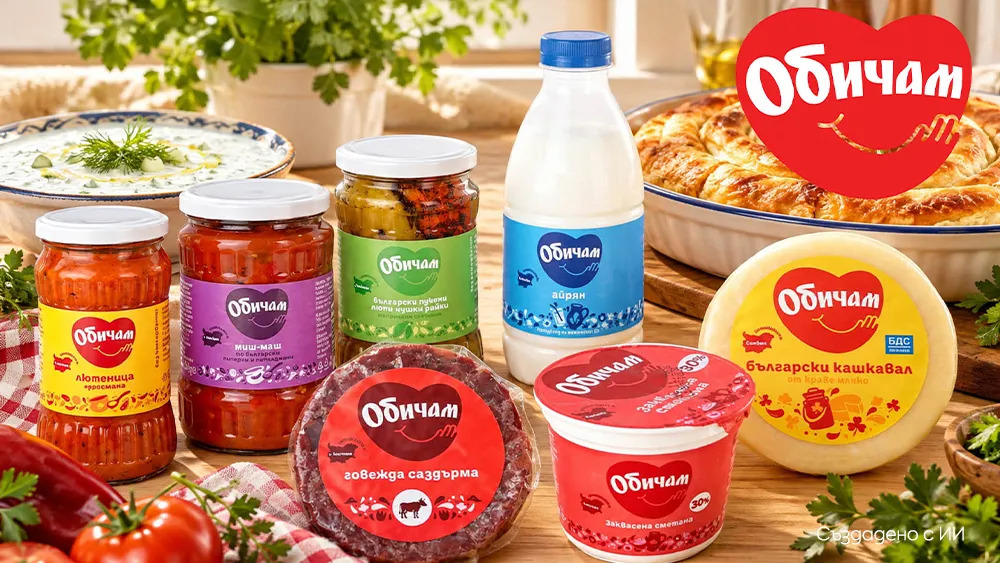
BILLA Bulgaria is expanding its private-label strategy with the introduction of ‘Obicham’ (“I Love”), a broad range built around Bulgarian production, straightforward ingredients, and clearly identified regional origins. The new collection responds to rising interest in local food, trustworthy sourcing, and products that reflect familiar culinary traditions.
A brand shaped by Bulgarian food heritage
BILLA developed Obicham after commissioning nationwide research from Kantar. The findings highlight a strong emotional connection between Bulgarian shoppers and traditional food. Some 83% of respondents said they look for flavours associated with childhood, while 75% expressed a preference for established recipes instead of newer or imported variations. In addition, more than four in five consumers said they would choose a Bulgarian product when presented with an otherwise identical imported alternative.
These results reflect important food and drink consumer trends and point to a changing role for private labels. Rather than competing primarily on price, retailers are now focusing on recognizable taste, transparent sourcing, and simpler ingredient lists. This approach also creates opportunities for local manufacturers to translate regional food culture into scalable retail products.
A long-term private-label platform
Obicham is intended to become a permanent part of BILLA Bulgaria’s commercial model. The retailer plans to grow the range beyond 100 products by the middle of 2027, creating a significantly broader offer across everyday grocery categories.
BILLA is also bringing established names such as BILLA Gardens and Bulgarian Farm into the wider Obicham structure. This integration allows the retailer to build on existing customer recognition while creating a more coordinated private-label portfolio.
The initiative supports BILLA’s longer-term objective of generating 30% of total company revenue from private-label products by 2030. The strategy reflects wider food manufacturing trends, in which retailers are working more closely with domestic producers to improve differentiation, resilience, and product control.
From dairy staples to traditional drinks
The Obicham selection is designed to support a wide range of eating occasions, from breakfast through to family meals. It includes both chilled and ambient products, with an emphasis on familiar recipes and clearly communicated ingredients.
The dairy and egg range includes fresh milk, yogurt, ayran, white brine cheese or sirene, yellow cheese or kashkaval, gyubek, and cottage cheese known as izvara. The meat selection features Bulgarian-style cured and cooked specialities, including regional sausages, babek, and traditional krenvirshi.
In the ambient grocery category, the collection includes the flagship Obicham lyutenitsa. Its recipe uses roasted peppers, eggplant, tomatoes, and sunflower oil, without starch or potato flakes. The broader pantry offer also contains ajvar, roasted peppers, and cooking oils.
Fruit preserves and natural honey form the sweet category, while the beverage range includes traditional boza and fruit syrups. Together, these products showcase the role of food and drink industry innovation in presenting heritage recipes through a modern retail format.
Regional provenance is central to the proposition. Each pack identifies the area where the product was made, enabling shoppers to see more clearly which Bulgarian farmers and processors contributed to the final product. This level of visibility supports the food distribution trends shaping the market, as retailers place greater emphasis on traceability and dependable domestic supply networks.
Commenting on the strategic importance of the launch, Albena Georgieva, executive director of BILLA Bulgaria, noted: “To be close to your family, roots, and traditions means valuing the flavours you grew up with. Bulgarian cuisine is part of our identity and carries stories that deserve to be preserved and passed on. This is precisely what stands behind ‘Obicham’—a brand that gathers our favourite Bulgarian flavours and gives them a contemporary read. For us, this is also an important step in developing our own brands, placing an even stronger emphasis on our partnership with Bulgarian producers.”
Why local private labels are gaining momentum
The launch illustrates a broader shift across European grocery retail. Once associated mainly with lower prices, private labels are increasingly becoming platforms for culinary development, regional sourcing, and closer retailer-supplier collaboration. These developments sit alongside wider food and beverage industry trends, including demand for cleaner formulations, responsible procurement, and stronger consumer trust.
Long-term agreements with local processors can help retailers reduce exposure to international supply disruptions while maintaining consistent standards. They also support food and drink sustainability by shortening supply routes, strengthening domestic agricultural networks, and giving producers greater visibility in the marketplace. At the same time, businesses must continue to address evolving food and drink regulations, particularly around labelling, traceability, claims, and ingredient disclosure.
Packaging will play an important role in this process. Clear regional information and accessible ingredient communication can make food and drink packaging a valuable part of the customer experience rather than simply a protective format. Retailers can reinforce the proposition through targeted food and drink marketing that connects product quality with Bulgarian identity and local economic contribution.
For food and beverage manufacturers throughout Central and Eastern Europe, programmes such as Obicham offer an attractive route to expansion. Suppliers able to deliver dependable quality, authentic regional flavour, transparent sourcing, and production capabilities supported by modern food processing technology will be well placed to benefit as retailers give private labels a more prominent role in their growth plans.