


The government’s latest circular economy research highlights why designing out waste, protecting reusable assets and keeping materials in circulation must become business priorities.
The University of Portsmouth’s latest report for Defra makes an important point that many of us working in resource management have understood for years: recycling is essential, but it is not enough. If we are serious about building a circular economy, we need to stop thinking about waste only once it has been created and start designing systems that prevent it in the first place.
For those of us in the grocery supply chain, this isn’t a theoretical debate. It is something we deal with every day.
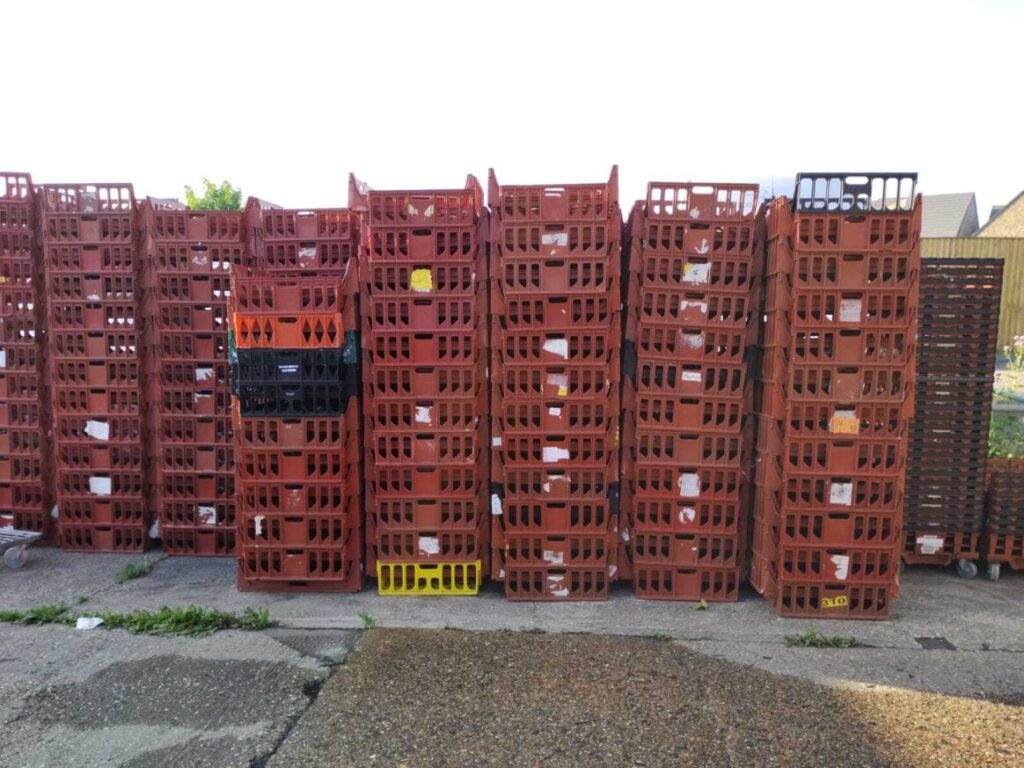
At Bakers Basco, our entire operating model is built around reuse. Every one of our bread baskets and delivery dollies is designed to circulate continuously between bakeries, distribution centres and retailers, often for many years. The longer those assets remain in the system, the fewer new products need to be manufactured, the less raw material is consumed and the lower the environmental impact becomes. That is circular economy thinking in its most practical form.


The report rightly highlights that too much attention is still being given to recycling and waste recovery instead of preventing waste from occurring. I couldn’t agree more. Recycling should be viewed as a last resort after we’ve exhausted every opportunity to keep products in use for as long as possible. The challenge is that reuse systems only deliver their full environmental benefit when the assets actually stay within them.
Every year, hundreds of thousands of reusable bakery baskets disappear from the legitimate supply chain. Some are stolen, others are misused by businesses outside the baking industry, and many are simply treated as free storage containers rather than valuable supply chain assets. When that happens, the environmental benefits of reuse are undermined because replacement equipment has to be manufactured unnecessarily.
This is why protecting reusable assets is just as important as creating them. A reusable transport item isn’t simply another piece of plastic. It represents embedded carbon, raw materials, manufacturing energy and years of intended service life. Every basket recovered and returned to circulation avoids the need to produce another one. That is prevention in action.
Technology also has a growing role to play. Greater traceability, improved asset tracking and better data are making it increasingly possible to understand where reusable equipment travels, where losses occur and how supply chains can become more efficient. These are exactly the kinds of upstream interventions the report encourages because they help retain value within the system instead of replacing it after the fact.
There is also an important behavioural challenge. Many organisations still see reusable logistics equipment as disposable or conveniently available for other purposes. Changing that mindset is just as important as developing new technologies or introducing new policies. Businesses throughout the supply chain need to recognise that these assets are part of a carefully managed circular system, not surplus materials waiting to become someone else’s storage solution.
The government’s renewed focus on circular economy policy presents an opportunity to broaden the conversation beyond household recycling rates and waste collection targets. Prevention, reuse and long-term asset management deserve equal attention because they deliver environmental and economic benefits simultaneously. The circular economy shouldn’t begin when something reaches the end of its life. It should begin the moment it is designed.
If we truly want to reduce waste, lower carbon emissions and make better use of finite resources, we need to build systems that keep products working for longer, recover them when they go missing and protect the value they already contain.
That’s not just better for the environment. It’s better for businesses, consumers and the resilience of our supply chains too.