


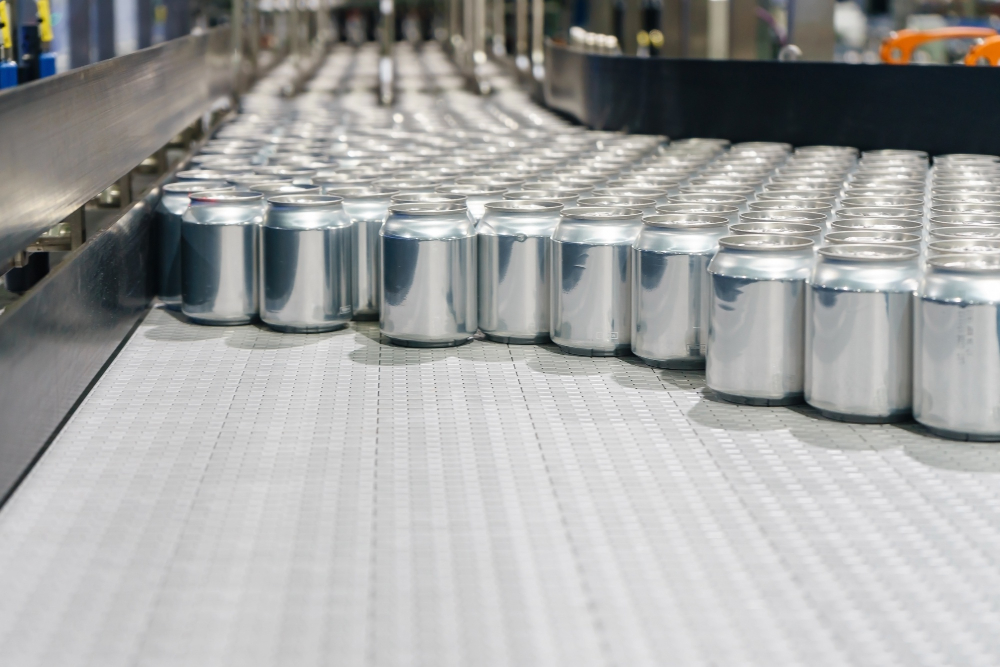
Aluminium cans continue to be a leading choice for sustainable food and drink packaging, backed by robust recycling systems in developed markets. Nowadays, emerging technologies are enhancing compliance and traceability, once again spotlighting aluminium as a crucial player in circular economy initiatives. As Russell Wiseman, Head of Global Beverage Solutions, Domino Printing Sciences (Domino) articulates, the strongest sustainability solution for beverage packaging is already at your fingertips.
Aluminium: The Circular Champion
As beverage brands endeavor to achieve circular economy goals and reduce carbon emissions, aluminium’s recyclability and efficiency make it a compelling choice. Unlike PET or glass, aluminium serves as a true closed-loop material that can be recycled infinitely without losing quality. According to global statistics, aluminium recycling rates hover around 75%, surpassing PET bottles (47%) and glass (42%). This translates into an annual saving of approximately 5.4 million tonnes of CO₂.
Regulatory frameworks are accelerating the pace of recycling advancements. Under the EU Packaging and Packaging Waste Regulation (PPWR), aluminium packaging must achieve 50% recycling by 2025 and 60% by 2030. Moreover, the stringent design-for-recyclability requirements are inspiring innovative thinking in product and packaging design. For beverage brands, aluminium is not merely a packaging option; it represents a compliance strategy and a valuable asset for reputation.
Speed and Precision
Sustainability extends beyond just the can. Every aspect of production is crucial, including the coding essential for compliance and traceability at scale. Modern beverage production lines often exceed 120,000 cans per hour, making accurate coding mission-critical. Mistakes or defects can rapidly escalate, resulting in costly recalls, product waste, and regulatory challenges. Each can must feature precise traceability information to satisfy regulatory and retailer expectations.
The industry demands coding technology that aligns with the requirements of fast-paced, sustainability-focused operations. However, traditional inkjet systems frequently falter at these elevated speeds. This struggle leads to excessive ink consumption, which in turn generates chemical waste that undermines sustainability goals. Additionally, delays in production caused by coding issues add further costs.
Coding for Sustainability
Recent advancements enable beverage manufacturers to re-evaluate their strategies for sustainability and compliance. High-speed, low-waste technologies, such as fibre laser coding, offer permanent, high-resolution codes without the need for inks or solvents. This allows manufacturers to uphold their sustainability objectives while maintaining optimal production throughput.
Innovative solutions like the Beverage Empty Can Coding System (BECCS) from Domino shift coding upstream to the empty can stage, significantly contributing to waste reduction and operational efficiency. By coding before filling, manufacturers can identify errors early, preventing costly recalls and product loss.
Operational Effectiveness
BECCS is designed for high-output lines where accuracy, speed, and minimal waste are essential. In addition to performance, BECCS allows brands to uphold production traceability and comply with EU labeling requirements without sacrificing efficiency.
Fibre laser technology also matches the rapid pace of existing production lines, keeping up with speeds of 120,000 cans per hour. Integrated vision and rejection systems facilitate real-time error detection, ensuring that faulty codes are not released into the market. This helps reduce waste and minimize downtime. With a mean time before failure (MTBF) of up to 100,000 hours, these state-of-the-art systems offer remarkable reliability.
Wiseman explains, “Circularity starts long before a can reaches the shelf. Aluminium offers an infinitely recyclable foundation, but the real progress comes from rethinking every step of production – coding included. Moving traceability upstream and eliminating consumables isn’t just operational efficiency; it’s how we make sustainability practical at scale.”
Closing the Loop
The collaboration between aluminium cans and fibre laser coding creates a formidable sustainability partnership. Together, they empower beverage brands to meet circular economy objectives, decrease carbon emissions, and enhance production agility. As the industry aims for an 80% global aluminium recovery rate by 2030, nearing 100% by 2050, technologies such as BECCS will be crucial in closing the loop – ensuring that each can is coded accurately, efficiently, and with minimal environmental impact.