


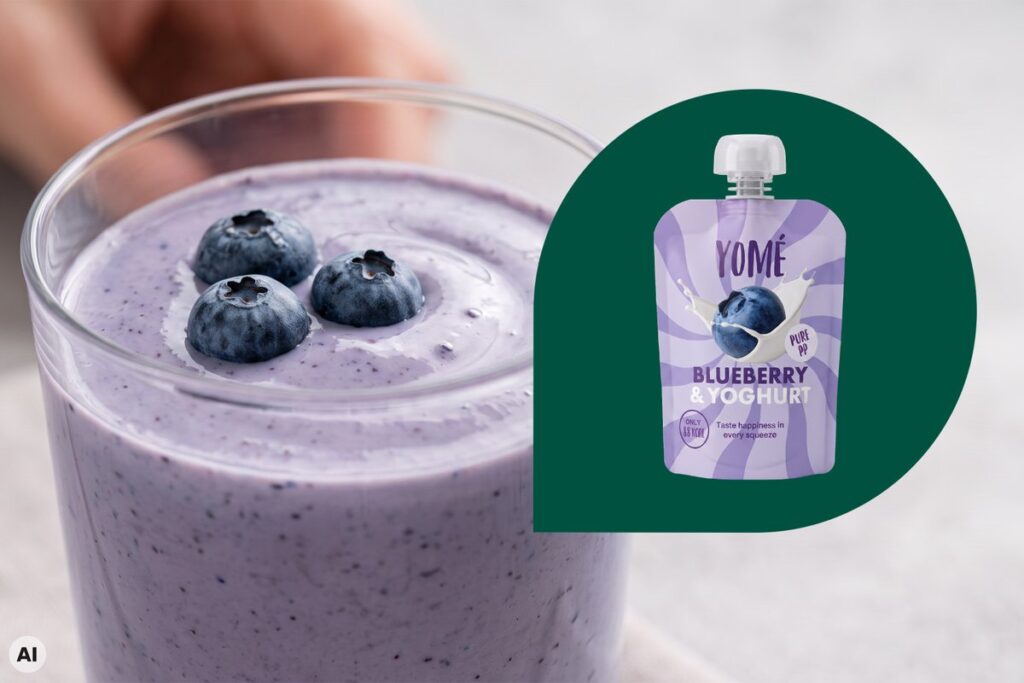
Yogurt beverages and other dairy products with elevated protein content have evolved beyond their traditional role as healthy foods. They now function as lifestyle offerings and, increasingly, as liquid-format functional nutrition. As the category expands, brands are paying closer attention not only to recipes and ingredients, but also to food and drink packaging. While bottles continue to lead the market, formats such as spouted pouches are gaining ground. SÜDPACK has developed a PP-based film solution for spouted pouch production that combines reliable product protection, convenient use, and a recycling-oriented package design.
Consumer interest in healthier products and convenient consumption away from home continues to strengthen the yogurt drinks category. The introduction of new flavor profiles, probiotic formulations, and high-protein recipes has broadened the market considerably. Current projections indicate that the European market could increase from approximately USD 4.6 billion today to about USD 6.7 billion by 2034. With close to 30% of global sales, Europe remains one of the most important regions for this product segment and reflects wider food and drink consumer trends.
Convenient formats support continued category expansion
Rigid packaging, including PET bottles and cups, currently accounts for more than 44% of the market and remains the leading format. Nevertheless, flexible pouches represent the fastest-expanding alternative, with projected growth of 8%. Their appeal comes from the combination of low weight and practical handling. For products intended for consumption on the move, packaging must open easily, close securely, and support clean use without spills. Spouted pouches can be compressed to remove nearly all of the contents and are simple to carry, qualities that resonate strongly with younger, active, and health-focused consumers. The format suits a range of applications, from nutritious children’s snacks and quick lunches to protein products for athletes. Its durable stand-up construction also helps it withstand everyday handling in backpacks and handbags.
Reliable protection and dependable filling performance
SÜDPACK produces its pouch using CarbonLite® PurePP, a polypropylene-based material. Its dependable sealing characteristics and secure spout connection create strong seals and sustained leak protection, including during the physical stresses encountered across transportation, storage, and retail. This supports both package integrity and food safety. When developing the solution for cold-filled drinkable yogurt, SÜDPACK combined its extrusion capabilities with experience gained through collaboration with equipment and spout suppliers on fruit purée applications. As a result, the PP laminate is well suited to processing on standard packaging equipment, including lines operating at high cycle speeds.
The films are intended for the cold filling of drinkable yogurt and related dairy products where packaging materials undergo UVC or hydrogen peroxide treatment to lower microbial contamination. Barrier properties can be adjusted to meet the necessary requirements for oxygen and water vapor protection. Internal testing indicates that the structure can provide a shelf life equivalent to the PET/aluminum/PE laminates traditionally used for these products.
Developed for recycling through the PP stream
The film structure provides an important advantage through its recycling-focused construction. When paired with a polypropylene spout, the complete pouch can be directed into the PP recycling stream. Based on PPWR design principles, the packaging achieves a recyclability rate above 95%[1]. The solution therefore gives brand owners an opportunity to prepare their packaging ranges for stricter Design for Recycling expectations, including requirements related to recyclability and reduced material use. These developments reflect broader food and drink sustainability priorities as well as evolving food and drink regulations.
The switch in material may also reduce climate impact. Internal calculations based solely on raw materials and manufacturing indicate that a PP spouted pouch made with 111 μm film has a CO2e footprint per square meter more than 40% below that of a 103 μm PET/aluminum/PE laminate. At end of life, the difference is also significant: conventional laminate is typically directed to energy recovery, whereas the PP-based format is suitable for mechanical recycling.
Technical assistance throughout implementation
SÜDPACK works with customers throughout the transition, from the first packaging concept through commercial launch. Its support includes technical advice, application-specific samples, and material and package testing on dedicated equipment. The company also assists with carbon footprint evaluations and recyclability studies. This type of technical collaboration can help manufacturers respond efficiently to changing food manufacturing trends, food processing technology requirements, and packaging expectations.
A practical option for modern dairy portfolios
For producers of drinkable yogurt, drinkable skyr, and comparable dairy beverages, the PP-based spouted pouch creates additional opportunities for package development. It addresses demand for convenient, contemporary products while meeting the requirements of industrial filling operations and the sustainability objectives shaping the packaging sector. The format can also strengthen retail performance by delivering an attractive presentation, improving shelf visibility, and helping brands differentiate their products in a competitive refrigerated environment. In this way, it supports both food and drink marketing strategies and wider food and drink industry innovation.
Further information is available at suedpack.com
[1] The recyclability analysis was performed with CHIRA software. An independent institute has not validated or certified the estimate, and SÜDPACK makes no guarantee regarding its accuracy. Actual recyclability can differ according to the country and the recycling infrastructure in place.