


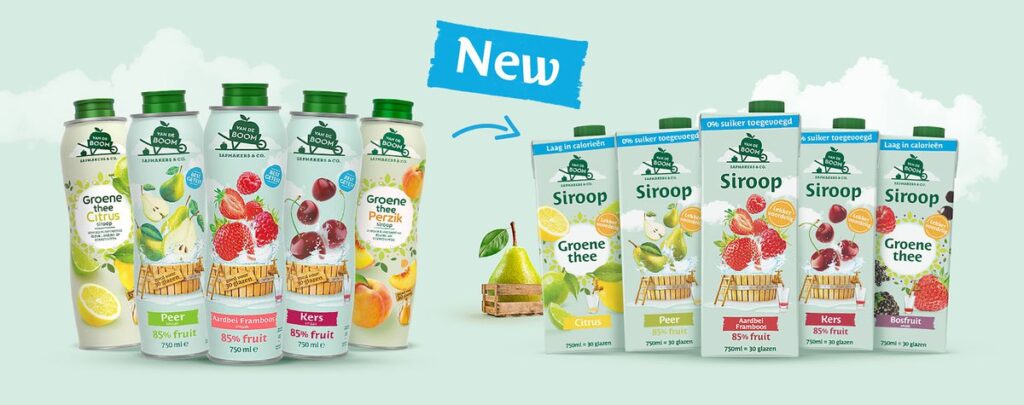
Riedel, a prominent juice producer in the Netherlands, is leading innovation in food and drink packaging by converting its Van de Boom syrup range from metal cans to SIG carton packs made from SIG Terra Forest-based polymers. Remarkably, 95% of this carton packaging consists of forest-based materials, including polymers sourced from renewable materials via a mass balance system.
The packaging material comprises three key raw materials sourced responsibly through mass-balance systems. The paperboard originates from FSC™-certified forests and other controlled sources. The forest-based renewable polymers hold ISCC PLUS certification. Additionally, a thin layer of aluminum is utilized to shield the contents from light and oxygen, backed by ASI (Aluminium Stewardship Initiative) certification. This strategic shift further reduces the carbon footprint of standard SIG packaging material by up to 43%, stemming from the replacement of fossil polymers with mass-balanced forest-based options derived from tall oil—a by-product of paper manufacturing. This transition is a significant move away from traditional fossil-based polymers.
When compared to other packaging substrates like pure metal or plastic, SIG carton packs stand out with a superior carbon footprint. This advantage is primarily attributed to their high proportion of renewable raw materials and lightweight design.
The transition from cans to cartons reflects Riedel’s unwavering commitment to minimizing its environmental impact by gradually converting the majority of its product range to SIG carton packs. Alongside this packaging evolution, Riedel ensures that its fruit syrups uphold their exceptional quality. Notably, these syrups boast an impressive 85% fruit content—the highest in the Dutch syrup market. Furthermore, with no added sugars, they present a healthier option for consumers. In conjunction with the fruit syrups, Riedel is set to launch unique green iced tea syrups in two fruity flavors, packaged in aseptic cartons that feature reduced sugar content and fewer calories.
Riedel’s journey towards more sustainable packaging began in 2018 with the transition of CoolBest and Appelsientje products to SIG carton packs made from SIG Terra Forest-based polymers. This pivotal milestone established the groundwork for expanding the use of sustainable packaging across Riedel’s product lineup in the following years. By 2022, Riedel showcased leadership by replacing small PET bottles with SIG Smile carton packs, culminating in a remarkable 75% reduction in CO2 emissions.
“At Riedel, we believe that every step toward a more sustainable and healthier future counts. Transitioning our Van de Boom syrup range to carton packs with SIG’s innovative packing material not only allows us to significantly reduce our environmental impact but also enables us to offer healthier choices for consumers. With our new low-calorie syrups containing less sugar, we continue to provide high-quality products that align with evolving consumer preferences,” said Julie van Bergen, Brand Manager at Riedel.
In conclusion, Riedel and SIG are collaborating closely to introduce innovative packaging solutions that propel the food and drink industry toward a more sustainable future.