


More than 400 million tons of plastic are produced globally each year, with approximately half allocated for single-use applications, as noted by the United Nations Environment Programme (UNEP). Alarmingly, under 10% of this plastic waste is recycled, contributing to an escalation in global pollution levels. UNEP Executive Director Inger Andersen emphasizes, “we will not emerge from the plastic pollution crisis by relying solely on recycling: we need a systemic transformation to achieve the transition to a circular economy.”
In this context, the ReLoop initiative was established, aiming to provide an innovative solution that combines automated dispensing of prepared meals with the return of reusable, traceable containers within a closed-loop system. This groundbreaking approach is expected to cut the carbon footprint by 90% to 95% compared to conventional single-use packaging.
The project is a collaborative effort involving AUSOLAN, a prominent player in institutional catering; AWAYTER, a pioneer in IoT and self-service technology; ITC Packaging, a major packaging industry player; and AIMPLAS, the Plastics Technology Centre. Together, these organizations are pioneering a comprehensive circular model that facilitates the circulation of reusable packaging, monitors its lifespan, and manages its return in a fully automated way.
This initiative aligns with the growing demand for stringent regulatory compliance. In Spain, for example, Law 7/2022 introduces a tax of €0.45 per kilogram on non-reusable packaging made from non-recycled plastic, thereby promoting the swift adoption of sustainable practices while still maintaining competitive viability.
As highlighted by Amaia Agirre, Director of Innovation at Ausolan, “closed-loop reuse is one of the most effective alternatives for reducing the use of single-use plastics, but it requires overcoming significant technological and logistical challenges.”
Development of Reusable and Traceable Food Packaging
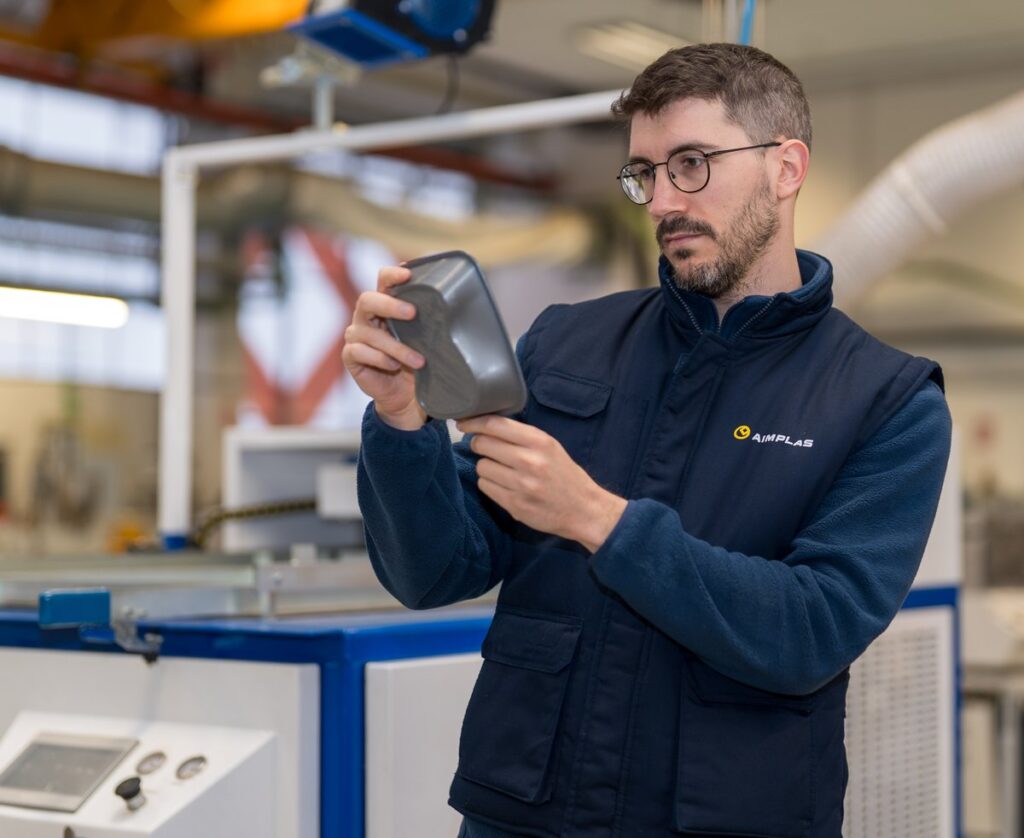
A core aim of ReLoop is to create reusable and traceable food packaging that is durable enough to endure multiple cycles of usage. The goal is to ensure that each piece of packaging can be utilized at least 40 times while satisfying safety standards for food contact, preserving functionality, and meeting consumer expectations.
To realize this objective, the consortium is exploring new materials capable of withstanding washing and drying procedures without degrading the packaging’s quality, ensuring recyclability at the end of its lifespan.
“It is not just about the container lasting longer, but about ensuring that it remains safe, functional and accepted by the user with every reuse,” remarked Nuria López, leading the packaging research at AIMPLAS.
Automated 24/7 Digital Canteen with Container Return System
Another significant challenge that ReLoop addresses is the tracking and management of reusable containers, ensuring effective and measurable reuse. The project aims to develop solutions that monitor the journey of each container, including its frequency of use.
Additionally, ReLoop is set to introduce an automated canteen that integrates the dispensing of food and the return of reusable containers, functioning 24/7. This fully digital service will allow users to order meals, make contactless payments, and return containers for cleaning and reuse. Currently, no existing systems effectively combine food dispensing and container recovery beyond basic recycling efforts.
“The aim is to close the loop: deliver the food, recover the container, sanitise it and reuse it with every guarantee,” emphasized Amaia Agirre from Ausolan.
Ensuring Cleaning, Drying, and Food Safety
The initiative is also focused on developing specific washing and drying protocols tailored for reusable containers and their contents. These procedures are crucial to maintain cleanliness while protecting the materials used, minimizing food safety risks, as insufficient drying can lead to microbial growth.
With these considerations in mind, ReLoop is designing a circular model primarily applicable to catering services in communal environments. This approach will tackle the technological, logistical, and business model challenges essential for ensuring both technical and economic viability.
“Collaboration between companies and technology centres is essential to ensure that these new reuse models can reach the market with a guarantee of success,” concluded Nuria López from AIMPLAS.
The RELOOP initiative receives funding from the Ministry of Science, Innovation and Universities through the State Research Agency’s (AEI) Public-Private Partnership proposal call for 2024, with additional co-funding from the European Union under the ERDF program.
For more information, visit www.aimplas.es.