


Label Apeel has entered the carton market with the launch of Carton Apeel, extending its specialist decorative print services beyond labels and into premium carton packaging.
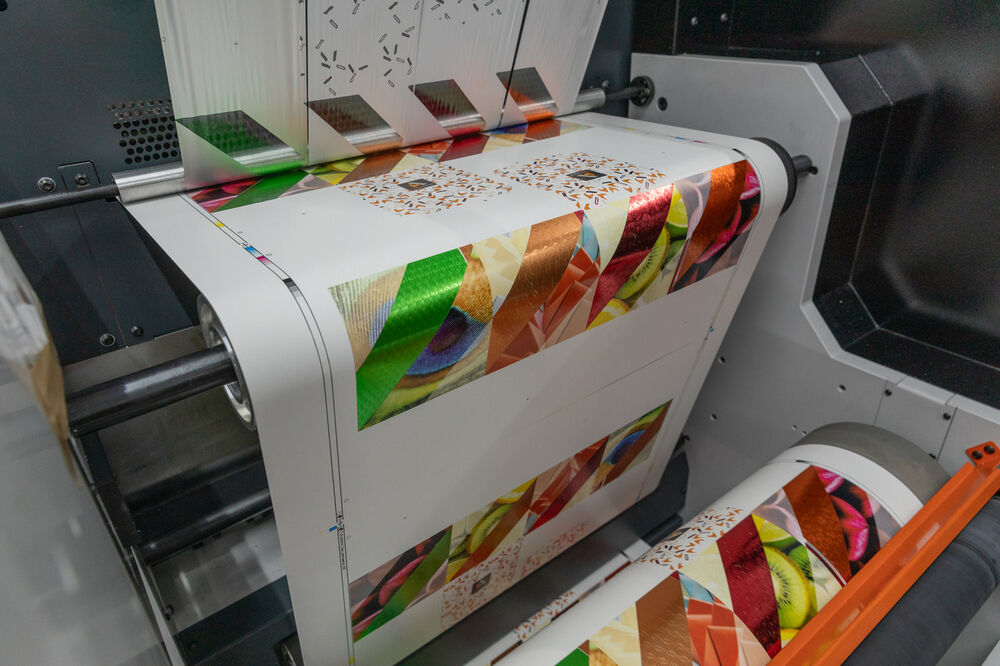
In partnership with press manufacturer Edale, the Leicester converter is operating an FL6p press capable of completing print, hot and cold foiling, embossing, varnishing and lamination in one pass. The same line also handles carton die-cutting.
Carton Apeel has been developed for independent and premium brands that want high-impact packaging but may not have the demand, budget or storage capacity required for traditional carton production minimums.
Customers can also purchase labels and cartons from a single source, with both formats produced against the same colour standards. This integrated approach can streamline packaging procurement and create a consistent appearance between a bottle or jar label and its accompanying carton.
Multiple finishing processes in one workflow
The FL6p brings several production and finishing stages together, limiting the need to transfer cartons between different suppliers, machines or manufacturing processes.
Its ability to print on both the internal and external carton surfaces gives brands further opportunities to communicate product information, reinforce brand identity and support food and drink marketing campaigns.
According to Label Apeel, consolidating these operations can reduce handling and work in progress while helping to improve turnaround times and colour consistency across multiple packaging formats.
Order flexibility for growing brands
Carton Apeel is designed to accommodate a wide range of order sizes, with no minimum order quantity. Customers can order as little as one carton or as many as 10,000, with standard delivery times of approximately 10 to 15 days.
This model enables manufacturers to align packaging purchases more closely with actual demand. Rather than tying up capital in excessive stock, businesses can adjust order volumes when designs change, forecasts shift or product performance varies.
Established products may justify longer production runs, while seasonal ranges, limited-edition releases and new product launches can be supported with smaller quantities.
Such flexibility can be especially valuable for smaller food and drink companies managing the competing pressures of packaging costs, inventory control and shelf differentiation. It also reflects wider food and drink consumer trends, as shoppers increasingly respond to distinctive presentation and clear brand positioning.
Stuart Kellock, director at Label Apeel, said: “Smaller brands are fighting hard for attention on the shelf, so their packaging has to do more than simply hold a product. It needs to tell a story and give people a reason to pick it up.”
Broadening packaging services
The investment allows Label Apeel to build on its established label manufacturing operation while creating a more joined-up packaging solution for customers.
Rapid changeovers make it possible to schedule label and carton projects for the same customer in close succession. Colour can then be coordinated across both formats, helping brands maintain a unified identity while retaining production flexibility.
The development addresses a key challenge for smaller producers: securing premium packaging that supports food and drink industry innovation without accepting the cost, capacity requirements and inventory commitments often linked to conventional production models.
Lachlan Buirds, managing director of Edale, said the FL6p enables Label Apeel to transfer its premium label expertise to carton production by combining printing, embellishment and die-cutting within a single pass.
For food and drink manufacturers, the project demonstrates how modern food processing technology and advanced print finishing can make sophisticated packaging more accessible to smaller companies. It also supports emerging food manufacturing trends, food distribution trends and food and drink sustainability goals by giving businesses greater control over production volumes, stock levels and packaging design. As food and drink regulations, packaging expectations and consumer preferences continue to evolve, flexible solutions such as this can help brands respond more efficiently.