


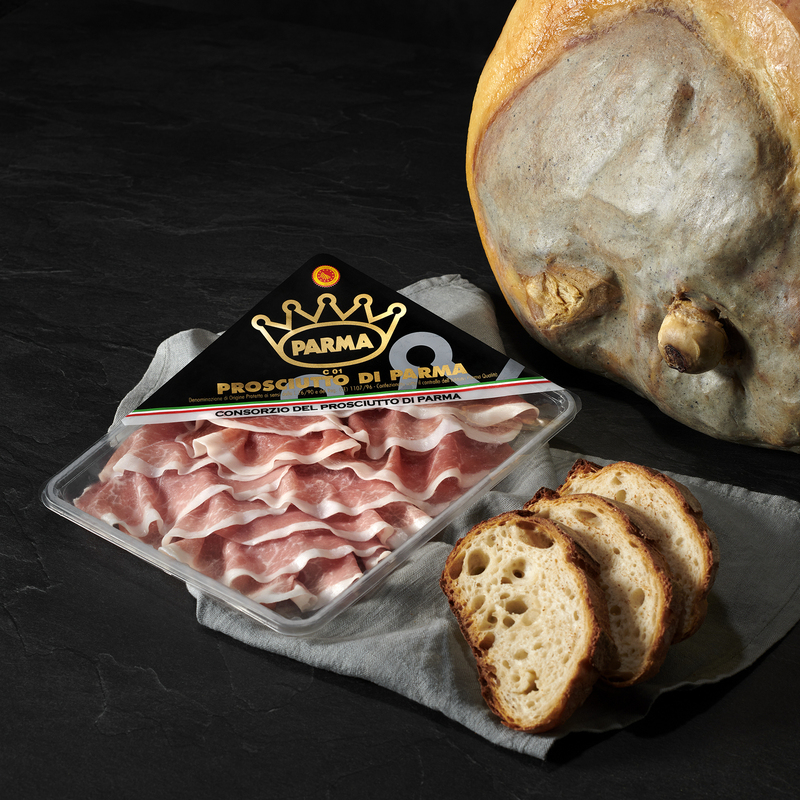
In a concerted effort to lessen the environmental impact of production activities, Prosciutto di Parma has conducted research to identify more sustainable options for food packaging. Parma Ham packs, whose sales have seen a surge during the pandemic, were the focus of the consortium’s efforts to find eco-friendly alternatives that would bolster the circular economy of the region. Alessandro Utini, President of the Consortium, emphasized the importance of finding ways to make Parma Ham more sustainable while maintaining its vital role in the social and economic resilience of the Parma province.
Collaborating with the Experimental Station for the Parma Food Conservation Industry, the consortium looked into using paper, compostable bioplastics, and recyclable PET as materials for packaging pre-sliced ham. Shelf-life tests were carried out to evaluate the efficiency of the alternatives. Packaging was used in a protective atmosphere with Parma Hams from different producers and maturation periods, ranging from 16 to 20 months, to compare the materials’ effectiveness.
“At the end of the monitoring period, the packs underwent chemical-physical, sensory and microbiological analyses with extremely significant results,” said Alessandro Utini. “We highlight the fact that packs consisting of a paper tray and paper top, with or without transparent window, yielded even better preservation performance than traditional materials, also in terms of durability. Paper is, therefore, an excellent solution for the packaging of our pre-packed products, thanks to its recyclability, ease of reuse, and origin from a renewable source.”
Testing also revealed that PET trays, while having a shorter shelf-life than paper, were ideal for transparent packaging, whereas compostable bioplastic-based packaging could sustain a shorter shelf-life suited for a ‘take away’ sales formula.
The consortium has now provided manufacturing and packaging companies with valuable tools to support their commitment to sustainability. The research successfully identified viable alternatives to traditional packaging. Even though the transition to alternative and more sustainable materials may require a considerable effort and time, it is not only desirable but finally attainable in a macro-economic and production context.
In conclusion, Prosciutto di Parma remains steadfast in its commitment to protecting the planet and promoting a circular economy. The Consortium’s efforts to find environmentally friendly food packaging solutions for their products exemplifies the kind of proactive approach that could benefit the whole industry in the long run.