


Domstein Sjømat, established in 1925 by fisherman Rasmus Domstein, began as a small-scale fish processing operation utilizing traditional methods such as salting and drying. Following the Second World War, Rasmus’s son, Knut Domstein, took leadership and modernized the company by introducing freezing and fillet production technologies. During the 1990s, the business experienced significant growth and honed its commitment to supplying high-quality seafood to consumers in Norway, achieving nationwide distribution in 2005. The company restructured in 2014 and continues as Domstein Sjømat, now ranking among Norway’s largest seafood suppliers, catering to retail, wholesale, catering, hotels, and restaurants. Remarkably, it remains a family-run operation in its third generation, distinguishing it within the food and drink industry.
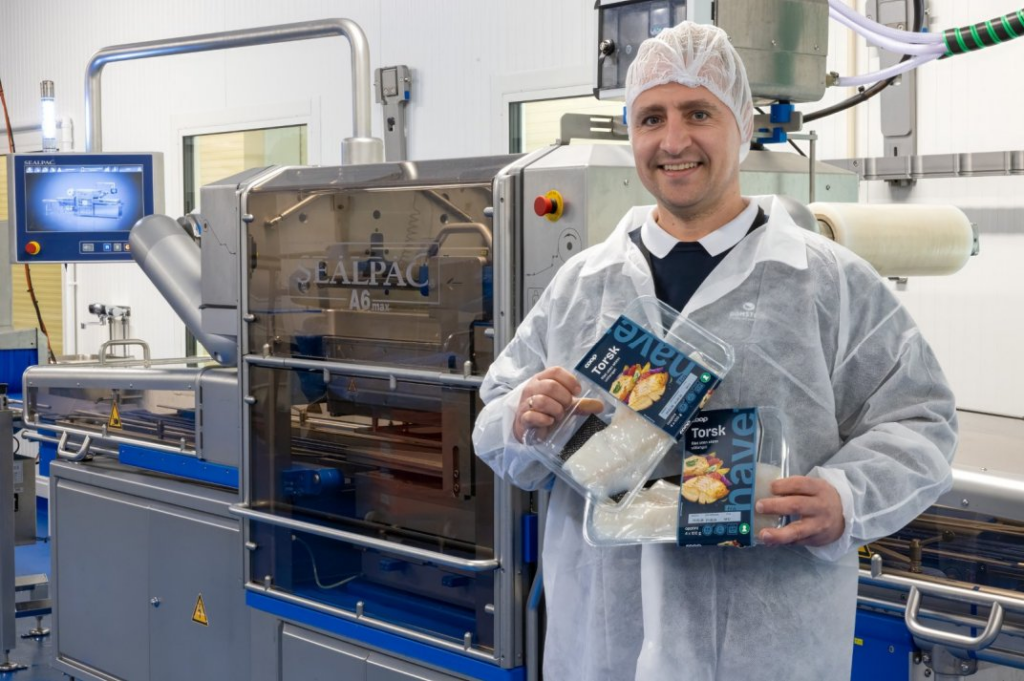
Operating throughout Norway, Domstein has facilities in several cities, including Kristiansand, Stavanger, Bergen, Trondheim, and Tromsø. At its state-of-the-art facility in Hagan, near Oslo, a dedicated production team manages retail packaging, processing approximately 1.5 tonnes of fish daily, which can increase to 5 tonnes during peak times. The location features two automated packaging lines, including a SEALPAC A6max traysealer that was installed in 2023.
Kestutis Krasauskas, also known as Kestas, serves as the Production Manager and has over 15 years of experience in the seafood sector, having previously worked with companies such as Mowi and Lerøy. He oversees various aspects of operations, including production planning, quality control, food safety, staff management, procurement, equipment maintenance, and ongoing improvements in processes. Collaboration with the quality, logistics, and sales teams ensures operational efficiency and product consistency.
Domstein’s guiding principle, “Fresh fish every day,” underscores its dedication to quality, freshness, and sustainability. Sourcing is exclusively from approved Norwegian fisheries along the west and north coasts, complemented by strict quality control measures, temperature monitoring, and traceability throughout the production process. Daily team meetings foster ongoing enhancements in packaging operations, while stringent allergen controls are maintained to prevent cross-contamination by ensuring that production lines do not operate simultaneously.
Incoming raw materials undergo thorough evaluation for temperature, freshness, appearance, and documentation. Only fish that meet approval criteria are allowed into production, adhering to HACCP-based hygiene and safety protocols. The company prioritizes minimal processing time, reduction of waste, and traceability from raw materials to finished products, guaranteeing high-quality outcomes and swift adjustments to any deviations.
The SEALPAC A6max traysealer, installed in 2023, was chosen for its reliable sealing capabilities, steady output, and efficiency. This packaging line was developed in collaboration with MPack A/S and features integrated equipment from Lexit, creating a fully synchronized system for tray loading, sealing, x-ray inspection, check-weighing, and sleeving.
Designed for high efficiency and adaptability, the system manages various product types and tray formats. Products packaged using modified atmosphere (MAP) typically achieve shelf lives of 10–12 days, utilizing CO₂ and N₂ gas mixtures to inhibit bacterial growth and preserve packaging integrity. TraySkin® packaging is preferred for premium offerings where visual presentation is particularly important.
Packaging effectiveness is vital to Domstein’s operations. The A6max ensures consistent sealing, minimal downtime, and rapid changeovers between tray sizes. The transparent, durable packaging is complemented by informative sleeves and easy-open features aimed at retail consumers. While aluminum trays may be utilized for select seasonal items, the company generally opts for solutions that better align with its sustainability goals and market preferences.
Domstein continues to serve major Norwegian retail chains and specialized seafood retailers, with plans to potentially invest in additional SEALPAC equipment as production capacity increases.