


Competition as a driving force
Companies that are known for raising the game can be sure of two things: that others will follow their lead, and that they themselves will consistently need to set the bar even higher. At Schubert, standing still has always been unthinkable. As a result, non-stop innovation from Crailsheim has been shaping the industry for decades – driven by the strong belief that healthy competition fosters excellence.
Although peering too closely into or underneath machines has long since become a given at trade fairs – and with it, the occasional ban on photography – to describe it as indispensable would be taking things too far. At least if you happen to view the coexistence of technologies as an opportunity rather than a threat. Of course, this doesn’t mean simply replicating what already exists. Rather, true innovation is about rising above the diversity that surrounds us.
Creating something entirely new instead of simply reproducing the status quo – this mindset goes back a long way in Crailsheim. Gerhard Schubert GmbH has been continuously refining its own developments since 1966 – precisely because of the intense competitive pressure, the many rivals and the multitude of solutions on the market. The company has always viewed these as an incentive rather than a risk. Against this backdrop, it goes without saying that neither imitation nor secrecy are part of the packaging machinery manufacturer’s strategy. On the contrary, those who see competition as a driver of innovation have no need to hide their own technology. Openness doesn’t, however, mean revealing every technical detail: patents, intellectual property rights and confidential design details remain important. The key is to secure a competitive edge through continuous development.
This being said, the company has often been a thought leader in technologies that have become standard features in packaging lines. For example, key developments such as hot-glue units in carton erecting machines or pick & place robots for packaging piece goods both originated in Crailsheim. Simply because the company recognised the need early on, considered possible solutions and implemented them pragmatically. Hot-glue bonding wasn’t common practice in the mid-1960s, but was nonetheless essential: the cold-glue method, which had been standard until then, took a long time before the erected cartons could be filled. And at the time, users were prepared to pay high prices for the machines. But the idea originated with the thought that using a different gluing method could significantly reduce both time and costs.
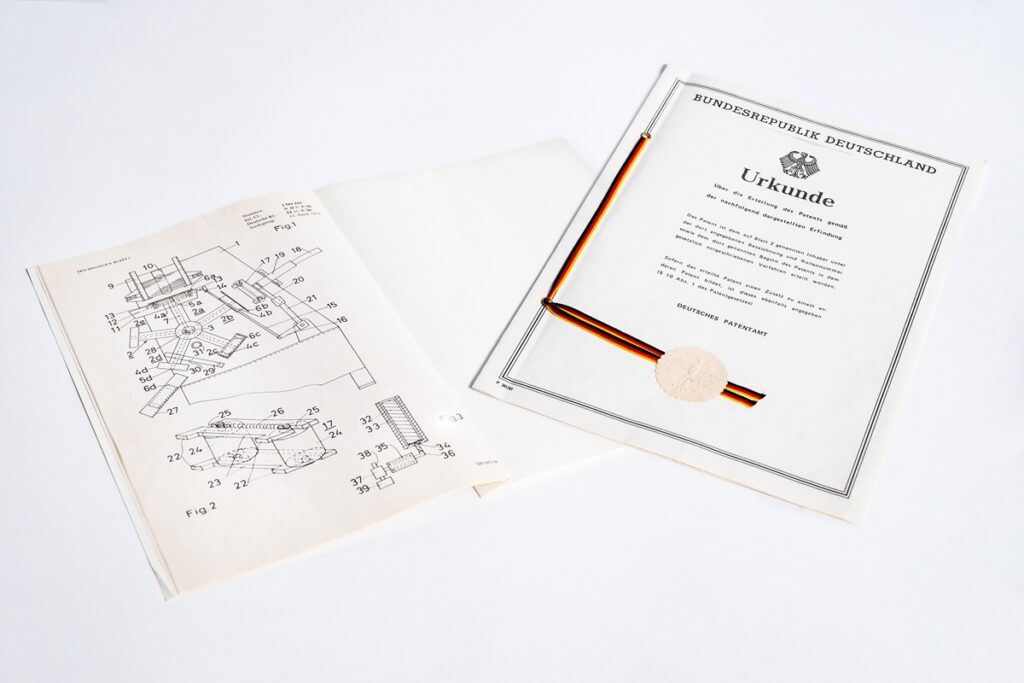
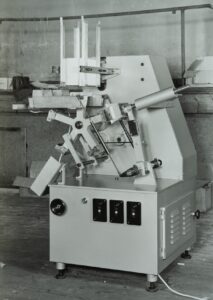
This concept provided the impetus to develop, in collaboration with adhesives manufacturer Henkel, a viable technology which, from 1966 onwards, ensured that blanks were firmly bonded within a short time in the patented Schubert Carton Erector (SKA) – and this in many packaging machines worldwide, not just in lines from Crailsheim. The SKA, which was sold until the late 1990s and subsequently often imitated, shows that the development had struck a chord with the spirit of the times.

A trailblazer in packaging robotics
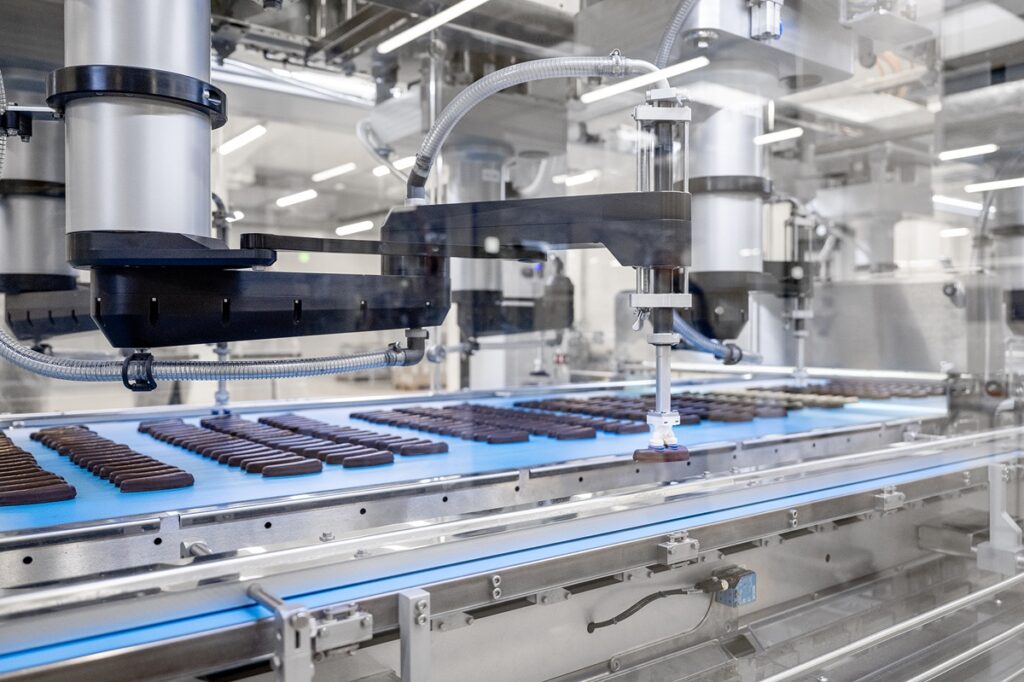
Things were no different with robots used in the final packaging process: 60 years ago, there were very few mechanical solutions for handling piece goods. At the time, countless human hands placed chocolates and biscuits into trays or boxes – a highly inefficient process that could hardly be reconciled with today’s hygiene standards. If an automated ‘arm’ were to take on this task, it would save a great deal of time and money, while maintaining quality and meeting the high demand for such consumer goods that was emerging at the time. In 1981, Schubert unveiled the four-axis SNC-R1 robot for the first time at interpack. Known as ‘Roby’, this robot was the basis for the world’s first robot-based chocolate-packing line, which Schubert delivered to a French customer in 1984.
Pick & place robots clearly illustrate that it wasn’t random technologies that ultimately shaped many industries, but rather innovations that signalled a new era. Drawing on Schubert robots, products from other manufacturers now make packaging machines around the world faster, more precise and more flexible. Two-axis variants group and pick up products. The groundwork for this was laid by the SNC-F2, which Schubert also launched in the 1980s. Rather than protectionism, the creators of the technology were driven by confidence. After all, being copied usually means you’re on the right track – and that it’s a path worth pursuing.
Schubert has long since moved beyond those early robots, whether they were patented or not: the ‘Transmodul’ transport robot – which remains unique to this day – as well as other packaging robots complete the TLM modular system that helped Schubert achieve its global breakthrough. Had the company clung to individual patents or actively sought to fend off the competition, success would likely never have been achieved.

Quality via image analysis
Equally widespread – and still perceived as futuristic in the early 1980s – are image-processing systems. Today, they routinely assist pick & place robots in precisely grasping products from a pile that is at times sorted and at times unsorted. The packaging machinery sector owes this success to the visionary collaboration between two scientists Schubert brought to Crailsheim in 1985.
Dr Joseph Pecht and Dr Abdelmalek Nasraoui successfully brought to market what had previously been limited to research projects. With image-based product recognition, Schubert laid yet another technological cornerstone that today ensures the quality of countless consumer goods. In addition to shape and size, the system can detect colour and any deviations from predefined product characteristics. Shortly after its development, the technology was supplied to the first customers, who then frequently optimised it. This partnership-based approach continues to distinguish Schubert to this day – even in cases where others market the technology from Crailsheim under their own names.
Rather than keeping competitors at arm’s length, the company prefers to focus on collaboration. Through licencing agreements, for example, selected competitors incorporate solutions such as the counter-flow principle – patented in 1996 – into their machines. The patent expired in 2016. By having the product and packaging conveyor belts run in opposite directions, this principle ensures that trays and boxes are always filled completely. While one conveyor belt transports piece goods out of the line’s cooling tunnel, another conveys the packaging materials towards this section of the machine. There, pick & place robots pick up the products from the ‘outgoing’ conveyor belt and place them into the packaging on the ‘incoming’ conveyor belt. Because new products are constantly emerging from the cooling tunnel, every package can be filled completely. If both conveyors were to run in the same direction, it could happen that the product conveyor is empty while a package is not yet full. The reason for this is that the product conveyor doesn’t always carry the same quantity consistently. Although buffer conveyors would offer an alternative, they generally only serve to make packaging lines larger. Thanks to the counter-flow principle, manufacturers can operate efficiently without taking up too much floor space.
Especially in the case of patented technologies, legal action cannot be entirely ruled out – particularly where there is no licencing agreement governing their use. For the Crailsheim-based innovator, however, technological leadership is far more important than cease & desist letters. Founder Gerhard Schubert is credited with the saying: “If our competitors stop copying us, we’ve done something wrong. What’s truly important is that we’re always a step ahead in terms of technology.” This reflects a conviction that remains valid to this day: competition is necessary, and sometimes so is imitation. Without them, progress lacks its driving force.