


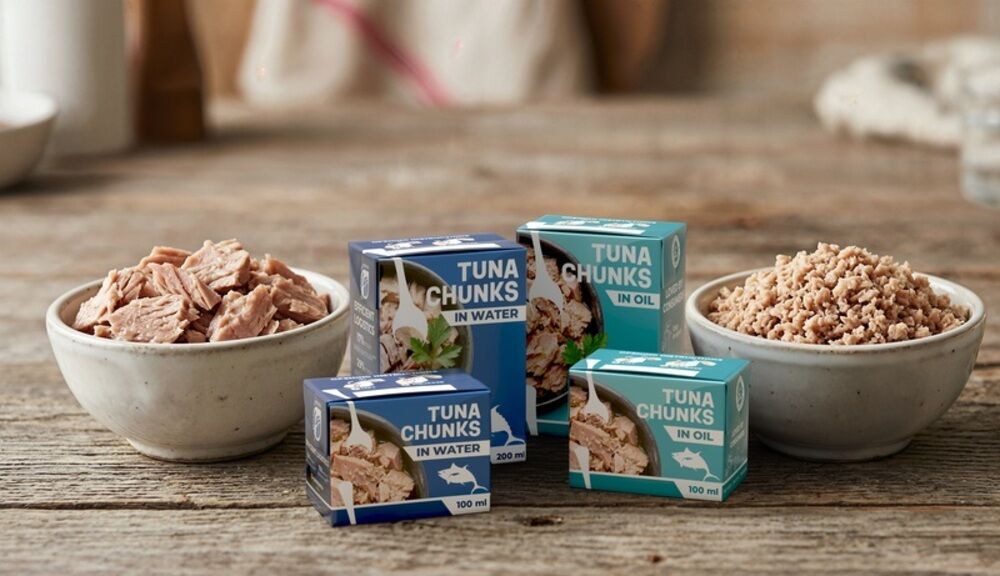
Tetra Pak, in collaboration with Spanish seafood maker Jealsa, has introduced the first-ever carton packaging designed specifically for shelf-stable tuna. This pioneering initiative has the potential to transform one of the food industry’s most traditional and less dynamic segments.
The introduction of Tetra Recart signifies a crucial advancement for brands aiming for eco-friendly, cost-effective options as an alternative to the conventional can, presenting a modern approach to a longstanding global food item.
Initially launched in Sweden with retailer Axfood, the 200ml Mini format is now accessible to food manufacturers around the globe.
This partnership effectively merges Tetra Pak’s proficiency in innovative, paper-based packaging with Jealsa’s extensive 68-year experience in producing shelf-stable seafood.
A Modern Take on a Classic Category
Globally recognized, shelf-stable tuna is among the leading packaged food products, with forecasts predicting a 12% increase in global volume, reaching 12.4 billion units by 2030. Despite its popularity, the packaging has remained relatively unchanged for many years.
Tetra Recart presents a paper-based option that allows producers to distinguish their products in an increasingly competitive market while also addressing the growing consumer demands for sustainability, convenience, and contemporary design.
Currently, Tetra Recart is suitable for various tuna preparations including spreads, flakes, chunks, and more, with additional offerings planned as the category continues to grow. For manufacturers, it provides a scalable, cost-effective solution that can be efficiently processed on high-output production lines while enhancing shelf appeal.
Tatiana Liceti, executive vice president of packaging solutions at Tetra Pak, stated that this launch signifies a major evolution in an industry typically dominated by metal packaging.
“This represents genuine innovation in a sector that has hardly changed for generations. We are empowering producers with a fresh way to enhance their brand visibility, protect their market presence, and transition to a paper-based alternative to traditional cans.”
Jealsa’s president, Jesús M. Alonso Escurís, emphasized that this partnership establishes a new standard within the seafood sector.
“We have introduced a revolutionary packaging solution that integrates innovative designs with our longstanding commitment to high-quality seafood. Following our successful introduction in Sweden, we are already experiencing significant momentum.”
For manufacturers across the ambient grocery sector, this development represents a broader chance to rethink and innovate within long-standing categories. Tetra Recart provides:
– An 85% reduction in carbon impact compared to steel cans and an 83% lower impact than glass jars, translating to a decrease of 21,000 tonnes of CO₂ for every million cans produced.
– Use of renewable materials, consisting of up to 71% FSC-certified paper.
– Improved shelf efficiency, as rectangular cartons can be tightly packed, enhancing merchandising while minimizing waste.
– E-commerce viability, being robust and easy to stack, making them well-suited for meal kits and home delivery solutions.
– Strong consumer appeal, with 80% of shoppers indicating they would purchase tuna packaged in Tetra Recart and 58% favoring it over other formats.
For those manufacturers aiming to innovate outdated categories, lower their carbon footprint, and fulfill retailer demands for sustainable packaging, this launch illustrates the potential of paper-based solutions to generate new value.
Jealsa plans to release several Tetra Recart tuna products under its brands Rianxeira, Mare Aperto, and Robinson Crusoe, as well as for private label partners. This marks the beginning of a broader industry shift, responding to the rising demand for convenient, protein-rich foods packaged in a more environmentally conscious manner.