


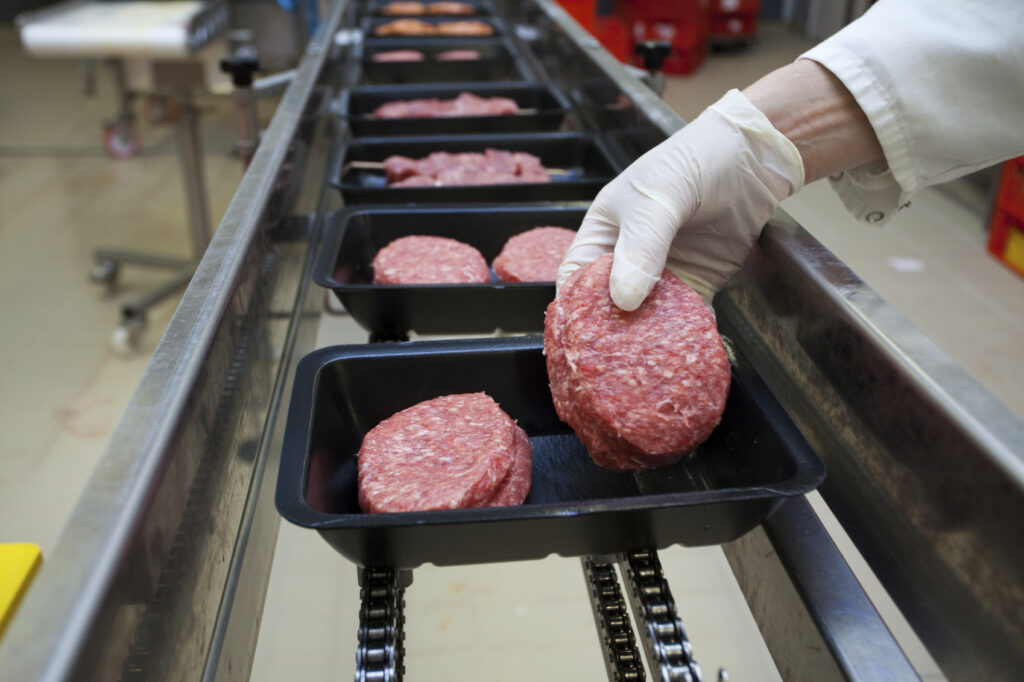
British meat firms are facing a labor crisis, resulting in spiraling costs and significant challenges in recruitment. To overcome this issue, businesses are resorting to paying one-off costs ranging from £10,000 to £15,000 to bring in staff from abroad, including regions as far afield as Asia. According to Nick Allen, the chief executive of the British Meat Processors Association (BMPA), this has become a necessity as suitable candidates from the local labor pools are scarce. The additional costs, which were not a factor prior to leaving the EU, coupled with a nearly 20% rise in wages, are pressuring these companies to pass on the expenses to consumers. As a result, food price inflation is increasing, making British companies less competitive in the market.
However, the BMPA argues that the current advice to hire more British workers overlooks two vital considerations. Firstly, it questions the willingness and physical ability of prospective local workers to perform such labor-intensive jobs. Secondly, it raises concerns about their willingness and ability to relocate or commute for these positions. Allen explains, “Meat processing is one of those industries that struggles to fill vacancies from the local population. This is partly a perception issue, which we’re working on. However, the larger problem lies in the lack of geographical mobility and the physically demanding working environment, factors that cannot be changed for productivity and food safety reasons.”
Despite these challenges, the government’s stance on migrant labor remains unclear. The Department for Environment, Food & Rural Affairs has called for allowing more skilled and semi-skilled migrant workers into the country to fill the labor supply gap. However, the ‘New Conservatives’ group of MPs has advocated for stricter measures to limit foreign labor and reduce migration, fearing that failure to do so will erode public trust.
In conclusion, Allen emphasizes that the solution lies in finding a balance between short-term reliance on overseas workers and a long-term shift in how certain careers are perceived and valued in the country. Achieving this goal requires the engagement and support of the government, schools, and education providers. By working together, the industry can address the ongoing labor crisis and secure a strong future for the food manufacturing sector in the UK.