


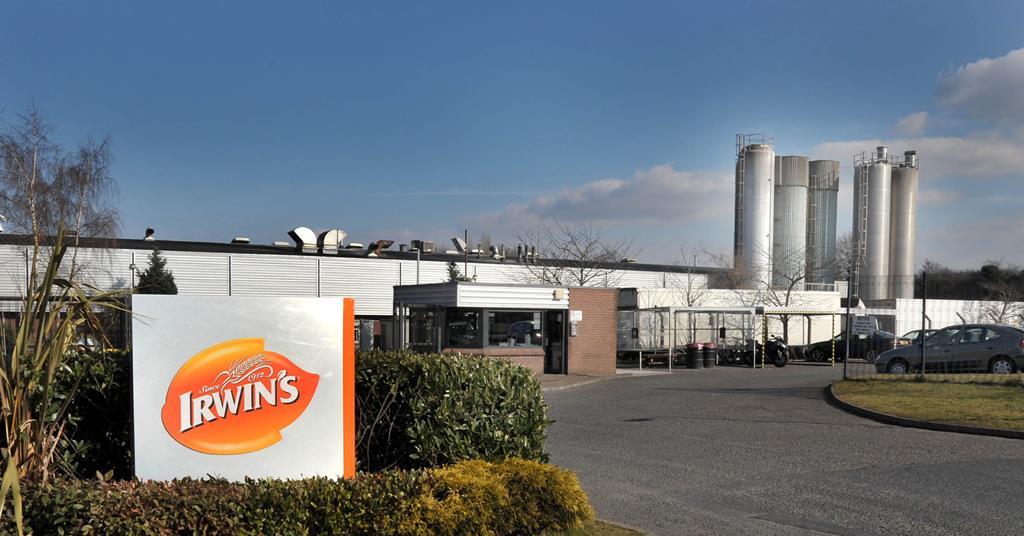
Irwin’s Bakery has changed hands, bringing 114 years of family ownership to an end.
The Portadown-based bakery manufacturer was established in 1912 and has now been acquired by local businessman Sam Rusk. Rusk has worked with the company for the past four-and-a-half years as both a non-executive director and investor, helping support its return to profitability in 2023. For the year ending 28 September 2025, Irwin’s reported revenue of £30.2m and a pre-tax profit of £1.2m.
The transaction follows the retirement of Brian Irwin, who spent 50 years with the family business. Rusk has purchased Irwin’s shares and become chairman. Brian’s sister-in-law Kathleen and nephew Ross have also left the board. Stewart, another nephew and a member of the fourth generation of the family, is now the only Irwin family member still employed by the company, where he oversees packaging operations.
Brian Irwin remains active within the baking sector and will continue as chairman of the Federation of Bakers. He assumed the position last year from Mike Roberts, formerly deputy chairman of Roberts Bakery.
Irwin’s day-to-day business activity will continue from its purpose-built facility on Diviny Drive. The site employs approximately 220 people, while the current leadership team will remain in place. CEO Michael Murphy continues to lead the business alongside finance director Chris Jarvis, operations director Aaron Hannigan, and head of technical and new product development Noeline McCooey. Each member of the executive team has worked for Irwin’s for more than a decade.
Murphy told British Baker that the factory is currently operating at a particularly busy pace as it produces Halloween Brack for retailers across Ireland. Also referred to as barmbrack, the seasonal Irish loaf is sweetened and traditionally made with sultanas and raisins. It may also contain items including a stick, piece of cloth, coin, ring, or pea, with each object symbolising a possible outcome connected to relationships, luck, or future prosperity.
Irwin’s includes a ring in its Halloween Brack, a feature Murphy described as important to Irish consumers. However, the product has presented a technical challenge for British teams because metal detection equipment must be switched off during production. “It’s done in a very controlled environment and for a short period,” he assured.
Nutty Krust remains Irwin’s leading product in the Northern Ireland market. The sliced white loaf was launched in 1961 and undergoes an 18-hour fermentation before being slow-baked for 75 minutes on the oven’s sole. “We were doing sourdough before it was trendy, we just didn’t call it sourdough,” expressed Murphy.
Alongside Nutty Krust, Irwin’s manufactures a broad selection of branded and own-label products. Its range includes muffins, potato farls, wheaten bread, fruit loaves, rolls, and malt loaves sold under the Veda brand.
Murphy said Irwin’s is expected to return to profitability during financial year 2026. He described that performance as notable given the difficult market conditions affecting major bakery manufacturers and the wider food and beverage industry trends influencing the sector. “It’s been a hard year for the likes of Braces and Roberts,” he added.
He said the company was not taking an unduly defensive approach, but would focus on the markets and product categories capable of delivering sustainable returns. “We’re not being cautious, but we’ll just be playing the right markets and the right products that we can make a proper return and keep the business stable.”
The chief executive also highlighted the importance of Northern Ireland in the Competition and Markets Authority’s investigation into the proposed merger between Allied Bakeries and Hovis. The transaction ultimately proceeded without an apparent challenge, despite extensive engagement with retailers and suppliers, including “an awful lot of questions and interviews with retailers and suppliers”.
Murphy said the merger could still influence the retail supply landscape, particularly where individual retailers source a substantial proportion of their range from one bakery. “We might see some change in things there in terms of some of the retailers having up to 80% of their [range supplied by] one bakery,” he said.
Fresh daily distribution and pricing for sliced bread remain ongoing pressures. In response, Irwin’s has expanded its presence in foodservice while also developing its cakes operation. This approach reflects wider food distribution trends and food manufacturing trends, as suppliers seek to balance retail exposure with alternative routes to market.
The company’s next phase will also be shaped by broader developments in food processing technology, food and drink industry innovation, and food and drink consumer trends. Product development, efficient manufacturing, food and drink packaging, and compliance with food and drink regulations will remain important considerations, alongside food and drink sustainability and targeted food and drink marketing.