


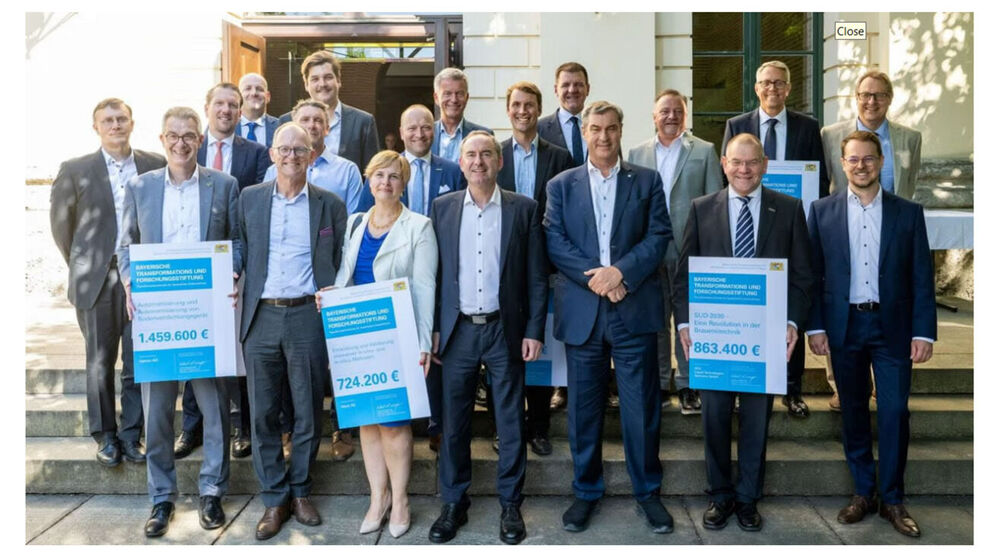
GEA’s SUD-2030 research initiative represents a transformative approach to the design of future brewhouses, moving away from the traditional separate handling of milling, mashing, and lautering. Instead, the company is focusing on creating a cohesive system that integrates these processes.
This holistic method aims to facilitate high-gravity brewing, which allows for greater wort concentrations and contributes to reduced water and energy consumption throughout the brewhouse. According to Dr. Daniel Heller, project manager of R&D at GEA, the performance of a brewhouse is heavily influenced by the interactions of these processes. By viewing them as a unified system, GEA is opening doors to innovative, resource-efficient brewhouse designs.
The significance of integration for improving efficiency cannot be overstated. Higher wort concentrations serve as a vital tool for enhancing sustainability; a more concentrated wort requires less water for heating, cooling, or treatment. This leads to decreased energy usage per hectolitre of beer and enables brewhouses to optimize their physical footprint, making them more efficient and cost-effective. However, conventional lautering systems face limitations when operating in high-gravity situations. The SUD-2030 project seeks to address these challenges by improving initial conditions through the coordinated processes of milling and mashing.
Key advantages of this approach include:
- Reduced water and energy requirements — A concentrated wort minimizes thermal load and the need for extensive treatment.
- More compact facility designs — The integration of processes allows breweries to reevaluate their brewhouse layout and equipment arrangement.
- Enhanced lautering efficiency — Optimizing upstream processes improves extraction stability and throughput, even at elevated gravities.
- Greater process consistency — Treating the brewhouse as a single entity reduces fluctuations between various stages.
The SUD-2030 project encompasses laboratory studies, pilot trials, and near-industrial testing at GEA’s Kitzingen facility, with support from research collaborators such as the Technical University of Munich. The initiative is also backed by the Bavarian Transformation Fund as part of its commitment to aiding companies in adapting to structural changes.
For breweries, the outcomes are expected to lead to innovative brewhouse models that emphasize efficiency and sustainability, resulting in higher extract yields through better coordination of milling, mashing, and lautering. Additionally, reduced operational costs will come from lowered water and energy usage, and the progressive transfer of findings into commercial applications will provide a pathway for industrial validation.
Jens Neidhardt, managing director of GEA Liquid Technologies, highlights that this funding supports a methodical advancement from laboratory research to industrial testing, bolstering innovation potential and preserving Germany’s competitive position in process engineering.