


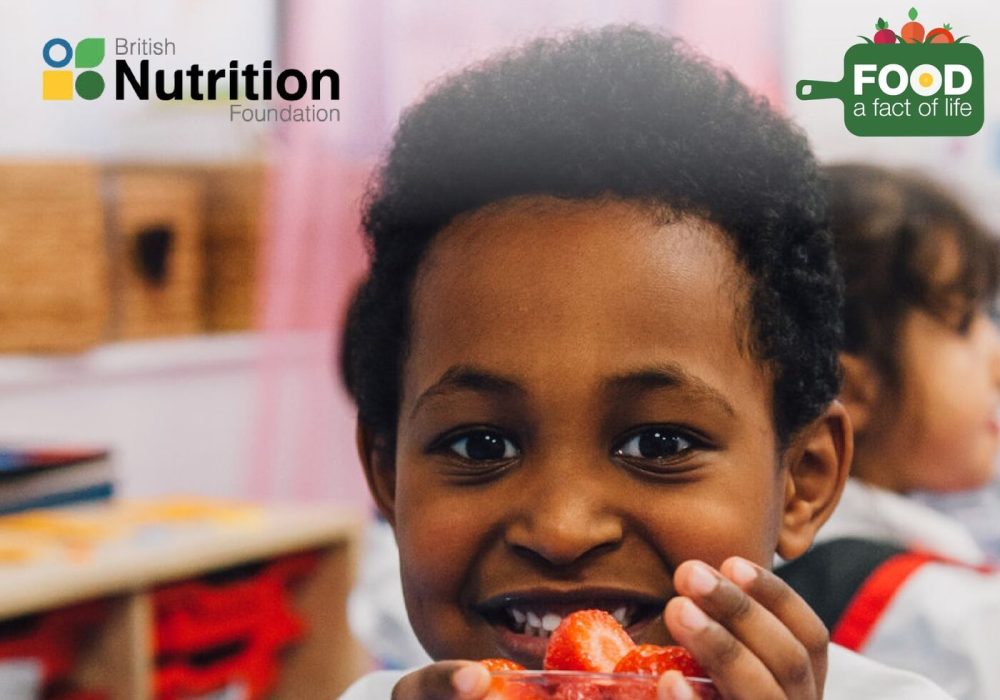
The British Nutrition Foundation (BNF) is urging policymakers across the UK to place greater emphasis on food education. It believes that improving children’s knowledge of food and developing practical skills could support healthier, more sustainable food systems while helping prepare the next generation for careers in food production and farming.
In its new white paper, Food education: The missing ingredient in a healthier, more sustainable future, the BNF presents eight recommendations for policymakers, schools and businesses. The proposals suggest that food and drink manufacturers could take a broader role in helping young people understand nutrition, food safety, sustainability, production methods and career opportunities.
The organisation says the quality and availability of food education differ considerably from one school to another. Factors such as funding, timetable allocation, teacher expertise and institutional priorities all influence the learning pupils receive. At the same time, increasing childhood overweight and obesity, food insecurity, declining confidence in cooking and the growth of online nutrition misinformation are making food literacy more essential.
Expanding food education beyond the kitchen
According to the BNF, effective food education should cover considerably more than basic cooking instruction.
Its recommendations include nutrition, food hygiene, sustainability, the origins of ingredients and the structure of the wider food system. The foundation also advocates closer links between food education, workforce planning, skills development and economic policy.
This approach has clear relevance for manufacturers, which form a central part of the food system that young people are being encouraged to explore.
Food businesses could support learning by explaining how products are manufactured, where ingredients come from, how processing affects food and how companies manage safety throughout production. They can also demonstrate how food manufacturing trends are influencing operations, from automation and advanced quality control to more efficient use of resources.
Such activity could help students discover the wide range of technical, scientific, engineering, production and quality-related careers available across the food and beverage industry.
Building the skills pipeline
Workforce development features among the BNF’s eight recommendations, highlighting the relationship between food education and the sector’s future recruitment requirements.
As factories adopt increasingly advanced systems, early engagement with students could become a valuable element of long-term talent planning. Visits to production sites, school outreach, careers events and practical workshops could challenge outdated assumptions about manufacturing and show how varied modern food production has become.
The BNF’s proposals may therefore broaden the purpose of industry participation in education. Rather than presenting food and drink solely as a career option, companies could explain the science, technology and operational expertise required to create the products found on supermarket shelves.
This could include discussions of food processing technology, robotics, data management, product development, laboratory testing and supply chain operations. It would also provide a practical way to connect classroom learning with food and drink industry innovation.
Making sustainability part of food literacy
The BNF is also calling for food education to be aligned with sustainability and wider food systems policy.
This is particularly significant for manufacturers investing in resource efficiency, waste prevention, alternative ingredients, renewable energy, packaging improvements and lower-impact production. These priorities reflect the growing importance of food and drink sustainability across the sector.
Stronger food education could help future consumers understand the environmental, economic and practical considerations involved in producing food. It would also create opportunities for manufacturers to explain how sustainability programmes operate in real-world settings, including the challenges associated with sourcing, processing, transport and food and drink packaging.
At the same time, the BNF stresses that education should remain balanced and informative. Industry involvement must not turn lessons into disguised commercial promotion. Young people need accurate, evidence-based information that supports critical thinking rather than messaging designed simply to promote a company or product.
How manufacturers could contribute
If food education gains a stronger position within education policy, manufacturers could support the agenda in several ways.
- Partnerships with schools: Businesses could collaborate with schools, colleges and education bodies by offering factory access, specialist knowledge, demonstrations and information about careers.
- Early skills engagement: Companies could introduce students to food science, engineering, automation, quality assurance, maintenance and production, creating an earlier connection with future workforce requirements.
- Practical food literacy: Manufacturers could explain the role of ingredients, processing, hygiene controls and traceability, showing how raw materials become safe, consistent finished products.
- Sustainability learning: Businesses could use real examples to demonstrate how changes to ingredients, production methods, packaging and resource management are reshaping the food system.
- Responsible communication: Any engagement with schools should clearly separate education from marketing. Information must be suitable for younger audiences, transparent, accurate and supported by credible evidence, particularly as food and drink regulations continue to evolve.
The BNF’s white paper positions food education within a broader discussion about public health, sustainability, employment and economic development. For producers, this suggests that relationships with schools could extend well beyond apprenticeship recruitment or graduate intake.
Greater attention to food literacy could also help companies respond to changing food and drink consumer trends. By giving young people a clearer understanding of nutrition, production, sourcing and environmental impact, manufacturers can contribute to more informed decision-making while building trust in the sector.
If food education becomes a more prominent policy priority, the industry could play a visible role in showing how food is made and why the sector needs expertise across science, technology, engineering and operations. This would support future skills development while helping the public better understand the innovation and responsibility behind modern food production, distribution and food and drink marketing.