


Industry Insight: The New Procurement Reality The era of “set and forget” packaging contracts is officially over. As of March 2026, we are seeing a decoupling of regional pricing. While U.S. manufacturers are benefiting from domestic ethane-based stability, European and Asian markets are grappling with PET resin spikes of 15% to 30% and PP volatility of up to 25% due to the “Hormuz Premium.” For the C-suite, this means packaging has moved from the procurement department to the risk committee. Strategic stockpiling is no longer seen as an inefficiency; it is a competitive advantage. Brands that successfully navigated the early-2026 supply crunch did so by having “dual-track” sourcing—maintaining active contracts with both Middle Eastern and North American resin converters to ensure that a single maritime blockage doesn’t lead to empty shelves
The global food and beverage industry has never been more dependent on plastic — or more exposed to its volatility.
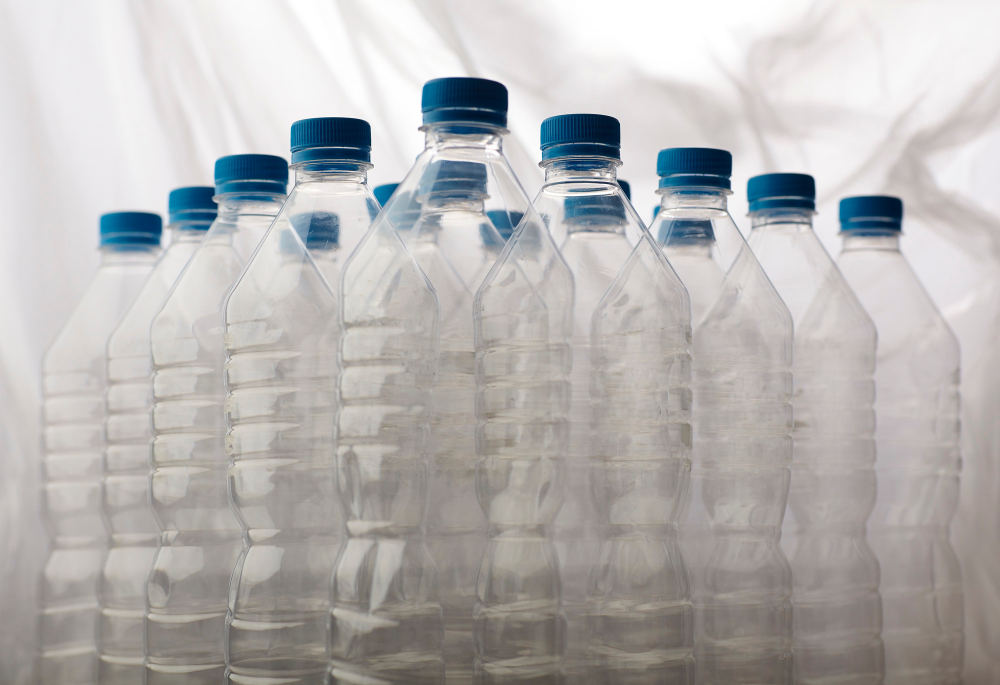
Plastics now account for over 50% of food packaging and more than 30% of beverage formats, supporting everything from ready meals and fresh produce to dairy, meat and bottled drinks. With an estimated 600 billion plastic bottles produced annually, the material remains central to modern supply chains.
But that dependency is now under pressure.
As geopolitical tensions intensify in the Middle East — particularly around the Strait of Hormuz — the fragility of the plastic supply chain is being exposed in real time. For food and beverage manufacturers, this is no longer a distant risk. It is an immediate operational challenge.


A Chokepoint Under Pressure
The Strait of Hormuz remains one of the most strategically important shipping routes in the world, handling around 13 million barrels of crude oil per day and over 20% of global LNG supply.
Disruption in this corridor directly impacts the availability and cost of hydrocarbons — the foundation of plastic production.
Materials such as polyethylene (PE) and polypropylene (PP), essential for films, trays, caps and bottles, are heavily tied to Middle Eastern production and export flows. When those flows tighten, the effects ripple rapidly across global packaging markets.
From Resin to Retail: The Cost Cascade
The impact on plastics is both immediate and severe.
Supply disruptions have already triggered price increases across Asia and Europe, with some resin producers declaring force majeure — effectively voiding supply contracts and pushing buyers into the spot market.
For manufacturers, this creates a cascade of challenges:
- Sudden and unpredictable input cost spikes
- Reduced supply certainty
- Increased exposure to spot-market volatility
At the same time, logistics pressures are compounding the issue. Rerouted shipping, war-risk insurance premiums and extended lead times are adding further cost layers to already stretched supply chains.
Beyond Plastic: A Multi-Layer Cost Shock
While plastics are at the centre of the issue, the wider impact is broader.
Glass packaging costs are rising due to increased energy prices. Fertiliser production — dependent on Middle Eastern inputs — is under pressure, feeding into agricultural costs. Transport and freight costs are also climbing, driven by fuel price volatility and disrupted shipping routes.
The result is a multi-layered cost shock, where manufacturers face rising expenses across packaging, production and distribution simultaneously.
Why does the Strait of Hormuz matter to food packaging in 2026?
It is the world’s most critical hydrocarbon chokepoint. Around 25% of all seaborne oil and 20% of global LNG pass through this narrow waterway. Since plastics like PE and PP are derived directly from these feedstocks, any regional tension instantly inflates the "input cost" of every tray, film, and bottle.
What does “Force Majeure” mean for food manufacturers right now?
It is a legal "get out of jail free" card for resin suppliers. When a conflict disrupts production, suppliers can void existing low-price contracts. This forces food brands to buy packaging on the "spot market," where prices in 2026 have been seen to jump 2x to 3x overnight, obliterating profit margins.
Which specific plastics are most at risk?
Polyethylene (PE) and Polypropylene (PP) are the most exposed. These are the workhorses of the F&B industry—used for everything from milk jugs and bottle caps to flexible snack films. PET (bottles) is also seeing sharp increases, driven by rising costs in PTA and MEG chemical precursors.
Can sustainable alternatives act as a "safety net" during this crisis?
While the shift to fiber-based and compostable materials is accelerating, they cannot yet replace plastic at the scale required for global F&B. In 2026, alternatives are a long-term hedge, but the immediate solution for most brands is geographical diversification—shifting sourcing to regions like the U.S. that are less dependent on Middle Eastern shipping.
What leading indicators should procurement teams watch?
To anticipate price hikes before they hit, watch:
Brent Crude & LNG Spot Prices: The primary drivers of resin cost.
PTA and MEG Futures: These signal where PET (bottle) prices will be in 90 days.
War-Risk Insurance Premiums: Often the first sign that freight costs are about to climb.