


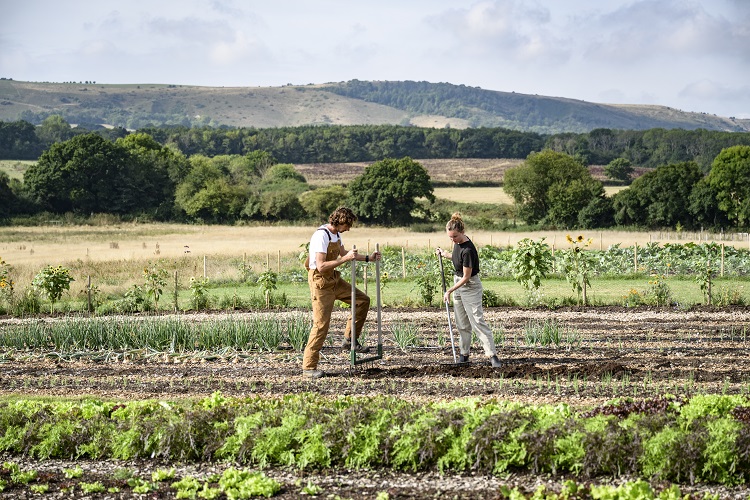
The SAI Platform has unveiled the ‘Regenerating Together’ program, a global initiative that brings together over 170 members, including companies and cooperatives, to promote regenerative agriculture practices. With the objective of enhancing soil health, water retention, biodiversity, and climate adaptation, this framework not only strengthens global agriculture but also ensures the sustainability of farmers’ businesses.
To address concerns surrounding the absence of a working definition of regenerative agriculture at the EU level, the SAI Platform has introduced a comprehensive definition. According to Domink Klauser, Director of Regenerative Agriculture at SAI Platform, regenerative agriculture is defined as an outcome-based farming approach that safeguards and enhances soil health, biodiversity, climate, and water resources while supporting the development of farming businesses. This definition provides the flexibility necessary to adapt to specific local contexts and emphasizes that regenerative agriculture is not a substitute for sustainable agriculture, but rather a complementary focus on the natural environment.
In addition to defining regenerative agriculture, the SAI Platform’s framework offers clear guidelines to assist farmers in implementing regenerative practices. The framework’s four key focus areas – water, biodiversity, climate, and soil – are accompanied by four steps of implementation: risk screening assessment, outcome selection, adoption of principles and practices, and monitoring and assessment of progress. The framework provides suggestions for regenerative agriculture principles that can be scaled to suit farms and businesses of all sizes along the supply chain. However, the strength of the framework lies in its non-prescriptive nature, allowing farmers to choose appropriate practices and principles that lead to improved performance against prioritized outcomes.
The flexibility of the framework enables its global applicability, accommodating the diverse needs of individual farmers. It can be easily adapted to crop and livestock systems, regardless of the size or location of the farm or ranch. As a result, the framework can encompass a wide range of practices while allowing farmers to select those that align with their agroecological and socioeconomic context.
The SAI Platform plans to integrate this framework into its existing initiatives, including the European Roundtable for Beef Sustainability (ERBS), the Farm Sustainability Assessment (FSA), and the Sustainable Dairy Partnership (SDP).
While collaboration with political bodies such as the EU is not a central component of the program, the SAI Platform remains open to potential partnerships between the public and private sectors. By working alongside partner organizations, the SAI Platform aims to encourage widespread adoption of the framework within the food and beverage industry. Furthermore, the platform recognizes the importance of alignment between the public and private sectors in the development of policies related to regenerative agriculture.
In conclusion, the ‘Regenerating Together’ program by the SAI Platform introduces a practical framework for implementing regenerative agriculture practices. By providing a clear definition, guidelines, and a flexible framework, the initiative aims to foster sustainable farming practices that benefit both the environment and farmers’ businesses.