


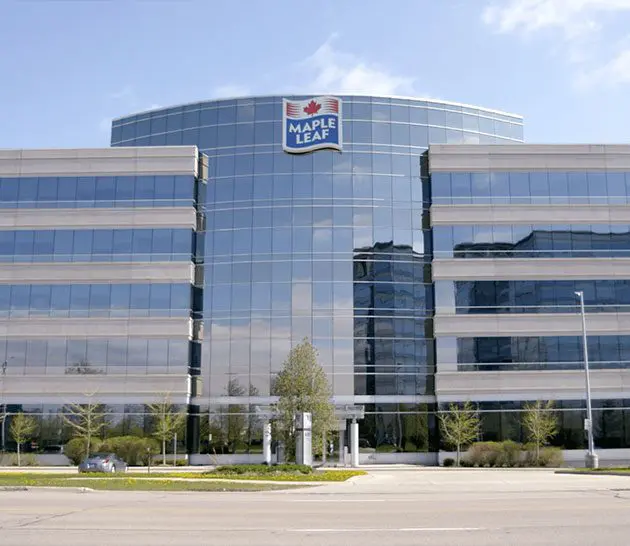
Maple Leaf Foods will close two US manufacturing facilities producing plant-based meat as the Canadian food producer responds to softer demand and works to restore profitability.
Announcing the decision on 22 September, the meat and plant-based foods group said it would “simplify” its operations, “improve the competitiveness of its manufacturing network” and “strengthen the structural profitability” of the business.
Manufacturing at its Seattle, Washington, and Turners Falls, Massachusetts, plants will be phased out over the next 12 to 18 months.
The company has not said how many employees will be affected. However, it said it would explore roles at other sites where possible.
Curtis Frank, Maple Leaf’s president and CEO, said the plant protein market has “changed significantly and declining volumes have left our manufacturing network substantially underutilised. Maintaining three facilities at these utilisation levels creates structural costs that are not sustainable over the long term”.
The company, whose brands include Field Roast, Lightlife and Yves Veggie Cuisine, will consolidate production at a single “plant protein centre of excellence” in Indianapolis, Indiana.
Maple Leaf intends to invest in the Indianapolis facility and increase staffing as production is expanded.
Frank said the consolidation would “significantly improve the economics” of the company’s manufacturing network while supporting the creation of “a structurally stronger and sustainably profitable plant protein business”.
In March 2025, the CEO told analysts that he saw “a pathway to profitable growth” in plant protein, describing the category as an “upside opportunity”.
Maple Leaf relaunched Yves Veggie Cuisine in Canada in May after purchasing the discontinued brand from Hain Celestial.
Frank said the latest plant closures “do not change our commitment to the plant protein category”, adding that the decision “strengthens the foundation of the business”.
For the second quarter, which ended in June, Maple Leaf reported a 1.6% increase in sales to C$1.02bn ($723.8m). Adjusted EBITDA rose 4.8% year on year to C$137.1m.
Sales in the prepared foods division, which includes plant-based protein products, declined 2% during the period. The performance reflected reduced volumes and increased spending on trade promotions, while poultry revenue climbed 7.1%.
Maple Leaf maintained its 2026 full-year outlook, which calls for mid-single-digit revenue growth and adjusted EBITDA of between C$520m and C$540m.