


Unilever’s Price Hikes Drive Higher Ice Cream Sales Amid Lower Volumes
Unilever’s strategic response to rising costs by increasing prices resulted in lower ice cream volumes but higher sales gains for the half-year ending June 30. Despite consumers displaying signs of caution, the company aims to maintain these gains. Unilever’s CFO, Graeme Pitkethly, stated that they have reasonably managed the price/volume competitiveness dynamic so far, but caution and patience are necessary.
In the US market, as a potential mild recession looms, consumers have begun trading down and reducing their spending, especially in the ice cream and dressings categories where private label growth has increased. In Europe, high inflation has led consumers to adjust their shopping habits, resulting in higher private label share. Unilever faces challenges in increasing prices in the region to offset cost inflation.
However, Unilever remains confident that these headwinds will not negatively impact their bottom line. The company projects underlying sales growth of over 5% for the year, with an anticipated total inflation impact of €2 billion in 2023. For the second half, they estimate an inflation impact of €0.4 billion. During the first half, Unilever’s turnover increased by 2.7% to €30.4 billion, with underlying sales growth of 9.1%, offset by acquisitions and disposals.
Unilever’s new CEO, Hein Schumacher, expressed confidence in the company’s strong fundamentals. Leveraging these strengths, supported by their simplified operating model, is key to improving performance and competitiveness. Schumacher believes that although inflation may moderate, Unilever’s fundamentals will help navigate potential uncertainties.
Pitkethly mentioned that the company is overcoming inflation dynamics and consumer pressures, with consumers focusing on budget balancing. Despite this, Unilever plans to continue investing heavily in brand promotion to remind consumers of their products. They believe that consumers tend to return to branded products as their spending power increases.
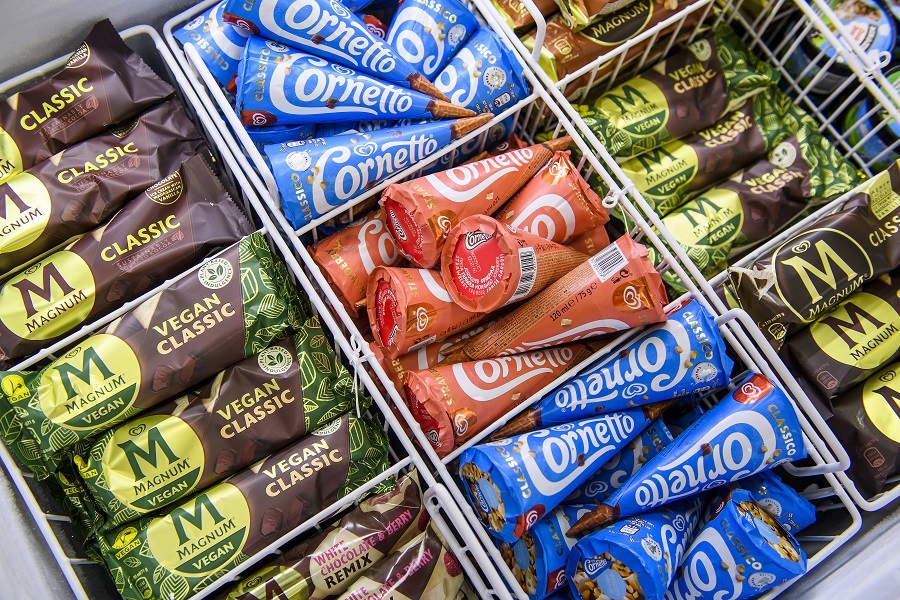
Unilever witnessed a 5.7% increase in overall ice cream sales in the first half, despite a 5.2% drop in volume. Price increases compensated for the decrease in consumer purchases. Magnum variants like Star Chaser and Sun Lover have contributed to premiumization and growth. In the nutrition category, sales grew by 10.4%, largely driven by dressings, although volumes dipped due to the challenging European market.
Unilever executives noted a decline in market share wins, attributing it to a reduction in SKUs, pricing dynamics, and consumer shifts in certain markets. Both Pitkethly and Schumacher expressed disappointment in this share decline, emphasizing the importance of investing in superior product quality and taking decisive action when necessary.
Unilever’s SKU adjustment involved a 30% cut in Knorr SKUs in the US, prioritizing products with low growth margins. Additionally, the company aims to reshape its portfolio through strategic acquisitions, such as the recent purchase of Yasso Holdings Inc., a premium frozen Greek yogurt brand in the US.