


The pork market continues to face an oversupply issue, resulting in price pressures and consecutive losses for producers, as highlighted in Rabobank’s latest quarterly report on the pork industry.
According to analysts, the liquidation of sow herds in China is expected to persist in the second half of this year.
In the first half of the year, piglet prices experienced a continuous decline. The Rabobank team attributes this trend to a gradual loss of confidence in the market among producers and fattening farms, along with the exit of underperforming producers.
The outbreak of African Swine Fever (ASF) remains a significant concern for China’s pork supply chain. Recent outbreaks have led to increased uncertainty, prompting more small-scale producers to exit sow farming and focus on fattening.
As for large Chinese companies, their strategies are undergoing adjustments. While some have reduced their sow herds, others are expanding at a slower pace.
Despite relatively low prices in the domestic market, China’s pork imports have seen growth in the first five months of 2023. Shipments from North and South America have increased, while European countries have seen a marginal rise in exports to the Asian market. Consequently, China now faces a high inventory of frozen pork.
Global trade
Analysts anticipate weaker global trade for the second half of 2023 compared to the same period last year. This is mainly due to the high inventory of frozen pork in China and reduced consumer spending. Additionally, tighter supply in the EU restricts pork shipments out of the region.
During the first four months of 2023, the EU and UK experienced a significant decline in pork supply. Some countries even witnessed double-digit falls. This constrained supply situation supports higher prices, resulting in reduced consumption.
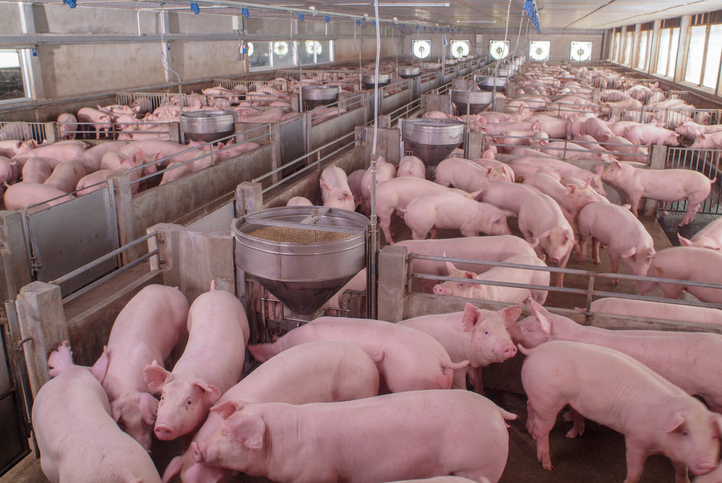
In the US market, the analysts foresee a decline in retail sales of pork during the second half of the year due to consumer cost-cutting measures. Demand has been slightly below expectations as the grilling season commenced, primarily due to adverse weather and poor air quality conditions.
Overall, consumers are generally opting for lower-priced alternatives, purchasing smaller portions, and exploring different distribution channels. However, pork’s affordability compared to beef and premium seafood, yet higher price compared to poultry, helps maintain its stable position in consumer preferences.
Feed prices
While feed prices have softened, the Rabobank report indicates that production costs will remain above pre-Covid levels.
Price volatility has been observed in corn and soybean markets, influenced by weather concerns, uncertainty in the Black Sea grain corridor, and variations in soy planted areas and corn areas in the US.
Chenjun Pan, senior analyst for animal protein at Rabobank, commented that feed prices are expected to decrease in the third quarter, albeit staying above pre-Covid levels due to relatively low stock-to-consumption ratios in many countries.
Disease challenges globally
Globally, disease outbreaks continue to pose challenges for the industry.
“Producers worldwide are facing significant tasks in improving herd health due to the impact of disease outbreaks on production,” stated Pan.
African Swine Fever (ASF) has been a particularly disruptive factor in Asia and Europe. Although multiple regions were affected in the first half of 2023, the disease spread at a slower pace during Q2. Sporadic outbreaks were reported in Indonesia, Vietnam, the Philippines, and China, leading to continued liquidation of sow herds.
Meanwhile, porcine reproductive and respiratory syndrome (PRRS) remains a significant challenge in Spain, resulting in a notable drop in production accompanied by high mortality rates among sows and weaned piglets. Outbreaks are ongoing in Spain’s largest pig production area between Lleida and Zaragoza.
Keywords: food and beverage industry trends, food manufacturing trends, food processing technology, food distribution trends, food and drink industry innovation, food and drink sustainability, food and drink regulations, food and drink packaging, food and drink marketing, food and drink consumer trends.