


The food and beverage industry has seen some significant trends and advancements in recent years. One area of focus has been on the reduction of sugars in popular breakfast cereals and yogurts. However, despite celebrated reductions in sugar content, these products have still fallen short of the 20% target set by the Government’s Sugar Reduction Programme.
A study conducted by Action on Sugar, based at Queen Mary University of London, revealed that only a small number of cereals and yogurts surveyed were found to be low in sugars. Furthermore, only four cereals met the criteria of being low in both sugars and salt. As a result, Action on Sugar is calling for the removal of packaging that appeals to children from these high-sugar, high-salt, and high-saturated fat products.
The research compared the average sugar content per 100g in each company’s range of products with packaging that would attract children. Shockingly, 47% of cereals surveyed contained a third of a 4-6-year-old’s maximum daily sugar recommendation in just one bowl.
Interestingly, Lidl, Nestle, and Aldi had the highest sugar content per 100g in their range of cereals with child-appealing packaging. For example, Lidl’s Crownfield Choco Hazelnut Pillows contained 28.5g of sugar per 100g.
Similarly, when it comes to yogurts, 65% of those surveyed contained a third of a 4-6-year-old’s daily maximum sugar recommendation. Nestle, Lidl, and Aldi had the highest sugar content per 100g in their range of yogurts with child-appealing packaging. Nestle’s Smarties Vanilla yogurt contained 14.6g of sugar per 100g.
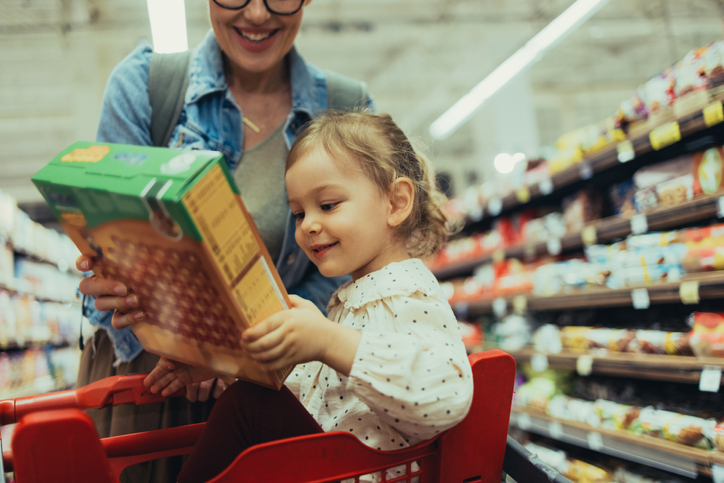
This issue stems from the use of packaging that appeals to children, including cartoon characters, vibrant colors, and familiar characters. This tactic, known as ‘pester power,’ is designed to influence children and their caregivers’ purchasing decisions. While restrictions exist for the advertising of unhealthy foods to children, there are no specific regulations for the packaging design.
Action on Sugar suggests redirecting visually captivating packaging strategies towards healthier food products sold in plain packaging targeted at adults could be a potential solution.
Dr. Kawther Hashem, a registered nutritionist and Campaign Lead at Action on Sugar, emphasizes the need for action, stating, “It’s ludicrous that products with child-appealing packaging still contain excessive amounts of sugar, unsuitable for children’s regular intake.”
To address the rising health problems among children, companies should remove child-appealing packaging from misleading and unhealthy products.
It’s essential for businesses in the food and beverage industry to stay updated on industry trends, manufacturing advancements, technology in food processing, distribution practices, sustainability efforts, regulations, packaging, marketing strategies, and consumer preferences. These factors play a crucial role in shaping the industry’s future.