


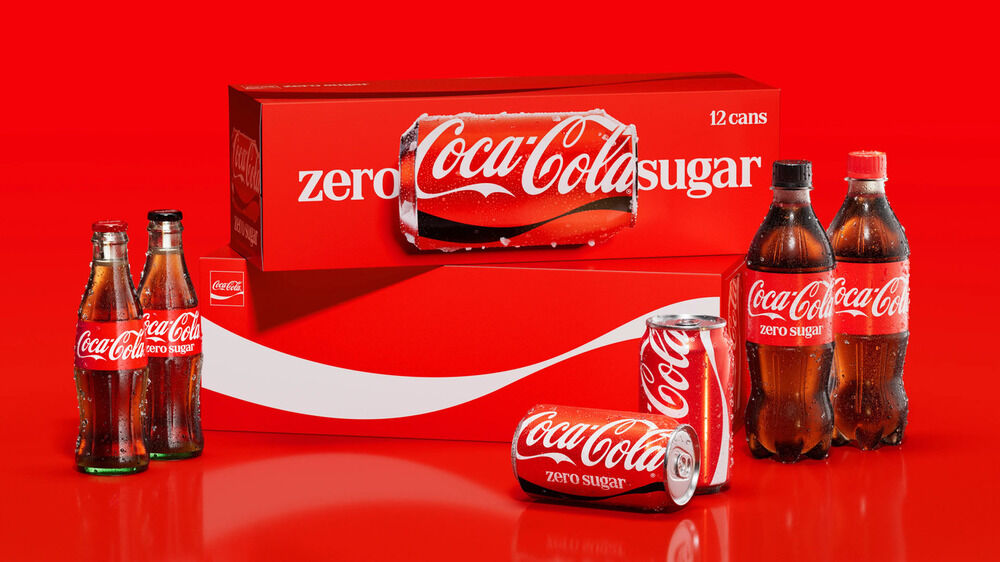
One of the most prominent global brands has decided to enhance its own identity even further.
The Coca-Cola Company has introduced a comprehensive visual identity system aimed at ensuring that every interaction with consumers is “unmistakably Coca-Cola,” whether on store shelves, in dining establishments, via digital platforms, or through marketing initiatives. This strategy indicates a wider trend that numerous food and beverage companies are currently facing: the need to establish stronger brands through increased simplicity and uniformity.
Arnab Roy, president of Coca-Cola’s global category, stated: “Coca-Cola is one of the most recognised brands in the world, and with that comes a responsibility to keep evolving. This refresh is about being clearer and more consistent in how we show up, wherever people experience our brand. By building on the things people already know and love, we’re creating a stronger foundation for growth while staying unmistakably Coca-Cola.”
Elevating the brand’s visuals
The newly established identity aims to enhance the brand’s most identifiable visual features.
The classic red-and-white color scheme will be even more prominent, alongside the Spencerian script logo, the Dynamic Ribbon, and the Arden Square. These components will be applied more uniformly across packaging, vending machines, retail settings, and digital avenues, creating a cohesive global experience for consumers. The initial rollout will take place in Latin America, Europe, the Middle East, and Asia before broadening further.
One of the most significant changes is found in Coca-Cola Zero Sugar, which will now visually align more closely with the flagship brand while still maintaining its unique identity through larger “Zero Sugar” text, a black Dynamic Ribbon on cans, and black caps on PET bottles. The goal is to enhance the connection between these products while ensuring clear distinctions.
Uniformity as a strategic edge
For years, packaging has been a critical marketing asset within the food sector, but its role has transformed significantly.
Today, products need to be easily identifiable across e-commerce sites, social media platforms, quick-commerce applications, retail media networks, and digital advertising. Coca-Cola’s recent approach acknowledges that visual consistency is a valuable operational asset.
By eliminating the accumulation of regional adaptations and creative variations, the company is standardizing its brand representation wherever consumers interact with it. This should provide quicker creative execution, improved global recognition, and enhanced brand management.
Rapha Abreu, global vice president of design at The Coca-Cola Company, remarked: “For over a century, Coca-Cola has been a global symbol of optimism and authenticity. Now, with one seamless visual identity, we can deliver one recognizable brand experience to consumers.”
Insights for food and beverage producers
While few companies can match Coca-Cola’s scale, the underlying principles of this branding refresh are applicable across the food and beverage landscape.
As many businesses have grown quickly through acquisitions, innovations, and product line expansions, they often find themselves with increasingly complicated brand portfolios. New offerings, functional variants, healthier formulations, and limited editions can gradually dilute brand recognition if not attentively managed.
This challenge is prevalent throughout the industry.
Consumers are looking for innovation but also want reassurance. They desire healthier options, reduced sugar products, and new flavors while retaining the familiarity that drew them to a brand in the first place.
By simplifying its visual structure instead of overhauling it, Coca-Cola illustrates how legacy brands can modernize without compromising their recognition.
Integrating technology with brand management
An important component of this initiative is what underlies the packaging.
In support of the new direction, Coca-Cola has launched a digital Brand Center along with AI-powered Design Intelligence tools for its internal teams and agency partners. These tools are designed to maintain governance, ensure consistency and uphold creative standards while facilitating faster content development across global markets.
This move aligns with a broader trend in manufacturing, where artificial intelligence is increasingly playing a role in supporting creative workflows as well as product development, supply chain planning, and quality management.
Rather than replacing designers, Coca-Cola is leveraging technology to guarantee that every execution aligns with its core visual standards while enabling creative teams to operate more efficiently at scale.