


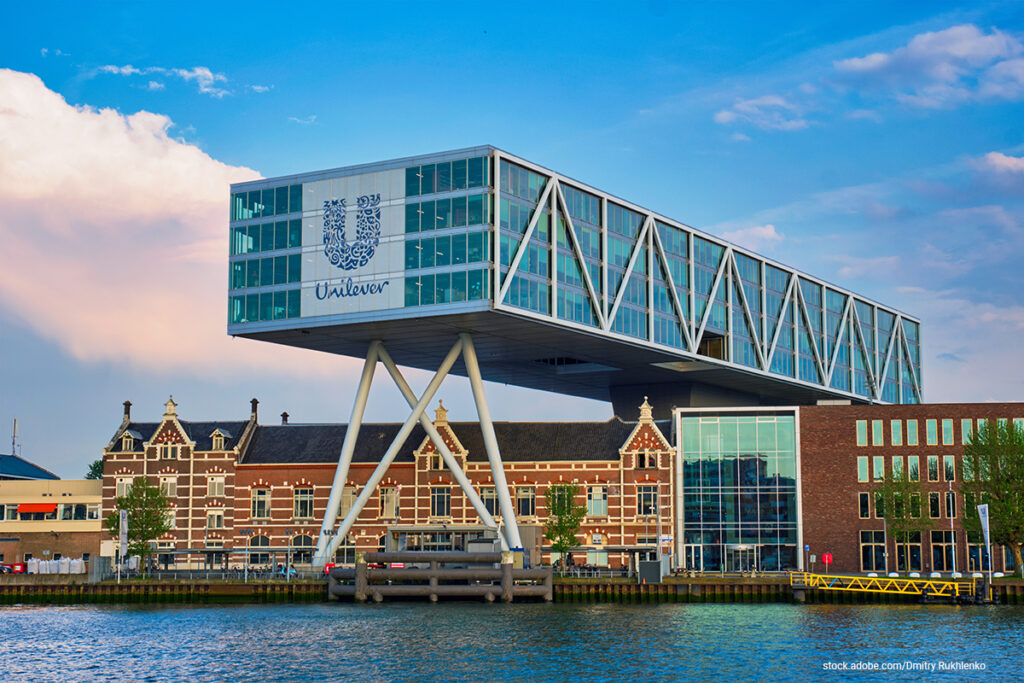
Amid renewed speculation surrounding the future of Unilever’s food division, the consumer goods giant has confirmed it is in disposal discussions with McCormick & Co.
US-based McCormick also acknowledged the talks, stating it is “engaged in discussions with Unilever regarding a potential strategic transaction” involving the assets.
If completed, the deal would bring together a powerful portfolio of brands, combining McCormick’s core range of herbs and spices, alongside French’s mustard and Frank’s RedHot, with Unilever’s Hellmann’s mayonnaise, Knorr cooking products and Colman’s mustard.
In a statement released today (20 March), Unilever said it was responding to media reports suggesting negotiations were underway between the two companies.
“Unilever confirms that it has received an inbound offer for its foods business and is in discussions with McCormick & Company, Inc. There can be no certainty that any transaction will be agreed,” the Marmite and Horlicks owner said.
“The board believes foods is a highly attractive business, with a strong financial profile led by market-leading brands in growing categories and is confident in the future of the foods business as part of Unilever.”
Earlier in the week, Bloomberg reported that Unilever was exploring options for its food operations, including a potential full or partial separation. The discussions were described as being at an early stage, with multiple strategic routes under consideration.
Unilever, which completed the spin-off of its ice cream business in December — now operating as The Magnum Ice Cream Company — declined to comment on the Bloomberg report.
Separately, The Financial Times reported that Unilever had previously held discussions with Kraft Heinz over a possible combination of their respective food portfolios, although those talks have since ended.
At the same time, Kraft Heinz has been reviewing its own structure, including plans to split into two standalone food businesses — an initiative first outlined in September before being paused in February under newly appointed CEO Steve Cahillane.
McCormick also cautioned that no agreement is guaranteed.
“While these discussions are ongoing, there can be no certainty or assurances as to whether an agreement for a transaction will be reached or as to the terms or timing of any such transaction,” the Cholula brand owner said.
“McCormick regularly evaluates its portfolio and strategic options in pursuit of maximising shareholder value and consistent with its fiduciary duties and in consultation with its financial and legal advisors.”
Beyond its ice cream exit, Unilever has already been streamlining its food portfolio through disposals including Graze, The Vegetarian Butcher and Unox.
Financially, the group reported underlying sales growth of 3.5% last year, with its food division contributing a more modest 2.5%. Food now represents roughly a quarter of Unilever’s €50.5bn ($58.06bn) annual revenue.
A potential exit from food would allow the company to sharpen its focus on higher-growth segments such as home care and personal care, potentially improving overall organic growth performance.
Barclays analyst Warren Ackerman suggested such a move would ease pressure on Unilever’s medium-term growth targets.
“It would make its 4-6% organic-sales-growth algo less of a stretch weighed down by a foods business which is unlikely to grow more than 2-3%. An exit of foods would free up resources for Unilever to double down on its health and wellbeing and personal-care strategy,” he said.
Ackerman estimates the value of Unilever’s food division at approximately nine to ten times its projected 2027 EBITDA.
“In 2025, Unilever’s food division generated circa €3.2bn of underlying EBITDA. By the 2027 fiscal year, we estimate the food business should generate circa €3.5bn of underlying EBITDA,” he added.
“Assuming circa €350m-400m of separation costs and dis-synergies in 2027 were a demerger to take place, this would bring the food division to circa €3.1bn of 2027 adjusted EBITDA.”