


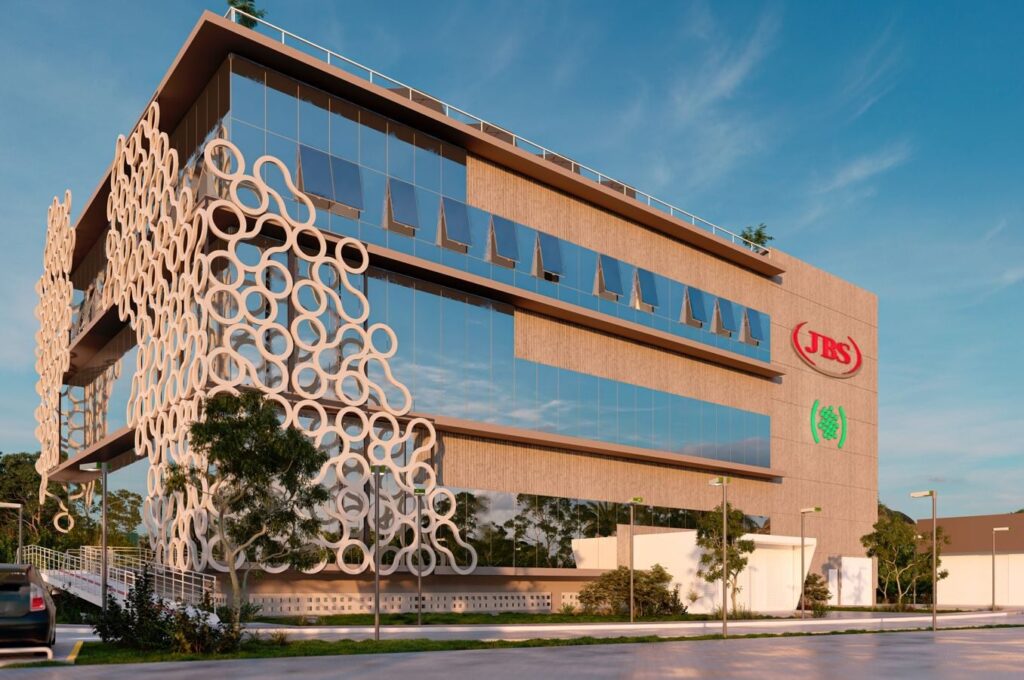
Meat giant JBS has commenced construction on a research and development (R&D) site that will focus on the development of cell-based protein. The facility aims to improve the efficiency, scalability, and economic competitiveness of cultivated protein production. This investment marks JBS’ dedication to the emerging industry.
The Biotech Innovation Centre, set to open by the end of next year, will be located in the Sapiens Parque innovation park in Florianópolis, Brazil. JBS plans to invest approximately $62 million in three stages, with the final stage involving the construction of an industrial-scale module to demonstrate the viability of cultured protein.
JBS has been actively expanding its presence in the cell-cultivated meat market. In 2021, the company acquired a majority stake in Spanish-cultivated protein firm BioTech Foods, allowing access to their technology and protein production. This collaboration paved the way for the construction of the world’s largest cultivated beef protein plant in San Sabastián, Spain.
Other major players in the meat industry, such as Cargill and Tyson Foods, have also recognized the potential of the cell-based protein sector. Both companies have made investments in Memphis Meats (now Upside Foods), while Cargill has backed Aleph Farms and Tyson has supported Future Meat Technologies (now Believer Meats).
Currently, only the US and Singapore have cleared cell-based meat for commercial sale, and it remains a niche market. However, the investment in cultured protein innovators remains high, with annual investments reaching $1.3 billion in 2021 and $896 million in 2022, according to analysis by the Good Food Institute.
Various market forecasts predict significant growth for cultivated meat, with estimates of a 20% market share worth $450 billion by 2040, according to Barclays. GovGrant estimates that cultivated meat could capture 35% of total meat sales. Despite these optimistic forecasts, there are still challenges to overcome before cell-based meat becomes mainstream.
Upside Foods, one of the first companies to receive regulatory approval in the US for its cell-based chicken, recently announced plans to establish its first large-scale factory. However, consumer demand for cultivated meat remains limited, and significant marketing efforts may be required to generate widespread interest.
Ultimately, the success of cultivated meat in the market will depend on consumer acceptance and demand. As the industry continues to evolve, companies like JBS and its competitors will play a crucial role in driving innovation and shaping the future of the food and beverage industry.