


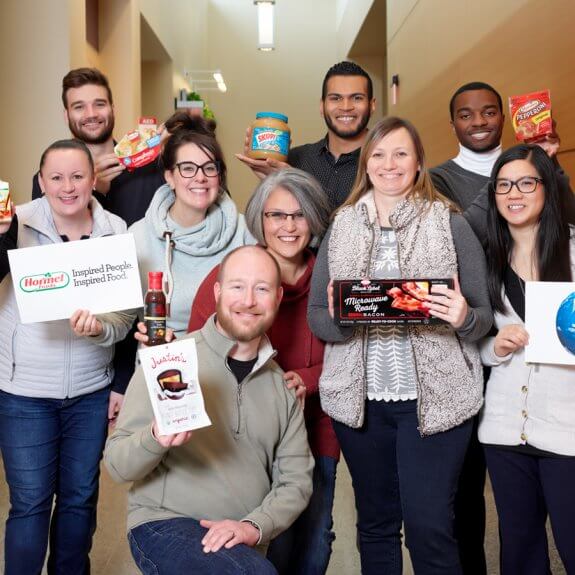
As Hormel Foods embraces the protein trend to bolster its revenues and profits, the U.S. retail and foodservice sectors are signaling potential further adjustments to their product lineup.
Already, the Justin’s brand of nut butters and chocolate snacks has been spun off into a venture with private-equity firm Forward Consumer Partners. Hormel Foods’ president, John Ghingo, indicated that additional changes could be on the horizon.
During a discussion about fiscal 2025 results with analysts on December 4, Ghingo did not provide specific instances but emphasized the need to “simplify” the portfolio.
“Portfolio reshaping certainly is an ongoing effort for us and it’s a strategic one,” he stated.
Ghingo elaborated on the strategic categories, expressing the importance of aligning their portfolio with growth ambitions while also simplifying operations. He highlighted that confectionery, as exemplified by Justin’s, is a “non-strategic category.” He reiterated, “If you think about simplifying operations, that includes exiting non-strategic businesses and ensuring we have the best owner for our brands and product lines.”
The focus will remain on protein for Hormel Foods, which boasts established brands like Jennie-O turkey, Black Label bacon, and Austin Blues smoked meats.
However, challenges lay ahead in the upcoming financial year. Elevated beef and pork prices, combined with uncertainties surrounding turkey supply due to the impact of bird flu in 2025, are expected to create pressure.
These challenges may result in increased prices within a market where Ghingo noted that the “strained” consumer continues to grapple with inflation and an uncertain macroeconomic landscape.
“Protein demand isn’t a passing trend. It’s a sustained, growing priority for many consumer segments,” Ghingo stated, although he did not address the rising usage of GLP-1 weight-loss drugs expected to drive increased demand.
Looking ahead to 2026, Ghingo commented, “We have a balanced, protein-centric portfolio with broad capabilities to create value and win with proteins. We deliver winning protein solutions for breakfast, lunch, dinner, and every snack in between, both at home and away, whether animal-based or plant-based.”
Interim CEO Jeffrey Ettinger, following the departure of Jim Snee, indicated that the revenue and profit forecasts for the new year reflect the pressures from commodity costs.
“We expect pork input costs to decline compared to fiscal 2025, but still remain above the five-year average,” Ettinger explained. He added that beef costs are projected to remain high, continuing to pose challenges in fiscal 2026, with net costs expected to be elevated relative to the previous year as well.
For the coming year, organic growth is anticipated to be in the range of 1-4%, broader than the long-term goal of 2-3% and the 2024 figure of 2%. Adjusted operating income is expected to climb by 4-10%, contrasting with a recently reported decline of 11% and the longer-term target of 5-7%.
Adjusted diluted EPS is projected to rise by 4-10%, compared to a 13% drop in fiscal 2025.
“Profit was challenged this year, and value-added growth was offset by year-over-year margin pressures due to higher commodity input costs, supply chain impacts from avian illnesses, and other discrete items,” said interim CFO Paul Kuehneman.
Kuehneman also offered insights into the tariff impact, particularly from steel and aluminum, estimated at $25-35 million.
“We are providing fiscal 2026 guidance with a slightly wider range than our growth algorithm,” Ettinger noted. “This approach accounts for the current dynamic environment and allows us flexibility to manage near-term volatility.”
“We believe our protein-centric portfolio, coupled with our strong presence in both retail and foodservice, positions us strategically for success in the future.”
This strategic approach reflects broader trends within the food and beverage industry, highlighting the growing focus on protein solutions that align with food and drink consumer trends.
With these developments, businesses in the food and drink industry must adapt to evolving market demands and operational complexities.