


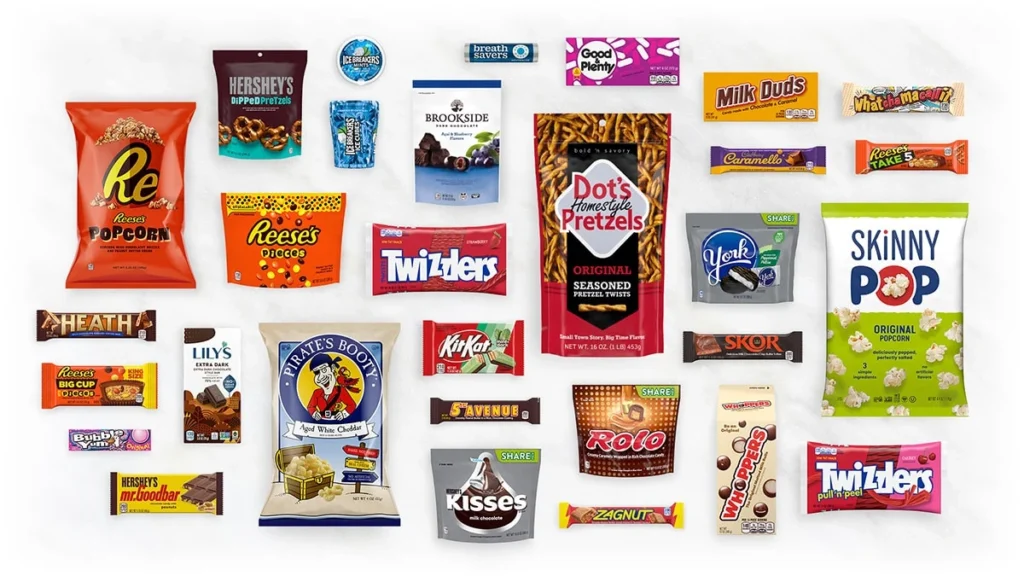
Hershey has introduced a major overhaul of its US commercial operations, reshaping how its confectionery, salty snacks and protein ranges are brought to market.
Announced on 16 March, the new approach will bring together commercial planning and retail execution across all three categories for the first time.
In a company statement, Hershey said the updated model unifies its brand strength, category strategies and consumer insights within a single, integrated structure.
“This evolution combines the scale of our iconic US confectionery brands with the speed and flexibility of our salty snacks and protein portfolios,” the business noted.
President and CEO Kirk Tanner commented: “Our strongest results come when talented teams collaborate across functions to deliver bold, innovative thinking.”
Despite the operational shift, Hershey will continue to report North America Confectionery and North America Salty Snacks as separate business segments, alongside its International division. Protein brands, including One and Fulfill, will remain part of the North America Confectionery segment.
A company spokesperson explained: “This is fundamentally a change in how we plan and go to market—moving away from category-specific commercial planning towards a more integrated model centred on total snacking occasions. It’s about how we operate, not how we report.”
As part of the changes, several senior leaders have taken on expanded roles with immediate effect.
Andrew Archambault, president of US operations, will now oversee the full domestic portfolio, including commercial planning, execution, category leadership, customer engagement and retail delivery.
Meanwhile, Stacy Taffet, chief growth and marketing officer, will lead marketing across the entire portfolio, and chief brand officer Vero Villasenor will transition into a new role focused on global brand activation.
Hershey confirmed the changes will not result in job losses, emphasising that the move is not a restructuring exercise.
“The shift reflects the integration of marketing and customer planning activities that were previously managed separately—bringing those teams together into a more unified way of working,” the spokesperson added.