


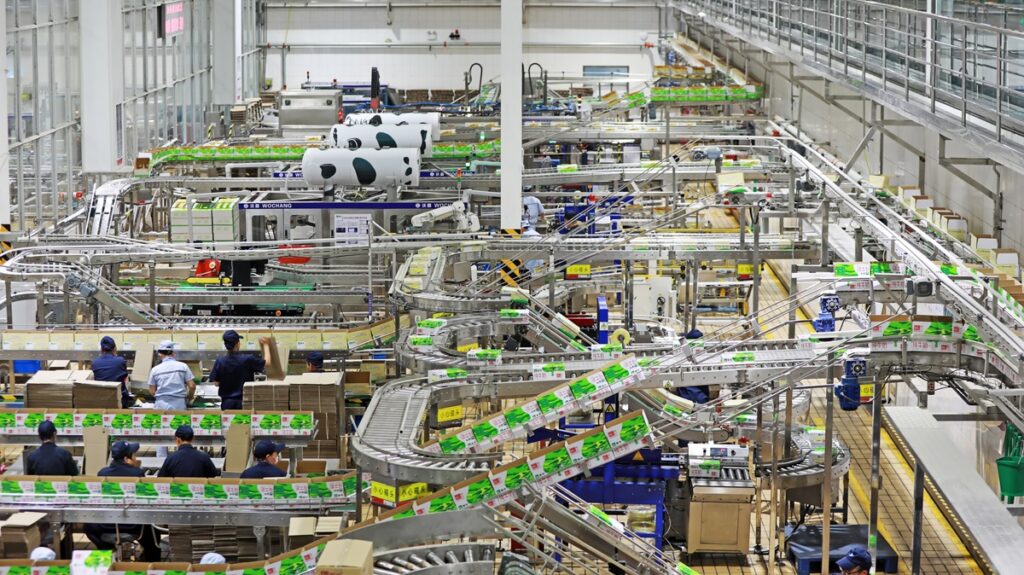
Industry Insight: Why are modern conveyor systems so important to food manufacturing efficiency? Modern conveyors do more than transport products. They regulate production flow, protect product quality, support hygienic operations and influence energy consumption. By combining intelligent controls, condition monitoring, efficient drives and improved mechanical design, manufacturers can reduce downtime, minimise waste and improve overall equipment effectiveness (OEE) without necessarily replacing entire production lines.
In 2026, conveyor technology is becoming a decisive factor in production efficiency. From intelligent drives and predictive maintenance to hygienic engineering and safer product handling, manufacturers are discovering that the performance of an entire production line can depend on what happens between the machines.
A production line is only as efficient as its least reliable connection. An advanced filling machine, high-speed wrapper or automated packing system can deliver impressive individual performance, but those gains quickly disappear when products accumulate, belts slip or transfers create repeated stoppages.
For food and beverage manufacturers, this is changing the way conveying equipment is specified, maintained and evaluated. Rather than treating conveyors as relatively inexpensive infrastructure, engineering teams are increasingly examining their contribution to line availability, product integrity, cleaning efficiency and total operating costs.
The opportunity is considerable. Improving the movement of products between processes can unlock existing capacity without demanding significant investment in new production machinery.

Where Productivity Meets Precision
One of the most important developments in conveyor engineering is the shift from continuous movement towards precisely controlled product flow.
Traditional systems frequently operate at fixed speeds, regardless of conditions elsewhere on the line. When downstream equipment slows, products accumulate. When production pauses, conveyors may continue running unnecessarily, consuming electricity and adding mechanical wear.
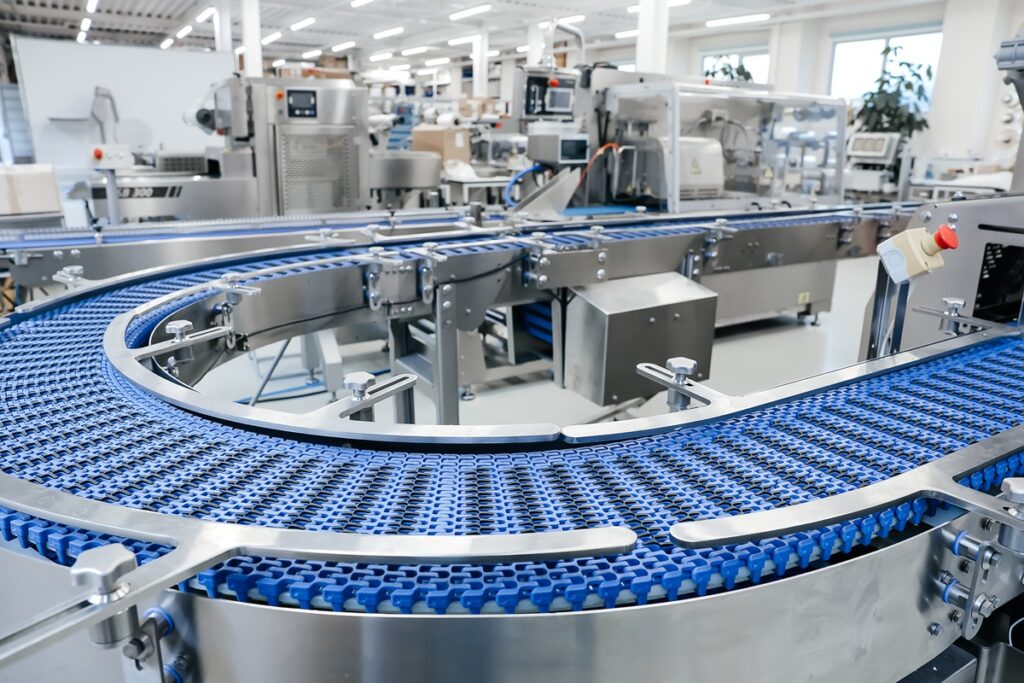
Modern zoned conveying systems offer a more responsive approach. Sensors detect product presence, while independently controlled sections regulate movement according to demand. Zero-pressure accumulation allows products to queue without contacting one another, reducing damage and providing valuable buffering between machines operating at different speeds.
For manufacturers handling delicate bakery products, prepared meals, confectionery or lightweight packaged goods, this control can be particularly valuable. Smooth acceleration, controlled spacing and carefully engineered transfers help prevent tipping, crushing and other handling defects.
The real advantage, however, is improved line stability. By absorbing small variations in equipment performance, conveyors can prevent minor interruptions developing into more disruptive production stoppages.
Engineering Energy Out of the Equation
Energy efficiency remains a substantial consideration, particularly where extensive conveyor networks operate across multiple shifts.
High-efficiency motors, variable-speed drives and decentralised controls offer opportunities to reduce electricity consumption. Permanent-magnet and synchronous reluctance motor technologies can provide efficiency advantages in appropriate applications, while modern control systems reduce unnecessary operation during periods of low demand.
However, the savings depend heavily on the existing installation, operating cycle and load characteristics. Replacing a motor with a more efficient alternative will not automatically produce substantial savings if the conveyor remains poorly configured or continues running empty.
A more effective strategy begins with understanding where energy is actually consumed.
Monitoring electricity use by conveyor section, production shift and product format can reveal opportunities that are otherwise overlooked. Excessive belt tension, poorly maintained bearings, unnecessary speed and inefficient transfers all contribute to avoidable consumption.
Demand-based operation can also reduce component wear, introducing a second financial benefit alongside lower electricity costs.
For engineering teams assessing investment, the most meaningful measurement is not simply motor efficiency but energy consumption relative to useful production output.
Predicting Problems Before Production Stops
The growing availability of relatively inexpensive sensors is changing how manufacturers manage conveyor reliability.
Vibration, temperature, motor current and operating-speed data can provide early indications of mechanical deterioration. Changes in these measurements may reveal developing bearing faults, abnormal loading, belt misalignment or excessive friction before equipment fails completely.
Increasingly, this information can be analysed locally through edge computing, allowing abnormalities to be identified without relying entirely on cloud-based processing.
The practical value lies in turning information into maintenance decisions.
Rather than receiving an unexplained warning, an engineering team might identify a rising vibration trend on a critical drive assembly and schedule inspection during the next planned production break.
When connected to maintenance management systems, these alerts can contribute to more effective work scheduling, spare-parts planning and equipment history.
Yet sophisticated analytics are not always necessary. A relatively simple monitoring system on a critical legacy conveyor may deliver greater value than an expensive digital platform installed across equipment with little operational risk.
The priority should be identifying failure points with the greatest consequences for production, then introducing monitoring where it can make a measurable difference.
Connectivity also demands appropriate cybersecurity measures, particularly where conveyor controls communicate with wider factory networks.
Hygiene Designed Into Every Movement
Few considerations are more important in food conveying than cleanability. Conveyor frames, belts, rollers and drive assemblies must be suitable for their operating environment while allowing effective cleaning and inspection.
The fourth edition of the European Hygienic Engineering & Design Group’s (EHEDG) Guideline 8, published in December 2025, reinforces the importance of risk-based hygienic design for equipment and production environments.
For conveyor applications, this means considering inaccessible surfaces, product traps, poor drainage and components that are difficult to dismantle or inspect. Open-frame construction, self-draining surfaces, accessible belt assemblies and appropriately specified materials can all contribute to more effective hygiene management.
Design requirements will vary substantially between a dry bakery operation and a wet-cleaned meat or ready-meal processing environment. Equipment suitable for one application may introduce unnecessary complexity or contamination risks in another.
Cleaning efficiency also has a direct commercial value.
Quick-release components and accessible construction can reduce the time required for cleaning and inspection, while designs that avoid unnecessary crevices may reduce water and chemical demand.
However, rapid dismantling must never compromise operator protection or cleaning validation. The objective is not simply to clean equipment faster, but to achieve consistent hygienic standards safely and with less disruption to production.
Safety Cannot Be an Afterthought
Conveyor safety deserves particular attention because familiar equipment can conceal serious mechanical hazards.
The Health and Safety Executive (HSE) identifies conveyors as being involved in more machinery accidents in food and drink manufacturing than any other machine category. Common dangers include in-running nip points, exposed transmission components and trapping hazards between moving and stationary parts.
Many incidents occur during routine activities, including clearing blockages and cleaning.
Under the Provision and Use of Work Equipment Regulations 1998 (PUWER), employers must ensure equipment remains suitable, properly maintained and safe to operate, maintain and clean.
Modern conveying systems can incorporate improved guarding, interlocked access panels, emergency stops and designs that reduce access to hazardous moving components. Effective isolation procedures and formal safe systems of work remain essential.
For older installations, a thorough risk assessment may identify opportunities to improve safeguarding without replacing the entire conveyor.
Looking ahead, the EU Machinery Regulation becomes generally applicable on 20 January 2027, introducing further considerations for machinery supplied into relevant European markets, including Northern Ireland. Great Britain’s machinery supply requirements must be considered separately.
For manufacturers planning connected or extensively modified installations, machinery safety should be addressed from the earliest design stages rather than treated as a final commissioning exercise.

Handling Packaging Without Compromise
Packaging innovation is introducing another challenge for conveyor designers.
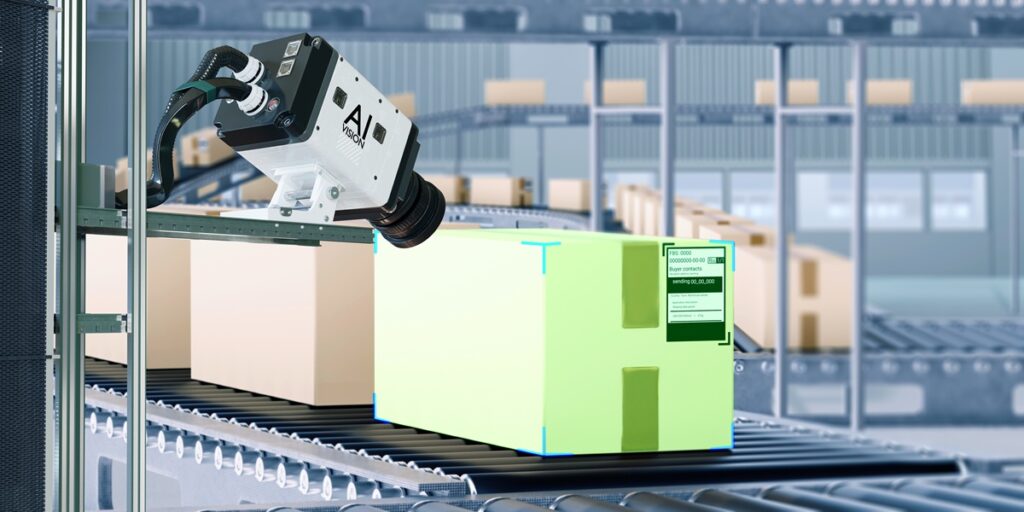
Lighter cartons, fibre-based trays, flexible films and alternative packaging formats can behave differently from the materials they replace. Reduced rigidity, changing friction characteristics and greater sensitivity to pressure can all affect conveyor performance.
A transfer that handles rigid plastic containers successfully may cause instability when the same product moves into lighter packaging.
Variable-speed sections, low-pressure accumulation, adjustable guides and carefully designed transfer points can help manufacturers accommodate these changes without compromising output.
The financial importance of packaging selection is also increasing. Under the UK’s packaging Extended Producer Responsibility scheme, the modulation of household packaging waste disposal fees begins with the 2026–27 assessment year, using recyclability ratings to differentiate fees.
Although these obligations relate to packaging placed on the market rather than conveyors themselves, the operational connection is important. As manufacturers adopt alternative materials, conveying equipment must be capable of handling them reliably.
Reducing damaged packs, rejected products and unnecessary repacking also helps control manufacturing waste, regardless of the packaging’s regulatory classification.
Ultimately, successful packaging innovation depends on compatibility with the entire production process, not simply the environmental credentials of an individual material.
Retrofit, Replace or Reconfigure?
For many manufacturers, the most commercially attractive solution will not involve installing a completely new conveyor system.
Existing installations can often benefit from upgraded drives, improved sensors, more efficient motors, revised transfer arrangements and modern control technology.
Before committing capital, engineering teams should examine where performance is being lost. Repeated jams, excessive cleaning time, high maintenance demand, product damage and unnecessary energy consumption provide tangible starting points for improvement.
Even modest gains can accumulate.
Consider a line operating 250 production shifts annually. Recovering just ten minutes of otherwise lost production each shift creates more than 41 hours of potential additional capacity each year. Whether that capacity translates into additional revenue depends on demand, staffing and the performance of the wider production process.
A credible investment appraisal should therefore consider available production capacity, maintenance expenditure, cleaning requirements, energy savings and reject rates alongside the initial equipment cost.
Manufacturers evaluating upgrades can also explore specialist engineering and conveying capabilities through the Food & Beverage Business Directory.
The strongest projects are those that solve a clearly identified operational problem rather than simply introduce another layer of technology.
Keeping the Entire Line Moving
The future of conveying is not defined by faster belts or increasingly sophisticated sensors alone. It lies in the ability to maintain controlled, reliable product movement throughout the manufacturing process.
A well-engineered conveyor installation protects the investment made in every machine around it. It reduces interruptions, supports hygiene, improves working conditions and helps manufacturers accommodate changing production demands.
For businesses seeking greater efficiency without continually expanding their equipment footprint, the opportunity may already be travelling through the factory.
The next major improvement in production performance could come not from the machines themselves, but from how intelligently everything moves between them.
How does packaging EPR affect conveyor technology?
Packaging Extended Producer Responsibility does not directly regulate conveyor equipment. However, its incentives for more recyclable packaging can influence the materials manufacturers choose. Conveyors may therefore require improved product handling, gentler transfers and flexible accumulation systems to accommodate lighter or more delicate packaging formats.
Can existing food conveyor systems be upgraded rather than replaced?
Yes. Depending on the equipment's condition and design, upgrades may include more efficient motors, variable-speed drives, condition-monitoring sensors, improved guarding, revised transfers and modern controls. A technical assessment should establish whether upgrading offers better long-term value than replacement.
What makes a conveyor suitable for hygienic food processing?
Hygienic conveyors use materials and construction methods suited to their operating environment. Important considerations include accessible cleaning surfaces, effective drainage, minimal product traps, suitable belt materials and safe access for inspection. EHEDG guidance provides recognised principles for hygienic equipment design.
What is predictive maintenance in conveyor systems?
Predictive maintenance uses operating data, including vibration, temperature and motor current, to detect potential mechanical problems before equipment fails. Monitoring changing conditions allows engineering teams to plan inspections and repairs, reducing the risk of unexpected production stoppages.
How do intelligent conveyor systems improve food production efficiency?
Intelligent conveyors use sensors, variable-speed controls and zoned operation to regulate product movement. They reduce unnecessary running, minimise accumulation problems and improve coordination between processing and packaging machinery. These improvements can increase overall equipment effectiveness while reducing energy consumption, wear and product damage.