



Industry Insight: What is the future of traceability in food manufacturing? Food traceability is moving beyond basic supplier and customer records towards connected, batch-level visibility throughout production and distribution. By integrating digital identification, manufacturing systems, real-time monitoring and interoperable data standards, manufacturers can identify affected products faster, reduce unnecessary waste, strengthen compliance and improve operational efficiency. The greatest benefit comes not from collecting more information, but from connecting accurate data across the entire production process.
Traceability is evolving from a record of where products have been into a powerful tool for managing quality, protecting margins and strengthening supply-chain resilience. As regulatory expectations develop and digital technologies connect previously isolated systems, food manufacturers have an opportunity to turn compliance data into actionable intelligence.
From Record-Keeping to Real-Time Intelligence
For decades, traceability has been an essential component of food safety, providing manufacturers with the information needed to identify ingredients, follow finished products and respond to potential contamination. Yet the growing complexity of modern production is exposing the limitations of traditional record-keeping systems.
A single finished product may incorporate ingredients from several suppliers, pass through multiple processing stages and enter numerous distribution channels. When production runs become shorter, recipes change more frequently and supply chains extend across international borders, the task of maintaining a reliable chain of information becomes increasingly demanding.
The fundamental question is no longer simply whether manufacturers can trace a product. It is how quickly they can establish what happened, where it happened and which other products may have been affected.
This distinction is changing the role of traceability within the factory. Instead of functioning primarily as an administrative requirement, connected systems can provide production managers, engineers and quality teams with the information needed to make faster, more confident decisions.
For manufacturers operating on narrow margins, that capability has measurable commercial value.
The Regulatory Reality: Evidence Matters
UK food businesses already operate under traceability requirements built around the principle of identifying where food and ingredients have come from and where products have been supplied. The Food Standards Agency’s updated guidance reinforces the importance of accurate records that can support investigations, withdrawals and recalls.
However, international requirements are adding further dimensions to the information manufacturers may need to maintain.
The EU Deforestation Regulation (EUDR) is particularly relevant to businesses handling covered commodities and derived products, including cocoa, coffee, cattle, soy and palm oil. Following legislative amendments, its application is scheduled for 30 December 2026 for large and medium operators, with most micro and small operators following on 30 June 2027.
For affected businesses, compliance involves much more than retaining a supplier’s name. Depending on their role in the supply chain, operators may need evidence of geographical origin, production legality and deforestation-free status, supported by the necessary due diligence information.
Meanwhile, the proposed UK–EU Sanitary and Phytosanitary (SPS) agreement, which the UK Government intends to introduce in mid-2027 subject to negotiations, could change how food businesses demonstrate conformity with relevant standards. Manufacturers will need to monitor the final arrangements rather than assume existing procedures will remain unchanged.
For exporters supplying certain foods to the United States, the Food Safety Modernization Act’s Food Traceability Rule adds another consideration. The US Food and Drug Administration has proposed moving the compliance date to July 2028, while legislation prevents enforcement before 20 July 2028. Its requirements emphasise recording specific information at critical points in the supply chain.
Although these frameworks differ, they share an underlying principle: reliable, accessible and verifiable information is becoming increasingly important to market access.

Connecting the Factory’s Information Islands
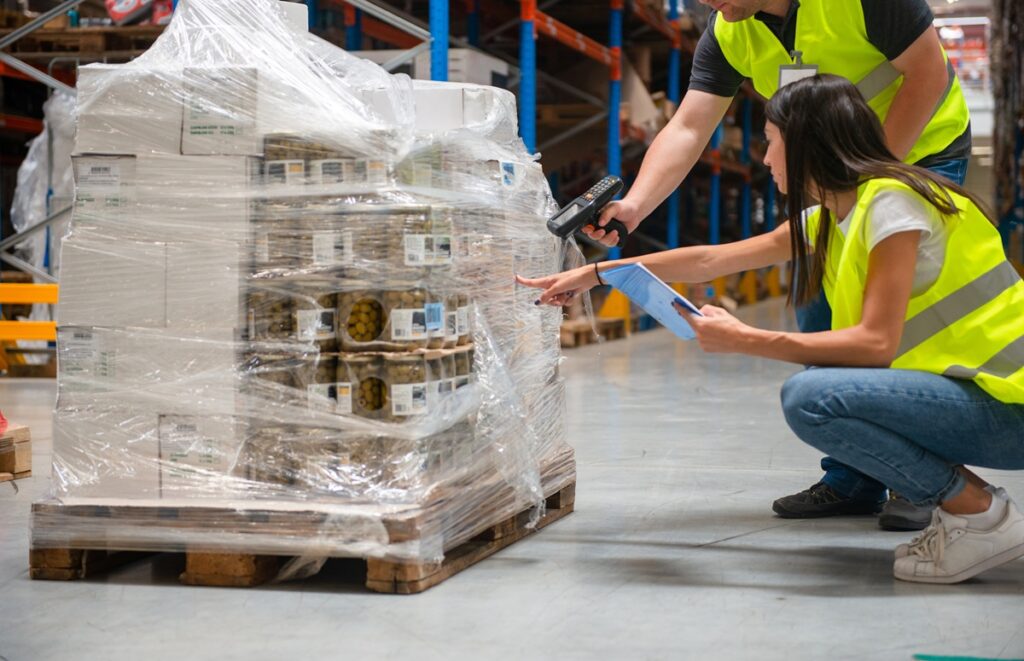
One of the greatest obstacles to effective traceability is not the absence of information, but the number of disconnected systems in which it resides.
Supplier details may be held within enterprise resource planning (ERP) software, ingredient movements within warehouse management systems, production parameters within manufacturing execution systems (MES), and quality results in separate laboratory records.
Each may function effectively in isolation. Problems emerge when an incident requires information to be assembled across departments or external suppliers.
Consider a manufacturer producing several recipes on a shared processing line. If a particular ingredient batch is subsequently found to be defective, an effective traceability system should establish exactly when it entered production, which finished batches incorporated it, where those products were dispatched and whether any remain in storage.
Without connected records, this investigation may require significant manual reconciliation. With integrated batch information, the affected products can be identified more precisely.
International data standards are helping to address this fragmentation. GS1’s Electronic Product Code Information Services (EPCIS) 2.0 provides a common framework for describing supply-chain events, capturing what happened, when and where it occurred, and the associated business context.
Rather than requiring every participant to operate identical software, interoperable standards can help different systems exchange meaningful information.
The objective is a continuous digital record that connects ingredient receipt, processing, packaging, storage and distribution.
Where Automation Strengthens the Chain
Traceability becomes considerably more valuable when information is captured automatically rather than reconstructed after production.
Barcode readers, machine vision systems and connected sensors can associate ingredients, packaging materials and finished goods with specific production events. Automated verification can also identify incorrect labels, missing date codes or discrepancies between the scheduled product and the packaging being applied.
This creates opportunities to prevent problems before affected products leave the production line.
For example, linking a packaging changeover to production records and automatic code verification can provide evidence that the correct label was used for a particular batch. If an error occurs, the system can help identify the relevant production window rather than forcing manufacturers to question an entire shift’s output.
Connected monitoring adds another layer. Temperature readings, equipment conditions and storage information can be associated with product movements, providing useful evidence when investigating deviations or evaluating product quality.
Artificial intelligence offers further potential, particularly in recognising patterns across large datasets. It can help flag unusual supplier records, missing batch associations, inconsistent processing conditions or emerging quality trends.
However, AI cannot compensate for unreliable source information. A system that receives incorrect ingredient identifiers or incomplete production records may generate convincing but inaccurate conclusions.
The priority must remain dependable data capture, supported by suitable human verification and clearly defined responsibilities.
The Financial Value of a Faster Recall
The commercial argument for traceability is perhaps clearest during a product withdrawal or recall.
When the source of a potential problem cannot be identified accurately, manufacturers may have to take a cautious approach, withdrawing products that were never exposed to the original issue.
The consequences can extend well beyond the value of the affected goods. Transport, storage, investigation, customer disruption, additional production and reputational damage may all contribute to the final cost.
More precise batch-level records can narrow the scope of an investigation, allowing a business to distinguish between affected and unaffected products more confidently.
This does not remove the obligation to act conservatively where food safety is uncertain. Instead, it gives decision-makers stronger evidence on which to base their actions.
The same information can deliver benefits during routine operations. Linking stock records with expiry dates supports first-expiry, first-out (FEFO) inventory management, while accurate ingredient consumption data can reveal unexpected losses, overuse or stock discrepancies.
For engineering and production teams, traceability records can also expose recurring process problems. A pattern of rejected batches associated with a particular operating condition, supplier lot or production stage may point towards an issue that deserves closer investigation.
In this context, traceability becomes more than an insurance policy against failure. It becomes a source of continuous operational improvement.

Smarter Codes, Clearer Communication
Packaging remains an important physical connection between products and their digital records.
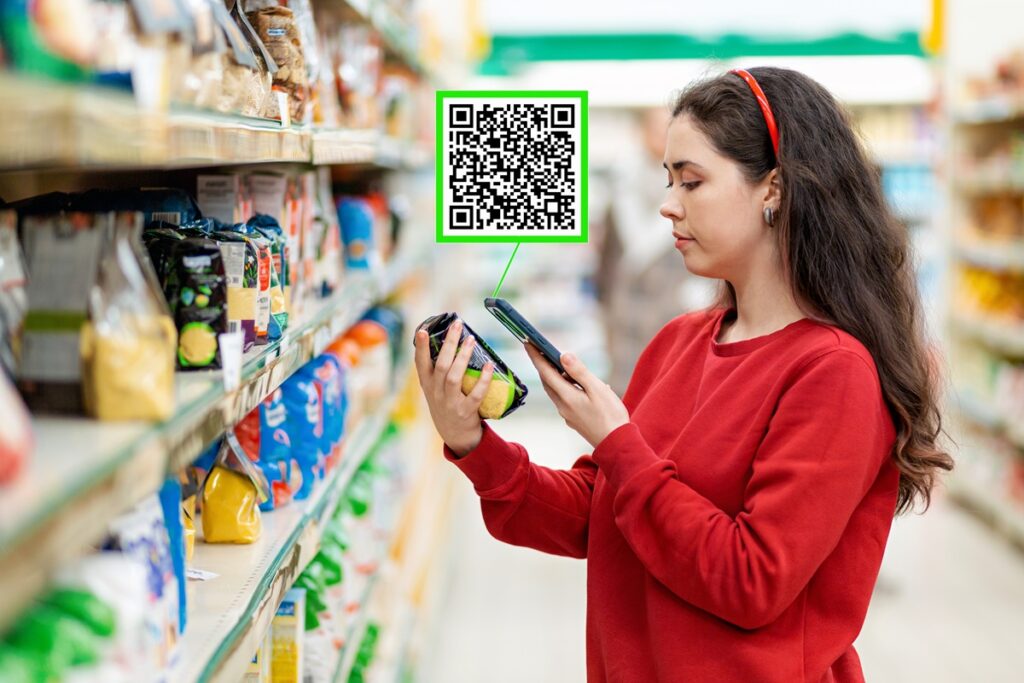
Traditional barcodes provide established methods of product identification, while the industry’s move towards more capable two-dimensional codes offers opportunities to carry or link additional information.
Depending on the application, GS1-compatible 2D codes can support product identification, batch information, expiry details and access to online information. This could help connect factory records with warehouse operations, retailers and consumers.
Nevertheless, the distinction between different digital identification systems is important.
The European Union’s Digital Product Passport framework under the Ecodesign for Sustainable Products Regulation does not apply to food or feed. Food manufacturers should therefore avoid treating a mandatory EU food product passport as an imminent legal requirement.
Instead, connected packaging should be assessed for its practical contribution to traceability, customer information and operational efficiency.
A QR code provides access to information; it does not independently guarantee the accuracy or completeness of the underlying records.
Building Traceability That Works
Investment in traceability does not necessarily require a complete replacement of existing factory systems. For many manufacturers, particularly smaller businesses, a staged approach may deliver better results.
The starting point is to understand where essential data originates, how it moves between systems and where gaps appear.
Standardising supplier identifiers, ingredient batches, production records and finished-product references can establish the foundations for improved visibility. Subsequent integration can prioritise the areas presenting the greatest food safety or financial exposure.
Regular mock recalls provide a valuable test of whether those improvements work under pressure. Rather than simply confirming that information exists, manufacturers should evaluate how quickly records can be retrieved, whether quantities reconcile and whether the complete movement of affected materials can be demonstrated.
A sensible investment case should measure practical outcomes: time spent searching for records, the precision of recall investigations, avoidable product withdrawals, stock losses and labour required to prepare for audits.
The best system is not necessarily the most technically elaborate. It is the one that produces reliable answers when the business needs them.
From Visibility to Confidence
The next stage of traceability will not be defined by the volume of information manufacturers collect, but by how effectively they use it.
Regulatory expectations, retailer requirements and increasingly sophisticated production environments will continue to demand accurate records. Yet the real opportunity lies in connecting those records to everyday decisions about quality, efficiency and risk.
Manufacturers capable of following an ingredient through processing, identifying precisely which products contain it and retrieving supporting evidence without delay will be better positioned to protect customers and manage unexpected disruption.
Traceability is no longer just about proving where a product has been. It is about understanding what happened to it — and having the evidence to act with confidence.
What is traceability in food manufacturing?
Traceability is the ability to identify and follow food products, ingredients and materials through production and the supply chain. It enables manufacturers to establish where ingredients originated, which finished products contain them and where those products were distributed. Modern digital systems can also connect batch records with processing conditions, quality checks and logistics information.
How does digital traceability reduce food recalls and waste?
Digital traceability helps manufacturers identify potentially affected batches more quickly and accurately during food safety investigations. By connecting ingredient records, production data and distribution information, businesses can narrow the scope of withdrawals where supported by the evidence, reduce unnecessary product disposal and respond more effectively to incidents.
What technologies are used for food traceability?
Common technologies include barcode scanners, QR codes, RFID, manufacturing execution systems, enterprise resource planning software, warehouse management systems and connected sensors. GS1 identification and EPCIS standards support information exchange, while artificial intelligence can help identify anomalies, missing records and patterns suggesting potential quality problems.
What are the legal traceability requirements for UK food manufacturers?
UK food businesses must maintain systems that identify their immediate suppliers and business customers, commonly described as one step back and one step forward. Records must be accurate and readily available. Additional requirements may apply to particular products and export markets, including relevant EU and US food safety or supply-chain legislation.
How can food manufacturers improve traceability without replacing existing systems?
Manufacturers can begin by standardising supplier details, ingredient identifiers and batch records before integrating existing production, quality and warehouse systems. Automated scanning, improved data sharing and regular mock recall exercises can strengthen traceability progressively. Investment should prioritise areas where information gaps create the greatest operational, financial or food safety risks.