


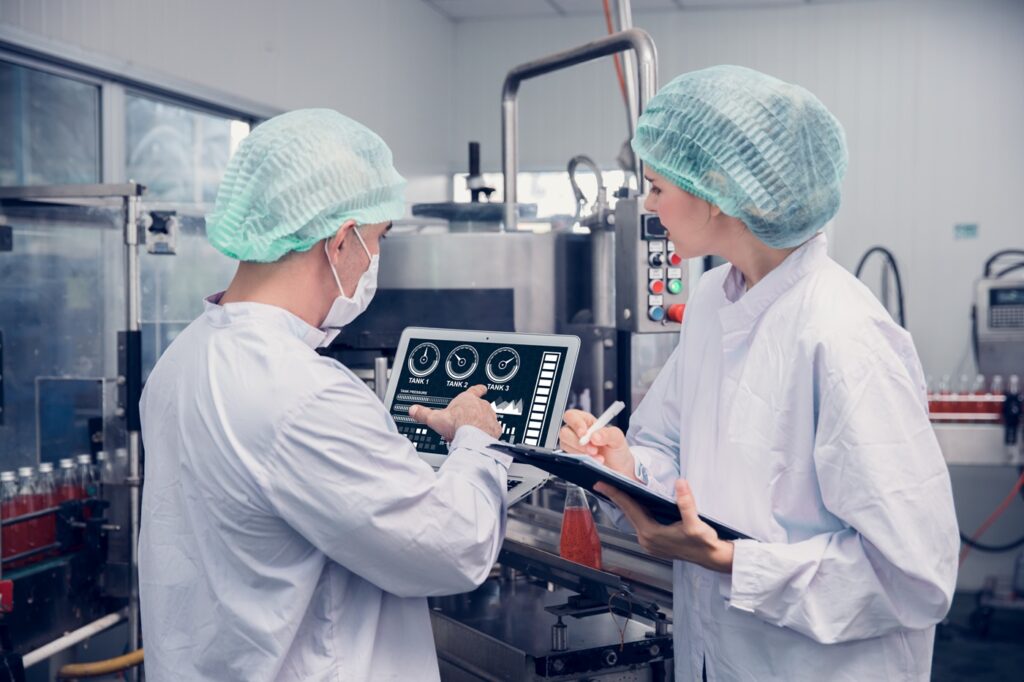
Industry Insight: The next stage of software and hardware investment will be judged by how well technology performs inside real production environments. Food and drink manufacturers need systems that connect with legacy equipment, support operators, strengthen traceability and protect production from disruption. The strongest returns will come from practical integration rather than isolated digital upgrades.
Software and hardware are no longer background investments for food and drink manufacturers. As pressure rises around traceability, resilience, labour, energy and compliance, digital infrastructure is becoming central to how factories protect margins, prove control and compete for contracts.
For years, software and hardware were treated as separate conversations. Hardware kept lines moving, software sat in the office, and most technology decisions were judged by whether they improved speed, reporting or maintenance. That picture has changed. In modern food and drink production, the machinery on the line, the sensors inside equipment, the data flowing through enterprise systems and the cybersecurity protecting the network are now part of the same operational equation.
The reason is simple: the factory is under pressure from every direction. Manufacturers are being asked to produce more SKUs, switch between formats faster, reduce waste, evidence sustainability claims, strengthen allergen control, protect the cold chain and provide greater transparency to retailers, regulators and customers. At the same time, they must manage labour shortages, cost inflation, cyber risk and ageing equipment estates that were not always designed for connected production.
This is where the next phase of software and hardware investment is different. The goal is not digitisation for its own sake. It is control. Businesses need systems that can see what is happening, interpret it quickly, trigger the right response and provide the evidence afterwards. The strongest technology strategies are therefore moving beyond isolated upgrades and towards integrated, resilient and scalable infrastructure.
From Support Tools to the Factory’s Operating System
The biggest shift is the way software and hardware now work together. A sensor on a processing line is not valuable because it collects data. It becomes valuable when that data is linked to quality systems, maintenance planning, traceability records, production schedules and management dashboards. The same applies to weighing equipment, vision inspection, refrigeration controls, robotics, packaging machinery and warehouse systems.
This is pushing manufacturers away from fragmented systems that only solve one local problem. In their place, businesses are looking for platforms and devices that can connect across the operation. A production manager may need live line performance data. A technical manager may need batch-level traceability. An engineer may need early warning of motor wear or temperature drift. A procurement team may need supplier evidence linked to ingredient origin. A logistics team may need proof that chilled or frozen goods remained within specification through storage and distribution.
The commercial value comes when those different requirements are served by the same connected infrastructure. Instead of reconciling spreadsheets after the event, teams can work from a shared view of performance, quality and risk. That reduces manual admin, improves decision-making and gives manufacturers a stronger evidence base when responding to customer audits, complaints or tenders.
For senior decision-makers, this changes the investment case. Software and hardware should no longer be assessed only by their immediate function. The question is whether they strengthen the wider operating model. Can the system integrate with existing equipment? Can data be exported easily? Can it support customer reporting? Can it scale across sites? Can it be maintained securely? These questions now sit at the heart of digital procurement.
Edge Intelligence: Faster Decisions Closer to the Line
Cloud-based analytics still has an important role in food and drink manufacturing, particularly for longer-term reporting, benchmarking and multi-site visibility. But time-critical decisions increasingly require intelligence closer to the line. This is why edge computing is becoming more important.
In practical terms, edge systems process data locally, near the equipment, rather than sending every signal to a remote cloud platform before action is taken. For high-speed production, that matters. If a sensor detects a pressure deviation, a temperature shift, a seal issue or a contamination risk, the value lies in how quickly the system can respond. Seconds can determine whether a batch is saved, downgraded or lost.
This is particularly relevant in areas such as dairy, fermentation, chilled production, bakery, beverage processing and high-care environments where product quality depends on tight control of process conditions. AI-enabled monitoring can identify unusual patterns that may not be obvious to operators in real time. Vision systems can inspect shape, colour, fill level, coding and packaging integrity at speeds manual checks cannot match. Predictive maintenance systems can flag early signs of component failure before they result in unplanned downtime.
The benefit is not simply fewer stoppages. It is greater process confidence. Manufacturers can intervene earlier, reduce giveaway, minimise waste, protect food safety and improve consistency. In a sector where margins are tight and delivery windows are unforgiving, small gains in responsiveness can have a significant financial impact.
Edge technology also supports resilience. If every operational decision relies on external connectivity, a network outage can become a production risk. Local processing gives factories a more robust foundation, allowing critical controls to continue even when wider systems are interrupted.
Flexible Factories: Modular Hardware Meets Smarter Software
Food and drink manufacturers are being asked to produce with greater variety and less certainty. Retail promotions, seasonal demand, private-label changes, allergen requirements, pack format variation and smaller production runs all place pressure on fixed production lines. The traditional model of long, stable runs on single-purpose equipment is becoming less suited to many categories.
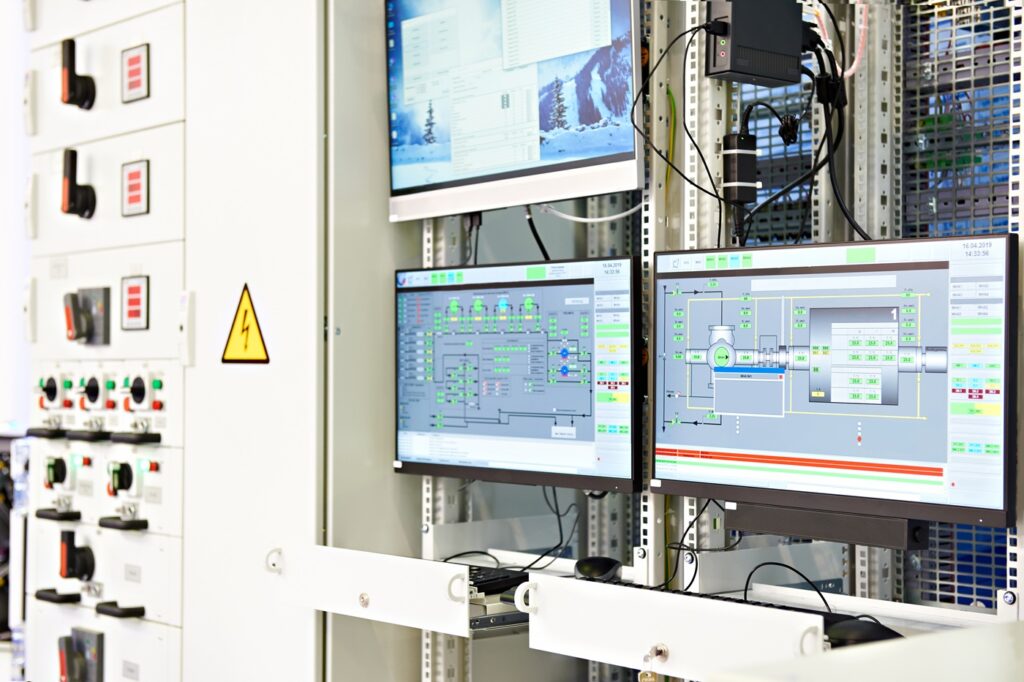
Flexible engineering is one answer. Modular equipment, programmable logic controllers, collaborative robots, autonomous mobile robots, smart conveyors and configurable packaging systems are making it easier to adapt production without major physical rebuilds. The hardware provides the movement, handling and processing capability. The software provides the recipe control, sequencing, changeover logic and performance visibility.
This is especially valuable where manufacturers need to switch between product types, packaging formats or customer specifications. A line that can move from one SKU to another with fewer manual adjustments can release capacity, reduce labour dependency and improve responsiveness. When changeovers are supported by digital work instructions, automated checks and validated cleaning records, the operational gain is matched by stronger compliance control.
The same logic applies to allergen management. As product portfolios expand, the ability to schedule, separate, clean, verify and document production runs becomes increasingly important. Software can help teams plan production in a way that reduces cross-contamination risk, while connected hardware can confirm that key process steps have been completed correctly.
Flexible technology also creates a stronger platform for innovation. Before committing to major capital investment, manufacturers can use digital twins or simulation tools to test process changes, layout options or throughput improvements. This reduces the risk of disruption and helps teams understand whether a proposed change will deliver the expected return.
Traceability by Design: Data Becomes a Compliance Asset
Traceability is no longer just a recall tool. It is becoming a live operational requirement and a commercial differentiator. Retailers and regulators increasingly expect manufacturers to provide accurate, accessible and detailed evidence covering ingredients, batches, suppliers, packaging, storage conditions, cleaning records and distribution.
This is where software and hardware investment has a direct compliance role. Barcode scanning, RFID, weighing systems, production control software, ERP platforms, warehouse management systems and transport monitoring all contribute to the audit trail. When these systems are connected, manufacturers can follow a product’s journey from incoming material to finished goods and, where needed, through the wider supply chain.
The regulatory direction is clear. Requirements around packaging responsibility, deforestation-linked commodities, environmental data and product transparency are all increasing the need for reliable information. For companies trading with EU markets or supplying customers with complex sustainability reporting requirements, the ability to capture and share accurate product data is becoming essential.
This does not mean every manufacturer needs the most advanced traceability platform immediately. It does mean businesses need to understand the gaps in their current data. Many sites still rely on a mixture of paper records, spreadsheets and older systems that do not communicate easily. That may be workable for basic internal control, but it becomes difficult when customers ask for faster evidence, more granular reporting or proof across multiple sites and suppliers.
The strongest approach is traceability by design. Rather than treating data capture as an administrative task at the end of production, manufacturers are embedding it into normal workflows. Operators scan materials as they move. Equipment records process parameters automatically. Quality checks are logged in real time. Packaging data is linked to batch records. Cold-chain information follows the product through storage and distribution.
The result is not only better compliance. It is faster investigation, stronger customer confidence and less disruption when issues arise.
Cyber Resilience: The New Cost of Connected Production
As factories become more connected, cyber resilience becomes an operational issue rather than an IT issue. Production equipment, sensors, remote access tools, cloud platforms, supplier portals and warehouse systems all create potential points of exposure. A cyber incident can now disrupt manufacturing, delay deliveries, compromise data, affect safety systems and damage customer confidence.
This is particularly important for operational technology environments, where equipment may have long life cycles and older control systems may not have been built with modern security expectations in mind. Connecting those systems to enterprise networks or remote support services can deliver real benefits, but only if risk is managed properly.
Cybersecurity is therefore becoming part of total cost of ownership. Buyers need to ask how equipment is patched, how remote access is controlled, how user permissions are managed, whether multi-factor authentication is supported, how data is backed up and how suppliers respond to vulnerabilities. These questions should be built into procurement, not bolted on after installation.
Network segmentation is also becoming more important. Separating critical production systems from general business networks can reduce the risk of an incident spreading across the organisation. Staff training remains essential too, because many attacks still begin with human error, weak passwords or phishing attempts.
For food and drink manufacturers, the board-level issue is resilience. If a system fails, can the site keep producing safely? Can critical data be restored? Can manual workarounds be used? Are suppliers contractually committed to support recovery? A technology investment that improves efficiency but creates unmanaged cyber risk is no longer a sound investment.
The New TCO: Integration, Energy, Skills and Scalability
The total cost of ownership for software and hardware has become more complex. Purchase price still matters, but it is only one part of the decision. Manufacturers need to consider installation, integration, downtime, training, maintenance, cybersecurity, data management, energy use and future scalability.
Integration is often the hidden cost. A new machine may perform well in isolation, but if it cannot communicate with existing control systems, ERP software or quality platforms, its value is limited. Open APIs, standard communication protocols and clear supplier support can make a major difference to long-term performance.
Energy efficiency is another important factor. Connected equipment can help manufacturers understand where energy is being used, when demand peaks and how process settings affect consumption. This matters for cost control and for carbon reporting. Hardware that provides energy data directly into management systems can support both operational improvement and sustainability evidence.
Training and change management should not be underestimated. The best system will fail if operators do not trust it or managers do not use the information it provides. Successful projects involve production, engineering, technical, IT and senior leadership from the start. That helps ensure the technology solves real factory problems rather than creating new administrative burdens.
Scalability is equally important. A pilot project on one line may prove useful, but the return improves when the same model can be applied across lines, sites or product categories. Decision-makers should therefore ask whether systems can grow with the business and whether suppliers can support future upgrades.
Ultimately, software and hardware investment is becoming a strategic decision. It affects efficiency, compliance, resilience, customer relationships and profitability. In a market where contracts are harder to win and operational risk is under closer scrutiny, technology is now part of how manufacturers prove they are reliable partners.
The winners will not necessarily be the businesses that buy the most technology. They will be the ones that connect it intelligently, secure it properly and use the data to make better decisions. For food and drink manufacturers, smarter systems are no longer optional upgrades. They are becoming the foundation of stronger operations.
Why are software and hardware investments becoming more important for food and drink manufacturers?
They are becoming central to efficiency, compliance, traceability and resilience. Connected systems help manufacturers monitor production in real time, reduce downtime, improve quality control, support audit requirements and respond faster to customer or regulatory demands.
What is edge computing in food and drink production?
Edge computing means processing data close to the production line rather than sending every signal to a remote cloud platform. This allows faster decisions, such as stopping a line, adjusting a process or flagging a quality issue before it becomes a larger problem.
How can digital systems improve traceability?
Digital traceability systems can connect ingredient records, batch data, supplier information, processing conditions, packaging details and logistics records. This creates a stronger audit trail and helps manufacturers respond more quickly to recalls, customer queries or compliance checks.
Why is cybersecurity now part of operational technology investment?
As production lines become more connected, cyber incidents can affect manufacturing uptime, data integrity and customer supply. Manufacturers need to consider secure remote access, patching, network segmentation, staff training and supplier support when investing in connected hardware or software.
What should manufacturers consider before buying new factory software or hardware?
Decision-makers should look beyond purchase price. Key considerations include integration with existing systems, cybersecurity, training, maintenance, energy data, scalability, supplier support and the ability to generate reliable compliance evidence.